Starvation Timeline Explained, What the Body Endures and When Risk Turns Critical
A realistic look at how long people may live without food, why water matters more in the short term, what starvation does to the body over days and weeks, and how to respond safely in an emergency.

People often hear a simple survival rule that says you can live for weeks without food. That is only partly true. A healthy adult who still has water, shelter, and relative rest may survive for several weeks, sometimes longer. But that does not mean the process is safe, predictable, or free of serious damage. In real emergencies, dehydration, heat, cold, illness, injury, and poor judgment can shorten survival fast.
For most healthy adults, a rough range for survival without food but with water is about 3 to 8 weeks, with many estimates clustering around 30 to 60 days. Rare cases have lasted longer, usually under unusual conditions or medical supervision. Without water, the timeline is much shorter, often around 3 to 7 days, and sometimes less in hot weather or with heavy exertion.
This article is for general information and preparedness. It is not personal medical advice. Extended fasting, especially beyond 48 to 72 hours, can become medically risky. Children, pregnant people, older adults, and anyone with diabetes, kidney disease, heart disease, low body weight, or an eating disorder should not use average survival estimates as a guide.
Food deprivation versus dehydration, the timeline changes dramatically
The biggest mistake in survival discussions is treating lack of food and lack of water as the same problem. They are not. Water usually determines the short-term outcome. Food matters greatly, but dehydration is often the immediate threat.
| Scenario | Typical survival range | Main limiting factor | What changes the outcome |
|---|---|---|---|
| No food, water available | Often about 3 to 8 weeks | Energy depletion, muscle loss, organ stress | Body fat, health, rest, shelter, infection, temperature |
| No food and no water | Often about 3 to 7 days | Dehydration | Heat, humidity, exertion, vomiting, diarrhea, age |
| Very little food, limited water | Highly variable, often shorter than expected | Usually dehydration first, then starvation | Access to shade, ability to rest, injuries, illness |
| No food, but cool shelter and rest | Potentially longer than average | Starvation progression | Hydration, baseline health, body reserves |
If you are planning for emergencies, prioritize water first. A pantry matters, but stored water, safe water treatment, and the ability to stay cool or warm are usually more urgent in the first days.
What happens to your body when you stop eating
Starvation is not one single event. It unfolds in stages. The exact pace varies, but the pattern is fairly consistent.
First 24 to 48 hours
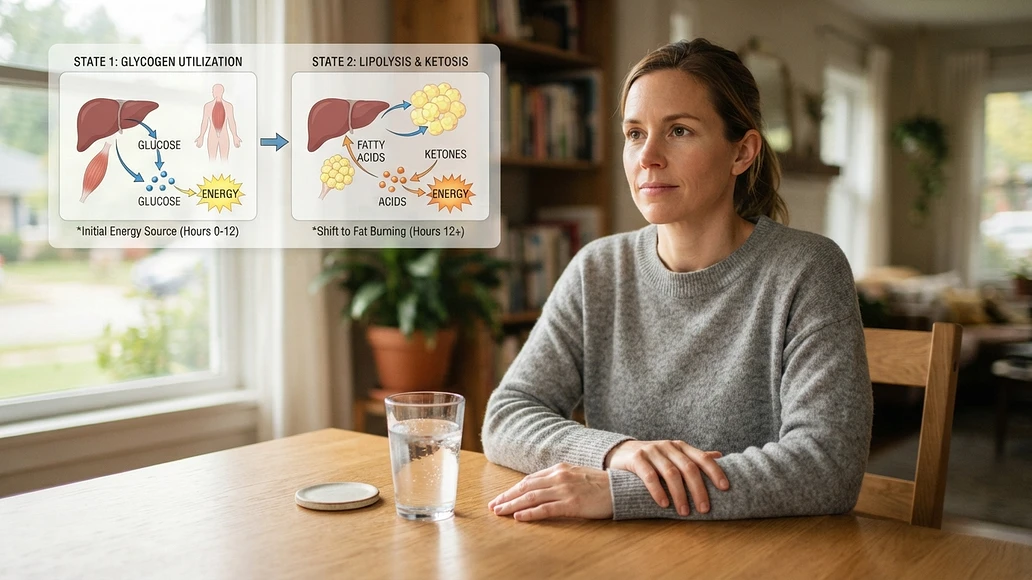
Your body first uses glucose in the bloodstream and glycogen stored in the liver and muscles. Hunger tends to be strongest early. Many people feel irritable, shaky, tired, headachy, or distracted. If you are also dehydrated, symptoms can escalate much faster.
After several days
Once glycogen runs low, the body shifts toward fat burning and ketosis. Ketones can help fuel the brain, but this is not a harmless state for everyone. Some people develop nausea, weakness, bad breath, dizziness, poor concentration, and sleep disruption. Blood pressure may drop, especially when standing.
After weeks
As fat stores decline, the body increasingly breaks down muscle and other tissues. That includes loss of strength, slower movement, impaired immunity, and eventually stress on the heart and other organs. At this stage, infection risk rises, wounds heal poorly, and thinking may become slow or confused. Death in prolonged starvation is often linked to cardiac failure, infection, or complications from electrolyte imbalance.
| Time without food | Primary fuel source | Common symptoms | Risk level | When to seek help |
|---|---|---|---|---|
| 0 to 24 hours | Blood glucose and stored glycogen | Hunger, irritability, mild fatigue, headache | Low to moderate for healthy adults | Earlier if pregnant, diabetic, elderly, or ill |
| 24 to 72 hours | Glycogen depletion, increasing fat use | Weakness, dizziness, poor focus, nausea | Moderate, rising quickly in high-risk groups | Medical advice is wise if symptoms are worsening |
| Several days to 2 weeks | Ketosis and fat metabolism | Low energy, lightheadedness, muscle weakness, mood changes | High without supervision | Seek care for fainting, vomiting, confusion, chest symptoms |
| Weeks | Fat depletion plus muscle breakdown | Marked weakness, muscle loss, apathy, confusion, swelling in some cases | Very high | Urgent medical care needed |
What changes how long someone can live without food
There is no single number that applies to everyone. Two people can stop eating on the same day and have very different outcomes.
| Factor | How it affects survival | Why it matters |
|---|---|---|
| Water access | Strongest short-term factor | Dehydration can become life-threatening in days |
| Body fat and muscle reserves | Can extend or shorten timeline | More stored energy usually means more time, but not safety |
| Baseline health | Often shortens survival if poor | Heart, kidney, liver, and metabolic disease reduce tolerance |
| Age | Children and older adults often decline faster | Lower reserves, higher vulnerability, medication issues |
| Temperature and shelter | Heat and cold shorten survival | Thermal stress raises fluid and energy demands |
| Activity level | Heavy exertion shortens timeline | Burns calories and water faster |
| Stress and mental state | Can worsen decisions and cooperation | Poor judgment leads to avoidable mistakes |
| Illness, injury, vomiting, diarrhea | Can sharply shorten survival | Fluid loss and inflammation increase risk |
This is why the old rule of thumb about three weeks without food is only a teaching shortcut. It is not a guarantee, and it can be dangerously misleading if it makes someone underestimate dehydration, exposure, or medical risk.
Real-world emergency scenarios
Context matters more than people think. A person resting in a cool room with water is in a very different situation from someone hiking in heat with no supplies.
Stranded with water but no food
If you have drinkable water, shade or warmth, and can stay mostly at rest, survival may extend into the multi-week range. The practical goal is to conserve energy, avoid injury, and maintain clear thinking. Panic and unnecessary movement waste both calories and water.
Lost outdoors with limited water
In wilderness or desert conditions, water usually becomes the urgent problem before food does. If you are deciding whether to burn energy searching for food, the answer is often no, unless water and rescue are already addressed. Shelter, signaling, and water procurement generally come first.
Trapped with no food or drink
This is the most dangerous scenario. The timeline may be measured in days, not weeks. Heat, injuries, and inability to rest can shorten it further. If rescue is possible, signaling and conserving fluids matter more than trying to stretch energy through movement.

Fasting for wellness is not the same as survival starvation
Interest in fasting has made this topic more confusing. A short eating window or an occasional brief fast is not the same as being unable to eat in an emergency.
| Pattern | Typical duration | General risk for healthy adults | Important caution |
|---|---|---|---|
| Time-restricted eating | About 12 to 16 hours | Often tolerated by healthy adults | Does not increase emergency survival capacity |
| One-day fast | About 24 hours | May be tolerated by some healthy adults | Can still be unsafe with diabetes, pregnancy, illness, or certain medications |
| Multi-day fast | 48 to 72 hours or more | Risk rises significantly | Not a do-it-yourself resilience test |
| Extended water-only fast | 5 days and beyond | High risk without supervision | Electrolyte problems and refeeding syndrome become serious concerns |
Recent medical caution around extended fasting is worth noting. Multi-day fasting is increasingly viewed as something that can create metabolic and cardiovascular risk, not as a harmless detox. It does not train the body to survive longer in a disaster. In many cases, it simply reduces reserves and adds stress.
Warning signs that food deprivation is becoming dangerous
Hunger alone is not the main danger signal. The red flags are changes in hydration, thinking, heart symptoms, and the ability to function.
| Symptom or sign | What it may mean | Action |
|---|---|---|
| Increasing dizziness, weakness, trouble standing | Low blood pressure, dehydration, low energy reserves | Stop exertion, hydrate if possible, seek medical advice |
| Confusion, disorientation, extreme sleepiness | Serious metabolic stress or dehydration | Urgent medical evaluation |
| Fainting, chest pain, palpitations, severe shortness of breath | Possible cardiac or electrolyte problem | Emergency care |
| Persistent vomiting or diarrhea | Rapid fluid and electrolyte loss | Emergency care if unable to keep fluids down |
| Seizure, sudden severe weakness, collapse | Medical emergency | Call emergency services immediately |
If you have a chronic illness or take medication, do not wait for severe symptoms. Even 24 to 48 hours without food can be dangerous for some people.
Who is at higher risk
Average timelines usually refer to relatively healthy adults. They do not apply well to many common situations.
| Group | How risk changes | Main concerns | Special caution |
|---|---|---|---|
| Children and teens | Often deteriorate faster | Higher metabolic needs, lower reserves | Do not use adult timelines |
| Older adults | Shorter safe window in many cases | Frailty, medications, chronic disease | Earlier medical evaluation is wise |
| Pregnant or breastfeeding people | Higher nutritional risk | Risk to parent and baby | Prolonged fasting is unsafe |
| People with diabetes | Can become dangerous quickly | Low or high blood sugar, medication mismatch | Do not fast without medical guidance |
| Heart or kidney disease | Lower tolerance | Fluid balance and electrolyte instability | Seek medical advice early |
| Low BMI or eating disorder history | Much less reserve | Rapid decline, psychological risk, refeeding risk | Professional care is important |
How to start eating again safely
After prolonged food deprivation, the body may react badly to a sudden large meal. This is where refeeding syndrome becomes a real concern. A big carbohydrate load can trigger dangerous shifts in phosphorus, potassium, magnesium, and fluid balance. In severe cases, that can lead to arrhythmias, breathing problems, or organ failure.
For anyone who has gone without food for several days, especially if they are weak, underweight, or ill, restarting food should be cautious. Small portions, fluids, and electrolyte awareness matter. Very prolonged deprivation needs medical supervision.
| Time without food | Safer first approach | What to avoid at first | When to get help |
|---|---|---|---|
| Less than 24 hours | Resume normal eating gradually, include fluids | Huge binge meal if nauseated or dehydrated | If symptoms persist or you cannot keep fluids down |
| 1 to 3 days | Small meals, easy-to-digest foods, steady fluids | Large greasy meals, heavy alcohol intake | If dizziness, vomiting, or palpitations occur |
| Several days | Small portions, slower carbohydrate intake, consider electrolyte support | Large high-sugar or high-carb meal | Medical advice is strongly recommended |
| More than a week or obvious malnutrition | Supervised refeeding is safest | Any unsupervised binge eating | Prompt medical care is needed |

Preparedness steps that matter more than testing your limits
The best survival strategy is not seeing how long you can go without food. It is avoiding that situation in the first place. For home preparedness, water and simple shelf-stable food should be the baseline.
| Preparedness item | Practical target | Why it matters |
|---|---|---|
| Stored water | At least 1 gallon per person per day | Covers drinking and basic sanitation |
| Emergency food | Several days to two weeks minimum | Reduces stress, preserves energy, supports medications |
| Electrolyte options | Oral rehydration supplies or similar | Helpful during illness, heat, or poor intake |
| No-cook foods | Ready-to-eat items | Useful during outages or evacuation |
| Manual can opener and simple utensils | One reliable set | Prevents access problems during power loss |
| Water treatment backup | Filter, tablets, or boiling plan | Protects against unsafe water sources |
Good emergency food choices include canned beans, nut butters, oats, rice, soups, tuna, shelf-stable milk, crackers, dried fruit, and simple comfort foods that people will actually eat. If someone in the household has diabetes, food allergies, or takes medicine with meals, plan around that first.
Common myths that can get people hurt
| Myth | Reality | Why the myth is risky |
|---|---|---|
| You can safely go three weeks without food if you have water | Some people may survive that long, but serious complications can happen much sooner | It encourages delay and false confidence |
| Fasting trains the body to handle starvation | There is no strong evidence for this | It may reduce reserves and increase risk |
| Extreme water-only fasting is a safe detox | It can be dangerous, especially beyond a few days | Electrolyte and heart risks are often ignored |
| Food is the first priority in every survival situation | Water, shelter, and rescue signaling often matter more at first | People may waste energy foraging instead of solving urgent threats |
Mental effects of not eating
Not eating does more than weaken muscles. It also affects judgment. People who are hungry and dehydrated often become irritable, impulsive, slow to think, and less cooperative. In a survival setting, that can lead to bad route choices, poor conflict control, and wasted energy. One practical reason to keep emergency snacks and water available is not just calories, but clearer decision-making.
When to call a doctor or seek emergency care
Seek urgent help during or after food deprivation if there is confusion, fainting, chest pain, palpitations, severe weakness, inability to drink, persistent vomiting, seizures, or collapse. If you have diabetes, kidney disease, heart disease, are pregnant, or take medicines that affect blood sugar or fluid balance, get medical advice much earlier. For many high-risk people, going more than 24 to 72 hours without food is not something to manage casually at home.
FAQ
Can you survive 7 days without food?
Many healthy adults could survive 7 days without food if they still have water, rest, and shelter. That does not mean it is safe. Weakness, dizziness, impaired judgment, and dehydration risk can become serious well before a week, especially in heat or with illness.
How long can you survive with water only but no food?
A rough estimate for a healthy adult is often several weeks, commonly around 3 to 8 weeks, with many sources placing typical survival around 30 to 60 days. Individual outcomes vary widely.
Is a 3-day water fast safe for most people?
No, it should not be assumed safe for most people. Even 48 to 72 hours can be risky for people with medical conditions, low body weight, pregnancy, medication use, or a history of disordered eating. Medical caution increases as fasting lengthens.
Does going without food for 24 hours have any health benefits?
Some healthy adults may tolerate a 24-hour fast, and some studies suggest certain metabolic effects from shorter fasting patterns. But possible benefit depends on the person, and it does not make someone more resilient in an emergency. It can also be unsafe for many people.
What is the longest recorded time a person has survived without eating?
There are rare reports of very long survival with water and medical supervision, including prolonged therapeutic fasts and hunger strikes. Those cases are exceptions, not safe examples to follow, and they do not reflect what happens in uncontrolled emergencies.