EMP and Your Health, What Is Real, What Is Hype, and How to Prepare
An EMP is often portrayed as something that directly injures people, but the better-supported risk is usually technology failure, medical disruption, and long outages. Here is what an EMP could realistically mean for the human body, who faces the most risk, and what practical steps help.

An electromagnetic pulse, or EMP, is one of those topics that attracts dramatic claims. Some are grounded in real engineering concerns. Others jump too quickly to ideas like instant organ damage, radiation sickness, or people being “fried” by an invisible wave. For most readers, the safer and more evidence-based takeaway is simpler. The main danger from an EMP is usually not direct injury to human tissue. The bigger danger is what happens when power, communications, refrigeration, transportation, and medical systems stop working.
This article is general preparedness information only, not medical advice. If you or someone in your care depends on powered medical equipment, refrigerated medication, oxygen, dialysis, seizure medication, or cardiac monitoring, loss of access can become an emergency quickly. Chest pain, fainting, severe shortness of breath, confusion, seizure, or inability to access critical medication are reasons to seek urgent professional help.
What is an EMP, exactly?
An EMP is a burst of electromagnetic energy that can disrupt or damage electronics. It is not all one thing, and that matters. A nuclear EMP is associated with a high-altitude nuclear detonation and can affect very large areas. A non-nuclear EMP is usually discussed as a more localized pulse from specialized equipment. Ordinary electromagnetic fields, such as those from household wiring, radios, or consumer electronics, are a different category and are not the same as a large disruptive EMP event.
That distinction helps clear up a common misunderstanding. People often hear the word “electromagnetic” and assume any EMP works like ionizing radiation. It does not. Ionizing radiation, such as gamma rays or X-rays, has a different mechanism and different health concerns. EMP discussions are mainly about electrical disruption, induced currents, and interference with equipment.
Can an EMP directly harm the human body?
For the general public, the best-supported answer is that direct bodily harm from an EMP is not the main expected effect. Mainstream public-health and device-safety guidance tends to frame electromagnetic risk around heating, nerve or muscle stimulation in certain exposure ranges, and interference with electronics or implanted devices. That is very different from saying an EMP will directly destroy organs or cause classic radiation poisoning.
In practical terms, a person standing in an affected area is more likely to face danger from failing systems around them than from the pulse itself. If traffic lights fail, vehicles crash, elevators stop, oxygen concentrators shut down, insulin spoils, or hospital equipment loses function, those are real health threats. Claims that an EMP will automatically “fry” healthy human tissue are not well supported for a general-audience preparedness article.
| Claim | Evidence strength | Practical takeaway |
|---|---|---|
| EMP directly cooks or fries the human body | Weak | Do not treat this as an expected outcome |
| EMP can cause harm through power loss, device failure, and infrastructure disruption | Well supported | This is the main preparedness concern |
| Strong electromagnetic environments can interfere with some medical devices | Well supported | People with implants or powered treatment need backup plans |
| Any symptoms after an EMP must be “radiation sickness” | Weak | Look first at trauma, heat, dehydration, missed medication, stress, or equipment failure |
What symptoms might happen if the grid fails around you?
If someone feels unwell during or after an EMP-related outage, the cause is more likely to be indirect. Symptoms can come from stress, heat or cold exposure, dehydration, missed doses, low blood sugar, lack of oxygen support, interrupted sleep, or injury during the disruption.
Plausible symptoms include dizziness, weakness, headache, anxiety, confusion from low blood sugar or dehydration, worsening shortness of breath if oxygen equipment fails, fatigue from poor sleep if CPAP stops working, and chest symptoms if a person misses heart medications or experiences severe stress. Burns or electric shock would be more likely from damaged electrical systems, fires, or unsafe generator use than from the pulse itself.

Immediate, short-term, and long-term effects
In the first minutes to hours, the biggest risks are accidents, panic, and abrupt loss of powered support. In the next day or two, medication access, refrigeration, safe water, food safety, and communication become more important. Over a longer outage, chronic disease management, infection risk, heat stress, cold stress, and delayed medical care can become the dominant health problems.
| Time frame | Most likely health risks | Examples |
|---|---|---|
| Immediate, minutes to hours | Accidents and sudden equipment failure | Traffic crashes, falls, elevator entrapment, oxygen concentrator shutdown |
| Short-term, first 24 to 72 hours | Missed treatment, spoiled medication, dehydration, stress | Insulin warming, CPAP interruption, inability to contact a clinician, panic symptoms |
| Longer-term, days to weeks | Worsening chronic illness and limited care access | Uncontrolled blood sugar, respiratory decline, infection, untreated heart or kidney problems |
What is the difference between an EMP, a solar storm, and lightning?
These hazards are often lumped together, but they are not interchangeable. Lightning is a direct high-energy electrical event that can severely injure or kill a person through current, burns, cardiac effects, and trauma. A solar storm mainly threatens large-scale electrical and communication systems through geomagnetic disturbance, not by directly shocking people on the ground. Everyday EMF exposure from household sources is another separate category and is usually discussed under established exposure limits, not disaster injury.
| Hazard | Main source | Likely direct body effect | Main household risk |
|---|---|---|---|
| EMP | Large pulse of electromagnetic energy | Direct injury to healthy tissue is not the main expected effect | Electronics disruption, outages, device interference |
| Lightning | Atmospheric electrical discharge | Severe direct injury is well established | Shock, burns, cardiac arrest, fire, blast trauma |
| Solar storm | Geomagnetic disturbance from solar activity | Little direct body effect expected for most people | Grid instability, communications problems, transformer damage |
| Ordinary EMF | Power lines, appliances, radios, devices | Public-health guidance focuses on limits, heating, and interference, not disaster injury | Usually low direct risk in normal settings |
| Ionizing radiation | X-rays, gamma rays, radioactive materials | Can directly damage tissue and DNA | Very different hazard from EMP |
Why the bigger danger is usually indirect, not direct
Preparedness planning works best when it focuses on the most likely failure points. A prolonged outage can interrupt water treatment, refrigeration, fuel distribution, pharmacy access, emergency dispatch, and hospital operations. That chain of failures is where human harm becomes most realistic. In other words, the pulse is the trigger, but the health consequences come from the breakdown that follows.
This is especially important for households that rely on routines supported by electricity. A person may be stable day to day because a machine runs overnight, a medication stays cold, a pharmacy can refill on time, and a clinician can be reached quickly. Remove those supports, and the health risk rises even if the EMP itself never directly injures tissue.
Which medical devices and treatments are most vulnerable?
Not every device carries the same level of risk. Some implanted devices are designed with electromagnetic compatibility in mind, but that does not mean every scenario is harmless. External powered devices and supply chains are often the bigger concern. The practical question is not only “Could the device be affected?” but also “What happens if power, charging, replacement parts, or monitoring disappear?”
| Device or treatment | Main vulnerability | Backup need | When to contact a clinician |
|---|---|---|---|
| Pacemaker or implanted cardiac device | Potential interference concerns, loss of monitoring access | Carry device information card, know follow-up plan, keep emergency contacts on paper | If symptoms such as fainting, palpitations, chest pain, or device alerts occur |
| Insulin pump and continuous glucose monitor | Power, charging, sensor supply, data access | Manual glucose plan, backup insulin method if prescribed, cooler strategy for storage | If glucose is uncontrolled, supplies fail, or dosing plan is unclear |
| Oxygen concentrator | Power dependence | Battery plan, oxygen supplier contact, alternate source arranged in advance | Immediately if oxygen support is interrupted and breathing worsens |
| CPAP or BiPAP | Power dependence | Battery backup, clinician-approved contingency plan | If severe sleep-related breathing issues or daytime respiratory symptoms worsen |
| Hearing aids | Battery and charging dependence | Spare batteries or charged backup | If communication loss creates a safety issue |
| Dialysis | Time-sensitive treatment access | Know emergency dialysis options and clinic instructions | Urgently if treatment is delayed or missed |
| Refrigerated medication | Temperature control and spoilage risk | Cooler, thermometers, backup cold storage plan | If storage limits are exceeded or replacement is needed |
Who is most at risk during a prolonged power disruption?
The highest-risk groups are usually not the healthiest adults with no medical needs. They are people whose safety depends on continuity. That includes older adults, infants, pregnant people, people with chronic disease, people with disabilities, and anyone using device-dependent treatment or time-sensitive medication.
Risk also rises for people who live alone, cannot drive, depend on elevators, need home nursing, or have limited cash and transportation. A household can be medically fragile even if no one appears critically ill on a normal day. If daily stability depends on electricity, refrigeration, pharmacy access, or regular monitoring, an outage can quickly become a health problem.
What should people with chronic illness plan for?
People with chronic illness should think in terms of continuity, not fear. The goal is to bridge a disruption safely until normal services return or professional care is reached. Confirm contingency plans with your clinician if you are pregnant, have a complex medication regimen, use an implanted device, or rely on oxygen, dialysis, seizure medication, insulin, or cardiac treatment.
Useful planning areas include written medication lists, refill timing, backup doses where appropriate, refrigeration needs, paper copies of prescriptions, clinician phone numbers, and a realistic transportation plan if roads, fuel, or communications are disrupted. Do not stop prescribed medication or shut off prescribed devices unless a clinician has already given you an alternate plan.
How to prepare medications, oxygen, insulin, and backup power
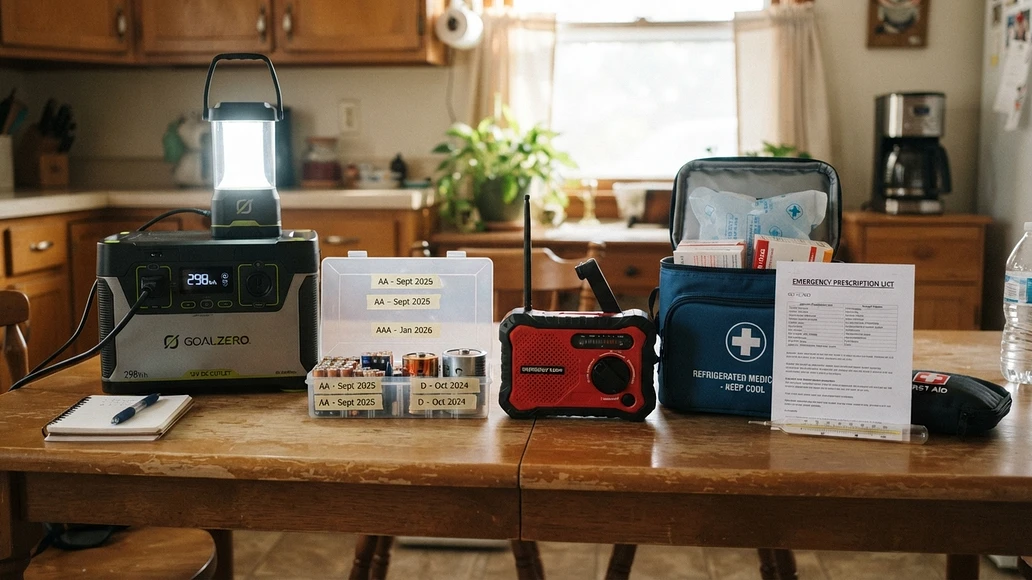
Good preparedness here is boring, specific, and effective. Know which items truly need electricity, which need refrigeration, and how long your current supplies can last. Label chargers, batteries, tubing, masks, and manuals so another person can help if needed. Keep paper instructions because apps and portals may be unavailable.
| Preparedness area | What to set up | Why it matters |
|---|---|---|
| Medication records | Printed list of drugs, doses, allergies, prescribers, and pharmacy numbers | Helps if phones, portals, or memory fail under stress |
| Refrigerated medicines | Cooler plan, ice rotation plan, thermometer, storage guidance from pharmacist | Prevents unsafe guessing about medication quality |
| Backup power | Charged battery packs, approved power stations, fuel-safe generator plan kept outside | Supports essential devices without unsafe improvisation |
| Oxygen support | Supplier contact sheet, backup cylinders if prescribed, transport plan | Loss of oxygen support can become an emergency fast |
| Sleep and breathing devices | Battery option, extension cords, clinician-approved fallback plan | Reduces risk from interrupted overnight treatment |
| Monitoring and communication | Paper logs, spare batteries, radio, written emergency contacts | Lets caregivers track symptoms when networks are down |
What to do in the first 24 hours after a major EMP event
First, check for immediate injuries and life-threatening problems. If someone has chest pain, severe shortness of breath, altered mental status, seizure, signs of stroke, or no access to critical life-sustaining treatment, treat that as an emergency. Next, stabilize the basics. Water, temperature control, medication timing, and communication with family or caregivers matter more than trying to diagnose invisible exposure.
Then move to continuity. Confirm who in the household needs power, refrigeration, mobility support, or regular medication. Preserve device batteries. Avoid unnecessary driving if signals are out and roads are chaotic. Use generators only outdoors and far from doors and windows to prevent carbon monoxide poisoning. If you rely on a clinician-managed treatment plan, follow the backup instructions you arranged ahead of time.
How long could health effects last after an EMP-related outage?
That depends less on the pulse itself and more on how long systems stay down. A brief disruption may cause little more than inconvenience and stress. A prolonged outage can create days or weeks of health strain, especially for people with chronic disease, limited mobility, or medical dependence.
Some problems resolve quickly once power and care return. Others can snowball. Missed doses, poor glucose control, dehydration, interrupted dialysis, and respiratory decline can have effects that outlast the outage. This is why restoring utilities and medical access shortens the problem, while comfort measures alone only ease symptoms.
How Faraday containers and shielding work, and their limits
Faraday protection is often discussed as a cure-all, but it is not magic. A properly designed conductive enclosure can reduce electromagnetic energy reaching the contents. That may help protect certain small electronics. It does not make a person invulnerable, and it does not solve the larger problem of infrastructure failure outside the container.
Shielding quality matters. Gaps, poor seals, conductive contact problems, and incorrect assumptions about what needs protection can all limit effectiveness. Faraday storage can be one layer of preparedness for radios, spare chargers, or small backup electronics, but it should not replace water, medication planning, paper records, and practical household resilience.
EMP myths versus evidence
| Common claim | What the evidence supports | Safer wording |
|---|---|---|
| An EMP gives people radiation sickness | EMP and ionizing radiation are different hazards | The main public risk from EMP is disruption, not classic radiation illness |
| An EMP instantly destroys healthy organs | Weak support for this as an expected direct effect | Indirect effects are the more credible concern |
| Anyone who feels bad afterward was injured by the pulse itself | Symptoms may come from stress, dehydration, missed treatment, heat, or injury | Look for practical causes first |
| Faraday gear makes you fully safe | Protection depends on design and only covers some equipment | Use shielding as one layer, not the whole plan |
| People should test shielding or exposure on themselves | Unsafe and not recommended | Avoid DIY exposure experiments |
What official guidance says about electromagnetic exposure
Public-health and regulatory sources generally separate non-ionizing electromagnetic exposure from ionizing radiation, and they focus on established mechanisms such as heating, stimulation, and device compatibility. They do not generally frame EMP as a routine direct human tissue injury scenario for the public. The more consistent concern is whether strong electromagnetic environments interfere with electronics, especially medical devices, and whether emergency systems remain functional.
That is why preparedness advice should stay grounded. If you want to reduce risk, the most useful steps are not body-shielding gimmicks. They are backup power, medication continuity, printed records, safe water, communication plans, and clinician-confirmed contingencies for anyone with complex medical needs.
When to seek emergency medical help
Seek emergency help right away if someone has chest pain, severe trouble breathing, fainting, seizure, new confusion, signs of stroke, severe dehydration, uncontrolled bleeding, or loss of access to oxygen, insulin, dialysis, seizure medication, or other critical treatment. If a person with a pacemaker, implanted device, or complex condition develops concerning symptoms, err on the side of urgent evaluation.
If you are pregnant, have chronic disease, or use implanted or powered medical equipment, review your contingency plan with your clinician before an emergency happens. That step is far more protective than relying on internet myths after the fact.
Preparedness checklist for households and caregivers
A strong household plan usually includes a written medication list, a paper contact list, backup lighting, safe water, food that does not require refrigeration, a way to keep critical medication within proper temperature range, and a realistic power plan for essential devices. Caregivers should know where supplies are stored, how to operate key equipment, and what symptoms mean it is time to escalate to emergency care.
For many families, the most important mindset shift is this. Prepare for a long outage with medical consequences, not for a movie-style wave that directly injures everyone. That approach is calmer, more accurate, and much more useful.
References
- National Institute of Environmental Health Sciences, Electric and Magnetic Fields
- US Environmental Protection Agency, Electric and Magnetic Fields from Power Lines
- US Food and Drug Administration, Electromagnetic Compatibility and Medical Devices
- Centers for Disease Control and Prevention, Facts About Wearable Technology
- UK Health Security Agency, Electromagnetic Fields, Sources and Health Effects
- New Zealand Ministry of Health, Research into Non-Ionising Fields