Out of Baking Soda? Smart Swaps for Cookies, Pancakes, Quick Breads, and More
Ran out of baking soda mid-recipe? Here is a practical guide to the best substitutes for different foods, with ratios, texture notes, low-sodium options, safety cautions, and troubleshooting tips.

Running out of baking soda does not always mean dinner or dessert is ruined. The right substitute depends on what baking soda was supposed to do in that recipe. In some batters it mainly creates lift. In others it also affects browning, spread, tenderness, and flavor. That is why one swap works beautifully in pancakes but gives disappointing cookies.
This guide explains how to choose a substitute based on the recipe in front of you, how much to use, what else to adjust, and when it is better not to improvise. This information is for cooking and household use only, not for medical treatment.
What baking soda actually does in a recipe
Baking soda, also called sodium bicarbonate, is an alkaline leavener. When it meets an acid such as buttermilk, yogurt, brown sugar, lemon juice, vinegar, or natural cocoa, it releases carbon dioxide. Those bubbles help batter or dough rise.
But leavening is only part of the story. Baking soda also raises pH, which can:
- encourage deeper browning
- reduce sharp acidic flavor
- help some baked goods spread more
- soften texture in certain batters
That is why replacing it with baking powder often works, but not perfectly, in every recipe. Baking powder already contains both an alkaline component and acid, so it is more self-contained and usually milder in effect.
How its role changes by recipe type
| Recipe type | Main job of baking soda | What you notice if it is missing |
|---|---|---|
| Cookies | Spread, browning, some lift | Thicker cookies, paler color, less crisp edges |
| Pancakes and waffles | Quick lift in wet batter | Denser texture, less fluff |
| Muffins and quick breads | Rise, tenderness, balancing acidic ingredients | Heavier crumb, possible tangy taste |
| Cakes and cupcakes | Lift and pH balance | Lower rise, tighter crumb, lighter color |
| Savory batters and fritters | Lightness and crispness | Heavier interior, less airy bite |
Fast decision guide for common situations
If you need a quick answer before the oven preheats, use this shortcut.
| If your recipe is... | Best substitute | Basic ratio | Important adjustment |
|---|---|---|---|
| Cookies | Baking powder | 3 teaspoons baking powder for 1 teaspoon baking soda | Expect less browning and slightly less spread |
| Pancakes or waffles | Baking powder or club soda | 3:1 for baking powder, or replace part of liquid with club soda | Cook batter quickly if using club soda |
| Muffins or banana bread | Baking powder | 3:1 | Reduce acidic ingredients slightly if recipe is very tangy |
| Flour-heavy quick bread | Self-rising flour | Use in place of regular flour, then reduce or omit added salt and leavening as needed | Works best when recipe already relies on flour, salt, and simple leavening |
| Low-sodium baking | Potassium bicarbonate | 1:1 | Add about 1/3 teaspoon salt per teaspoon if the recipe needs it |
| Light sponge-style batter | Whipped egg whites | Varies by recipe | Fold gently, bake right away |
| Dry crisp cookies or crackers | Baker's ammonia | Often 1:1 | Use only in dry bakes, not moist cakes |
Baking powder, the easiest all-purpose substitute
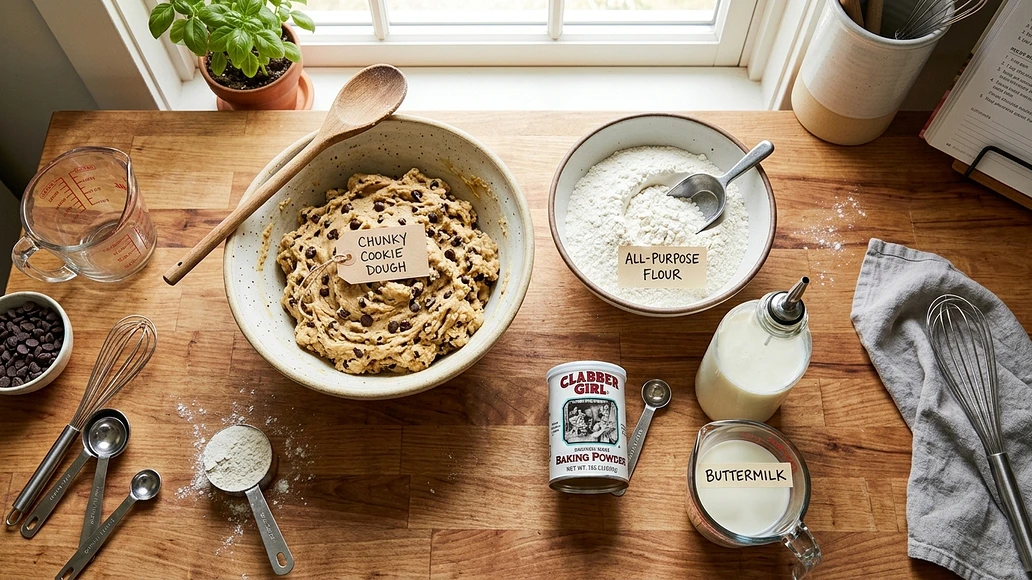
For most home cooks, baking powder is the best backup. A common rule is to use 3 teaspoons of baking powder for every 1 teaspoon of baking soda.
This works because baking powder is weaker per teaspoon than baking soda. It can replace the leavening effect in many recipes, especially muffins, pancakes, snack cakes, and quick breads.
When baking powder works well
- pancakes and waffles
- muffins
- banana bread
- simple cakes and cupcakes
- cornbread
When results may change
- cookies may brown less and spread less
- recipes with lots of buttermilk, yogurt, or molasses may taste a bit tangier if you do not rebalance acidity
- very delicate cakes can become slightly denser or more uneven
What to adjust
If the original recipe contains a strongly acidic ingredient, baking soda was likely there to neutralize some of that acid. When switching to baking powder, you may want to slightly reduce highly acidic add-ins, or accept a slightly sharper flavor. Do not make large liquid changes unless you understand the batter well.
Potassium bicarbonate, the closest low-sodium swap
Potassium bicarbonate is one of the closest functional substitutes because it behaves similarly to baking soda in baking. In many recipes, you can use it in a 1 to 1 swap.
Because it does not bring sodium, some bakers add about 1/3 teaspoon salt for each teaspoon of potassium bicarbonate used, unless the recipe already has enough salt.
Best uses
- cookies
- muffins
- quick breads
- cakes where baking soda is the main leavener
Important caution
This can be a helpful option for sodium-conscious baking, but it is not ideal for everyone. People with kidney disease, those taking medicines that affect potassium, or anyone told to limit potassium should read labels carefully and ask a clinician or dietitian before relying on it often.
Self-rising flour, useful in flour-heavy recipes
Self-rising flour already contains baking powder and salt. That makes it a practical substitute in recipes where the structure is mostly flour-based, such as biscuits, muffins, some pancakes, and quick breads.
It is less useful in recipes where the flour amount is small or where the original formula depends on a very specific acid-alkali balance.
How to think about the swap
If a recipe uses regular flour, baking soda, and salt, self-rising flour may cover part or all of that job. You will usually need to omit or reduce the added salt, and often reduce or omit other leavening. Because self-rising flour formulas vary by brand, this is a good emergency fix, not a precision method for delicate baking.
Where it works best
| Recipe | How well self-rising flour works | Notes |
|---|---|---|
| Muffins | Good | Reduce added salt, watch total leavening |
| Quick breads | Good | Best in simple loaf recipes |
| Pancakes | Good | Can produce tender, fluffy results |
| Cookies | Fair | Texture may change noticeably |
| Delicate cakes | Limited | Less predictable than baking powder |
Whipped egg whites and other aeration tricks
If your recipe can hold trapped air, whipped egg whites can provide lift even without chemical leavening. This is most useful in sponge-style cakes, some pancakes, soufflé-like batters, and a few muffins.
It is not a true one-for-one substitute because it does not replace baking soda's pH effect or browning boost. Still, it can save a recipe that mainly needs lightness.
Best uses
- sponge cakes
- Japanese-style pancakes
- light muffins
- some waffles
Weak uses
- drop cookies
- dense banana bread
- hearty cornbread
Fold whipped whites gently into the batter and bake immediately so the trapped air is not lost.
Club soda, a partial fix for wet batters
Club soda can add a little lift because it contains dissolved carbon dioxide. It works best when the recipe already has enough liquid and does not depend heavily on baking soda for browning or pH control.
Replace part of the liquid, not all of it, and mix as little as possible. Then cook or bake right away.
Best uses
- pancakes
- waffles
- fritters
- tempura-style batters
This is a texture helper more than a full substitute. It can make a batter lighter, but it will not fully mimic baking soda in cookies or quick breads.
Baker's ammonia, excellent for crisp dry bakes
Baker's ammonia, also called ammonium carbonate, is an old-fashioned leavener that still shines in very dry baked goods. It can create excellent crispness in crackers, springerle, biscotti, and thin cookies.
It is a poor choice for moist cakes or thick soft cookies because the ammonia odor may not bake off completely.
Use it only when
| Condition | Use baker's ammonia? | Reason |
|---|---|---|
| Thin, dry cookies | Yes | Odor dissipates, texture becomes crisp |
| Crackers | Yes | Traditional and effective |
| Moist cakes | No | Odor can remain trapped |
| Soft muffins | No | Not the right texture profile |
Best substitutes by recipe type
| Recipe type | Preferred substitute | Backup option | Expected change |
|---|---|---|---|
| Chocolate chip cookies | Baking powder | Potassium bicarbonate | Less spread, lighter color, slightly cakier texture |
| Muffins | Baking powder | Self-rising flour | Slightly less browning, usually still tender |
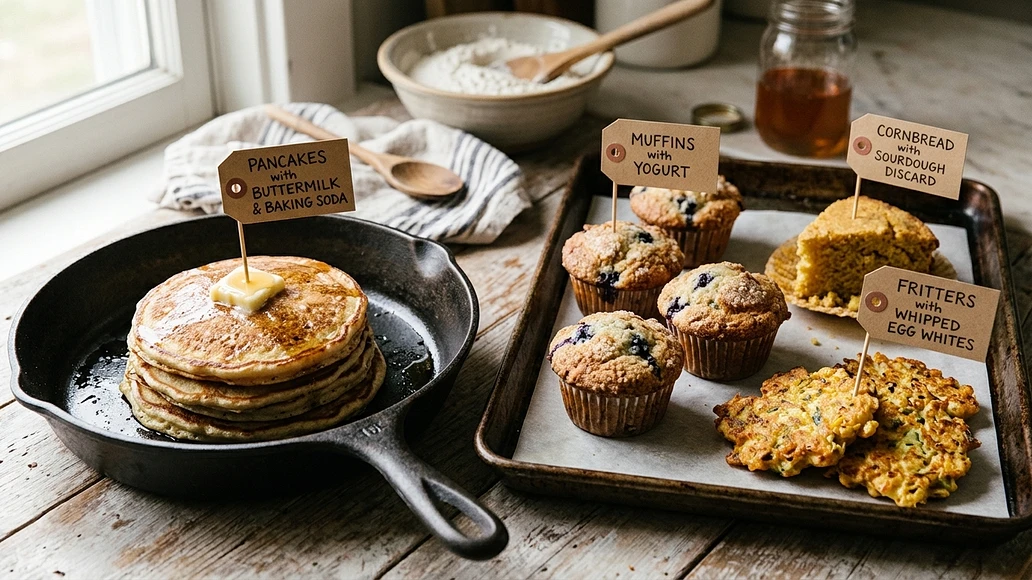
| Pancakes | Baking powder | Club soda plus whipped egg whites | Good lift, softer crumb |
| Banana bread | Baking powder | Self-rising flour | May be a bit denser, less dark crust |
| Cornbread | Baking powder | Self-rising flour | Still rises well, flavor may be slightly less balanced if acidic dairy is present |
| Sponge cake | Whipped egg whites | Baking powder | Light texture possible, but technique matters |
| Savory fritters | Baking powder | Club soda | Good puff, lighter interior |
Cookies
Cookies are where baking soda's pH effect really shows. If you use baking powder instead, expect less browning and less spread. Potassium bicarbonate is often the closest match if you have it. For crisp, dry cookies, baker's ammonia can be excellent.
Muffins and quick breads
Baking powder is usually the safest substitute. These recipes are forgiving enough that the 3 to 1 ratio often works well. Self-rising flour can also help if the recipe is flour-heavy and simple.
Pancakes and waffles
Baking powder is the top choice. Club soda can improve fluffiness if you need extra help. Whipped egg whites are useful when you want a lighter, airier result.
Banana bread and cornbread
Both usually do well with baking powder. If the recipe contains buttermilk or yogurt, the flavor may be a little tangier without baking soda's neutralizing effect. The loaf may also brown a bit less.
Savory batters and fritters
Baking powder works well in corn fritters, onion rings, and simple vegetable batters. Club soda is especially helpful when crispness and lightness matter.
Core substitution ratios and adjustments
| Substitute | Ratio vs 1 teaspoon baking soda | Best recipe types | Main adjustment needed |
|---|---|---|---|
| Baking powder | 3 teaspoons | Muffins, pancakes, quick breads, cakes | May need less acid, expect less browning |
| Potassium bicarbonate | 1 teaspoon | Most sweet baked goods | Add about 1/3 teaspoon salt if needed |
| Self-rising flour | Not direct, use in place of regular flour | Muffins, biscuits, pancakes, quick breads | Reduce added salt and other leaveners |
| Whipped egg whites | Not direct | Sponge cakes, airy pancakes | Fold gently, bake immediately |
| Club soda | Not direct, replace part of liquid | Pancakes, waffles, fritters | Use fast before bubbles fade |
| Baker's ammonia | Often 1 teaspoon | Dry cookies, crackers | Do not use in moist bakes |
Food-safe substitutes versus cleaning-only products
One of the biggest mistakes is assuming that anything with the word soda in the name can replace baking soda in food. That is not true.
| Product | Food-safe? | Typical use | Safety note |
|---|---|---|---|
| Baking soda, sodium bicarbonate | Yes | Baking, deodorizing, mild cleaning | Safe in normal recipe amounts |
| Baking powder | Yes | Leavening in baking | Best common substitute for baking soda |
| Potassium bicarbonate | Yes | Low-sodium baking | Use caution if potassium restriction applies |
| Self-rising flour | Yes | Baking | Contains wheat and usually salt |
| Vinegar | Yes | Cooking, cleaning | Not a direct baking soda substitute by itself |
| Washing soda, sodium carbonate | No for home recipe substitution | Laundry and heavy cleaning | Too alkaline, not interchangeable in food |
| Borax | No | Household cleaning | Not for food use |
| Soda ash | No for home recipe substitution | Industrial and specialty uses | Do not use as a home baking substitute |
What to use instead for cleaning and deodorizing
If your goal is not baking but cleaning, the substitute depends on the job.
| Task | Possible substitute | How well it replaces baking soda | Notes |
|---|---|---|---|
| Deodorizing sink or trash can | Vinegar rinse, soap and hot water | Partial | Good for odor reduction, different mechanism |
| Scrubbing stovetop or sink | Mild abrasive cleaner | Good | Choose surface-safe products |
| Laundry boost | Washing soda | Good for laundry only | Not food-safe |
| General kitchen wipe-down | Diluted vinegar or dish soap solution | Good | Do not mix cleaners carelessly |
Keep food substitutes and cleaning substitutes separate in storage so there is no chance of a dangerous mix-up.
Low-sodium considerations and label reading
If you are trying to reduce sodium, baking soda and baking powder are not identical choices. Baking powder usually contains sodium too, and self-rising flour adds both leavening and salt. Potassium bicarbonate can lower sodium, but it is not automatically the best fit for every person.
| Ingredient | Typical sodium impact | Why it matters | Key caution |
|---|---|---|---|
| Baking soda | High sodium for a small amount | Can add up in frequent baking | Watch intake on sodium-restricted diets |
| Baking powder | Moderate to high, varies by brand | Often used in larger amounts than baking soda | Check label, sodium-free versions exist |
| Potassium bicarbonate | Very low sodium | Useful sodium alternative | Not ideal for people who must limit potassium |
| Self-rising flour | Includes sodium from salt and leavening | Can quietly increase total sodium | Adjust added salt elsewhere |
For people with hypertension, heart failure, kidney disease, or medically prescribed sodium limits, reading the nutrition label matters more than relying on a generic substitution chart.
When you should not improvise
Some recipes are forgiving. Others are not. Avoid casual substitutions when:
- the recipe is a delicate cake with a very fine crumb
- the bake is gluten-free and already structurally fragile
- the formula depends on a strong acid-alkali reaction for both rise and flavor
- you are tempted to use washing soda, borax, or soda ash in food
If the recipe uses only a tiny amount of baking soda and has another leavener present, you may be able to continue with a minor quality loss. If baking soda is the main leavener, skipping it entirely usually leads to a flatter, denser result.
Troubleshooting after a substitution
| Problem | Likely cause | What to change next time |
|---|---|---|
| Flat or dense bake | Too little leavening, weak substitute, old baking powder | Use fresh leavener, follow ratio more closely, bake immediately |
| Pale crust | Lost baking soda's browning effect | Use potassium bicarbonate if available, or accept lighter color |
| Cookies did not spread | Baking powder used instead of baking soda | Slightly flatten dough before baking, or use a closer substitute next time |
| Metallic or bitter taste | Too much baking powder or poor acid balance | Measure carefully and review acidic ingredients |
| Tangy flavor | Acidic ingredients not balanced by baking soda | Reduce buttermilk, yogurt, or vinegar slightly next time |
Pantry planning for future shortages
If you bake regularly or keep a preparedness pantry, a small backup system prevents last-minute frustration.
| Item | Why keep it | Best storage habit | Useful for |
|---|---|---|---|
| Baking powder | Most versatile emergency leavener | Cool, dry, tightly sealed | Pancakes, muffins, cakes, quick breads |
| Potassium bicarbonate | Closest low-sodium substitute | Dry airtight container | Cookies and general baking |
| Self-rising flour | Fast fix for flour-heavy recipes | Rotate regularly, protect from moisture | Biscuits, muffins, pancakes |
| Cream of tartar | Useful for other baking adjustments | Dry pantry shelf | Meringues, stabilizing egg whites |
| Buttermilk powder | Adds acidity and flavor when needed | Follow package storage guidance | Pancakes, biscuits, quick breads |
To test baking powder, stir a little into hot water. It should bubble actively. To test baking soda itself, add a little vinegar. If the reaction is weak, replace it.
About drinking baking soda for heartburn or detox claims
Baking soda is widely used in food, but that does not make it a safe home remedy in large or repeated doses. Drinking baking soda for indigestion, detox, alkalizing, urinary issues, or disease prevention can be risky. Reported problems include electrolyte imbalance, metabolic alkalosis, high sodium intake, and serious stomach complications.
Children should not be given baking soda as an antacid unless specifically directed by a medical professional. Adults with high blood pressure, heart failure, kidney disease, pregnancy-related concerns, or sodium restrictions should be especially cautious.
If you have persistent heartburn, chest pain, trouble swallowing, vomiting, black stools, or digestive discomfort lasting more than two weeks, contact a healthcare professional rather than self-treating with baking soda.
FAQ
What is the best substitute for cookies if I only have baking powder?
Use 3 teaspoons of baking powder for every 1 teaspoon of baking soda. The cookies will usually be a little thicker, lighter in color, and less crisp at the edges, but still very bakeable.
Can I skip baking soda entirely?
Sometimes, but only if the recipe has another source of lift or uses a very small amount. Expect less rise, less browning, and a denser texture. If baking soda is the main leavener, skipping it usually hurts the result.
Is it safe to use soda ash or washing soda instead of baking soda in food?
No. They are not interchangeable home food substitutes. Washing soda and soda ash are much more alkaline and are meant for cleaning or specialized industrial uses, not casual recipe swaps.
What can I use instead of baking soda for cleaning my kitchen?
For many jobs, diluted vinegar, dish soap, or a mild abrasive cleaner can work. Choose the substitute based on the task, and keep cleaning products completely separate from food ingredients.
How much baking soda is safe to consume, and when should I call a doctor?
Normal recipe amounts used in food are generally considered safe for most people. Large or repeated medicinal use is different and can be dangerous. Seek medical help for persistent heartburn, chest pain, trouble swallowing, severe stomach pain, or symptoms that last more than two weeks.