Charcoal and Cuts, What Helps, What Hurts, and What Belongs in a Real First Aid Kit
Activated charcoal has a place in medicine, but not in the way many preparedness articles suggest. Here is what charcoal wound dressings may do, where DIY use becomes risky, and how to handle minor wounds safely at home.

Activated charcoal has a strong reputation in preparedness circles, but its real role in wound care is narrower than many people think. In medicine, charcoal is best known for selected poisoning cases under professional supervision. In wound care, the more promising use is not loose powder from a capsule, but specific medical dressings made with activated carbon cloth. Those products may help manage odor and excess drainage in some chronic wounds, yet they are not a cure and they do not replace cleaning, pressure, moisture balance, antibiotics when needed, or medical evaluation.
This article is for general information only and is not a substitute for professional medical advice or emergency care. If a wound is deep, heavily contaminated, keeps bleeding, shows infection, or involves someone with diabetes, poor circulation, or immunosuppression, get medical help.
What activated charcoal actually is
Activated charcoal is a form of carbon processed to create a very large surface area. That surface can adsorb certain substances, meaning particles stick to the charcoal's surface. This is different from absorb, which means soaking something up into the material itself. That distinction matters because many popular claims about charcoal use the wrong idea and overpromise what it can do.
There are also major differences between charcoal products. Medical oral charcoal used in toxicology is not the same as cosmetic charcoal masks. Medical wound dressings that contain activated carbon cloth are not the same as opening a supplement capsule and sprinkling black powder into a cut. Sterility, material structure, and intended use all matter.
The only clearly proven medical use, poisoning care under supervision
The strongest evidence for activated charcoal is in selected poisonings and overdoses, usually when given within a limited time window and only when clinicians decide it is appropriate. It is not a general detox product, and it is not recommended for routine home treatment after a suspected poisoning. Some substances do not respond well to charcoal, and giving it to a person who is vomiting, drowsy, or unable to protect their airway can be dangerous.
If someone may have swallowed a poison or overdosed, call 911 or Poison Control right away instead of trying to treat it yourself with charcoal at home.
Can charcoal help a wound heal?
The honest answer is, sometimes as an adjunct, but the evidence is limited. Small studies and case series suggest that activated carbon cloth dressings may help certain chronic wounds by managing odor, handling excess exudate, and supporting a better wound environment. That can improve comfort and may help healing progress in some cases. Still, this is not the same as proving that generic charcoal powder speeds healing in everyday cuts and scrapes.
For minor acute wounds, the basics still matter most. Clean water, gentle irrigation, bleeding control, a clean dressing, and watching for infection are more evidence-based than improvised charcoal use. If charcoal helps at all in this setting, it is more likely to help with symptoms such as moisture or odor than to directly close the wound faster.
| Use or claim | Evidence level | Typical setting | Main benefit | Main risks or limits |
|---|---|---|---|---|
| Oral activated charcoal for selected poisoning or overdose | Well supported | Hospital or poison center guided care | Can reduce absorption of certain toxins from the gut | Not for unsupervised home use, timing and toxin type matter |
| Activated carbon cloth dressings for chronic wounds | Emerging but limited | Clinical wound care, chronic ulcers, odor control | May reduce odor and exudate, may support wound environment | Adjunct only, does not fix infection, poor circulation, or tissue death |
| Loose activated charcoal powder on minor open wounds | Weak or mixed | DIY home use | Possible moisture or odor control | Contamination, irritation, delayed proper care, difficult wound cleaning |
| Charcoal as an antimicrobial cure | Mixed | Marketing claims and extrapolation | May assist the wound environment in some products | Does not replace antibiotics, debridement, or source control |
| Charcoal detox for skin or body | Weak to unsupported | Supplements and cosmetic products | Mostly marketing appeal | Can mislead users and cause irritation or medication interference |
Medical charcoal dressings versus DIY charcoal poultices
This is the distinction many articles miss. Medical charcoal dressings are designed for wound care. They are manufactured for contact with skin, often layered with other dressing materials, and intended to manage drainage and odor while fitting into a broader wound-care plan. Improvised charcoal powder is a different thing entirely.
Opening capsules, crushing tablets, or using non-medical charcoal on an open wound can introduce particles and contaminants. It may also make later cleaning harder, especially if the wound needs professional assessment. In a preparedness context, the safer takeaway is not to improvise with random charcoal, but to understand where a sealed, medical-grade charcoal dressing might fit as an optional tool.
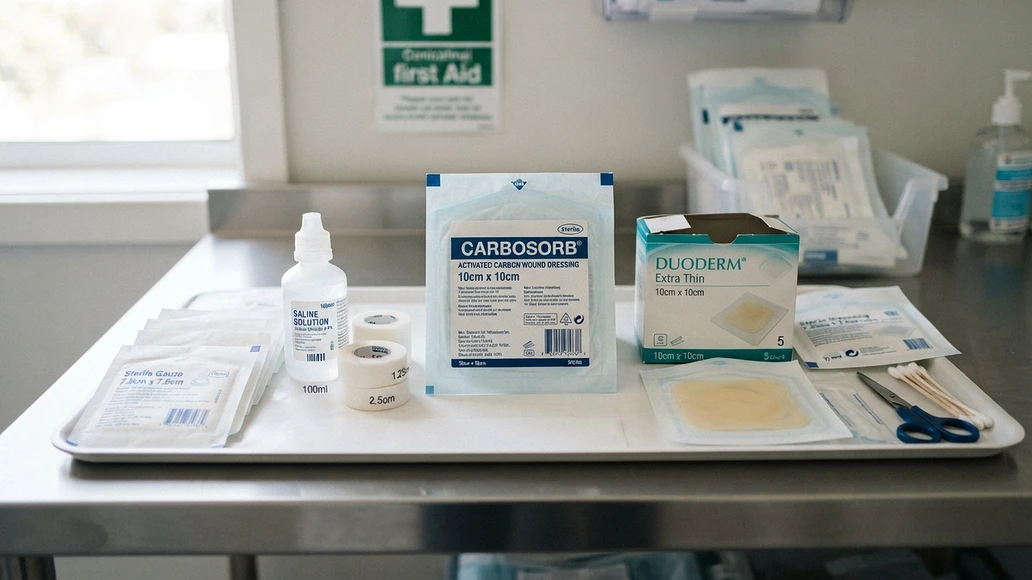
What charcoal may do in wound care, and what it does not do
Activated carbon dressings may help by adsorbing odor-causing compounds and handling some wound drainage. In chronic wounds, especially those that are difficult to manage, that can improve comfort, reduce distress, and support a cleaner dressing environment.
What charcoal does not do is just as important. It does not reliably sterilize a wound. It does not close a deep cut. It does not reverse poor blood flow. It does not remove all toxins from tissue in the popular sense. It does not replace debridement, irrigation, tetanus review, antibiotics when indicated, or evaluation for stitches.
Basic wound care comes first
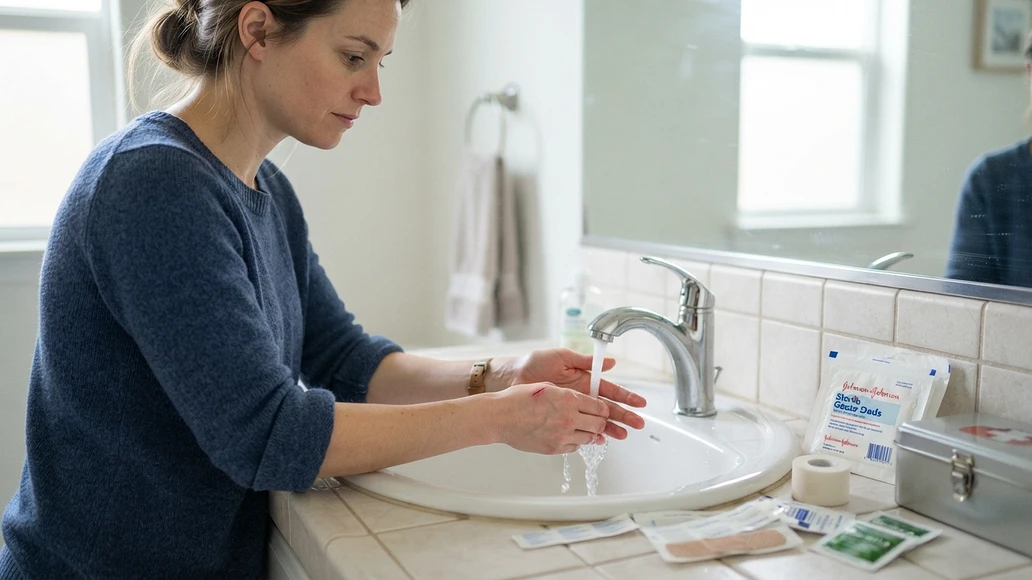
If you are dealing with a minor cut, scrape, or shallow abrasion at home, start with standard care before thinking about specialty dressings.
- Wash your hands or use clean gloves if available.
- Apply firm pressure with clean gauze or cloth to stop bleeding.
- Rinse the wound gently with clean running water or sterile saline. Remove visible dirt with clean tweezers if needed.
- Pat the surrounding skin dry. Do not scrub the wound bed aggressively.
- Apply a simple clean dressing that protects the area and maintains a slightly moist healing environment.
- Change the dressing as needed, especially if it becomes wet, dirty, or loose.
- Watch daily for increasing redness, swelling, warmth, pus, bad odor, fever, or worsening pain.
For most minor wounds, this straightforward approach is more important than adding charcoal. If you do keep charcoal dressings in a kit, think of them as optional and situation-specific, not as a first-line answer for every injury.
When a charcoal dressing may be reasonable
A charcoal-based dressing may be worth considering when the issue is persistent odor or moderate drainage, especially in a chronic wound being monitored as part of an overall care plan. In a preparedness kit, it can make sense as an extra item for households caring for an older adult or someone with a history of chronic leg or foot wounds, but it should not crowd out more basic supplies.
| Wound situation | Could a charcoal dressing help? | Why or why not | Better priority |
|---|---|---|---|
| Small clean kitchen cut | Usually no | Standard cleansing and a simple dressing are enough | Gauze, bandages, saline, pressure |
| Shallow scrape with mild drainage | Usually no | No strong evidence it heals faster than standard care | Cleaning, nonstick dressing, monitoring |
| Chronic wound with odor | Possibly yes | Charcoal dressings may help adsorb odor and manage exudate | Medical oversight, moisture balance, offloading, circulation care |
| Deep puncture wound | No | High infection risk and possible retained debris | Prompt medical evaluation |
| Burn, exposed tendon, or heavily contaminated wound | No | Needs professional wound management | Urgent care or emergency care |
Safer low-tech alternatives and adjuncts
People often search for charcoal because they want a practical, low-tech option. That is understandable. But several other wound approaches have stronger support or clearer roles.
| Dressing or approach | Best use | Evidence strength | Main advantage | Main caution |
|---|---|---|---|---|
| Sterile gauze and nonstick pads | Most minor wounds | Strong practical standard | Simple, available, low risk | Needs regular changes and proper cleaning |
| Hydrocolloid dressings | Clean shallow wounds, blisters | Good for selected uses | Maintains moisture balance | Not ideal for infected or heavily draining wounds |
| Medical honey dressings | Some superficial or chronic wounds | Moderate | Moist environment, possible antimicrobial support | Use medical-grade products, not kitchen honey in serious wounds |
| Silver dressings | Selected higher-risk wounds | Moderate in specific settings | Can help manage bioburden | Best used with guidance, not for every wound |
| Chitosan-based dressings | Bleeding control and wound support | Promising | Hemostatic and bioactive potential | Availability and product quality vary |
| Gelatin or advanced bioactive dressings | Specialized wound care | Promising to moderate | Can support healing environment | Less practical for most home kits |
| Activated carbon cloth dressings | Odorous or draining chronic wounds | Limited but promising | Odor and exudate management | Adjunct only, not a cure or substitute for standard care |
Topical charcoal and oral charcoal are not interchangeable
This point deserves repetition because confusion here can become dangerous. Topical charcoal products are meant for skin or dressings. Oral activated charcoal is a poison-management tool used only in selected cases. Taking charcoal pills after an injury, surgery, or illness will not help your body heal faster. It may interfere with medications and nutrient absorption, and it can cause vomiting, constipation, black stools, and in rare cases bowel complications.
Charcoal also does not perform a whole-body detox in the way wellness marketing suggests. If a wound is infected, the answer is not to swallow charcoal. The answer is proper wound care and medical evaluation when needed.
Who should avoid DIY charcoal wound treatments
Some people have much less room for error with wounds. Children, older adults, pregnant people, and anyone with diabetes, peripheral vascular disease, kidney disease, neuropathy, or immunosuppression should be especially cautious. In these groups, a wound that looks minor can worsen quickly, and delayed treatment can have serious consequences.
Cosmetic charcoal masks, scrubs, and peel-off products should never be used on broken skin or active wounds. They are not wound dressings and may irritate tissue or damage the skin barrier.
When to stop home care and get help
| Problem | Reason it matters | What to do |
|---|---|---|
| Bleeding that does not stop after 10 to 15 minutes of firm pressure | May need closure or further treatment | Seek urgent medical care |
| Deep, gaping, or longer wound edges | May need stitches or advanced cleaning | Get evaluated promptly |
| Puncture wound, animal bite, or soil contamination | Higher infection and tetanus risk | Seek medical advice the same day |
| Spreading redness, warmth, swelling, pus, foul odor, fever | Possible infection | Seek prompt medical care |
| Burns, exposed bone, tendon, or severe tissue damage | Complex wound management required | Urgent or emergency care |
| No improvement over 7 to 14 days | May signal poor healing or underlying disease | Schedule medical evaluation |
| Any concerning wound in a person with diabetes or poor circulation | High complication risk | Get early professional care |
What to put in a practical wound care kit
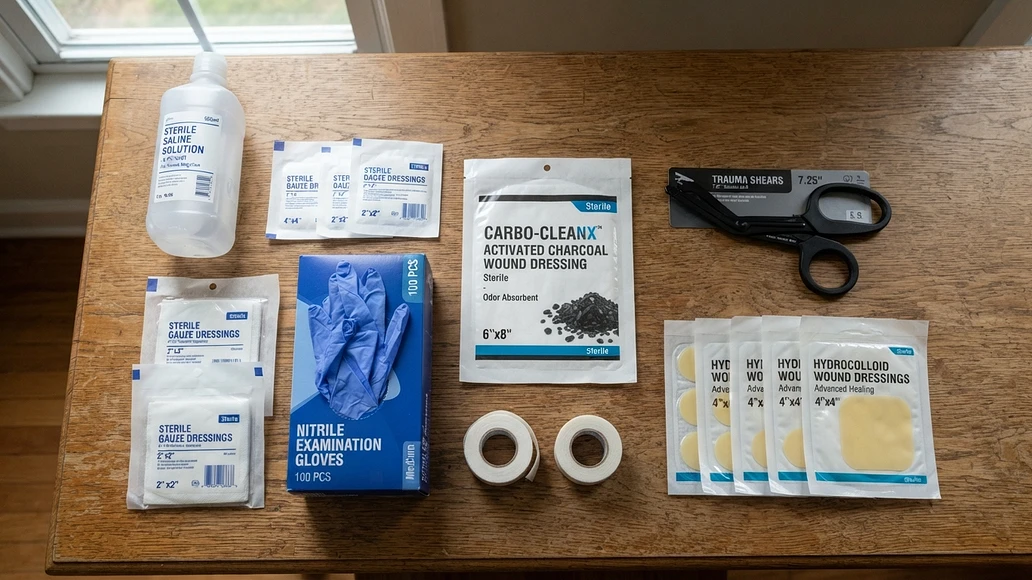
If your goal is preparedness, build around proven basics first. A strong home kit should prioritize irrigation, bleeding control, clean dressings, and infection awareness. Charcoal dressings can be an optional add-on, not the foundation.
| Kit item | Why it matters | Priority level |
|---|---|---|
| Clean water or sterile saline | Essential for rinsing debris from wounds | High |
| Sterile gauze and nonstick pads | Core dressing supplies for most injuries | High |
| Medical tape and wrap | Secures dressings in place | High |
| Gloves | Reduces contamination during care | High |
| Tweezers and small scissors | Helps remove visible debris and cut dressings | High |
| Antiseptic suitable for surrounding skin | Supports cleaner wound care routine | Medium |
| Hydrocolloid or blister dressings | Useful for selected shallow wounds and friction injuries | Medium |
| Medical honey or silver dressing | Optional adjuncts for specific situations | Medium |
| Activated carbon wound dressing | Optional for odor or exudate management in chronic wounds | Low to medium |
How to choose a charcoal product, if you want one
Look for a product specifically labeled for wound dressing or medical use, not a beauty mask, supplement capsule, aquarium product, or generic bulk powder. Sealed packaging, clear instructions, and a reputable manufacturer matter. In a preparedness setting, shelf stability and intact packaging are part of safety. If the package is damaged or the product is not clearly intended for wound care, do not improvise with it on open tissue.
Common myths about charcoal and wound healing
Myth, charcoal pulls infection out of a wound
Charcoal may adsorb some compounds and help with odor, but it does not reliably remove an established infection. Infected wounds need proper assessment and sometimes antibiotics, drainage, or debridement.
Myth, if a little charcoal helps, more is better
More is not better. Loose powder can complicate cleaning, irritate tissue, and distract from basic wound care.
Myth, charcoal is natural, so it is automatically safe
Natural does not mean sterile, appropriate, or low-risk. Open wounds are vulnerable to contamination and delayed treatment.
Myth, taking charcoal pills after an injury speeds recovery
There is no good evidence for that. Oral charcoal can interfere with medications and should not be used as a wellness shortcut.
FAQ
Can I sprinkle activated charcoal from a capsule directly onto a cut or scrape?
It is not a good idea. Capsule powder is not the same as a sterile wound dressing, and it may introduce contaminants or leave particles that make the wound harder to assess and clean. For a minor cut or scrape, rinse well, control bleeding, and use a clean standard dressing.
Is it safe to use activated charcoal on a wound for my child or an older relative?
Extra caution is warranted. Children and older adults can have more fragile skin or higher risk from delayed treatment. If you are considering charcoal for anything beyond a very minor issue, use a medical-grade product only and seek professional advice early. Avoid DIY charcoal applications.
Will activated charcoal remove toxins or infection from a wound on its own?
No. That is a popular claim, not a reliable medical effect. Charcoal dressings may help with odor and drainage, but they do not replace cleaning, infection control, or treatment of the underlying cause.
What kind of charcoal wound dressings should I look for if I want to add them to my emergency kit?
Choose sealed products clearly intended for wound care, ideally activated carbon or activated carbon cloth dressings from established medical suppliers. Avoid cosmetic charcoal products and loose powders. Keep them as optional adjuncts, not as your main wound-care strategy.
Can I take activated charcoal pills after an injury or surgery to help my body heal faster?
No. There is no established benefit for healing, and oral charcoal can interfere with medications, including important prescriptions. After injury or surgery, follow your clinician's instructions instead.
References
- Activated Charcoal, StatPearls, NCBI Bookshelf
- Activated Charcoal, Benefits, Uses and Risks, WebMD
- Application of 100% Activated Carbon Cloth Dressings in Patients With Chronic Wounds, Wounds International
- Charcoal, Activated Monograph for Professionals, Drugs.com
- Canadian Antidote Guide, Activated Charcoal
- Therapeutic Potential of Chitosan-Based and Related Wound Dressings, PMC
- Important Warning, Why Your Doctor Monitors Activated Charcoal Use