Activated Charcoal for Wound Care, What Helps, What Does Not, and When to Skip DIY
Activated charcoal has a real medical role, but not in the way many preparedness articles suggest. Learn where charcoal dressings may help, why improvised powders are risky, and how to handle minor wounds safely at home.

Activated charcoal has a strong reputation in preparedness circles, but its best proven medical use is not wound healing. In modern medicine, activated charcoal is mainly used for selected poisonings under professional supervision. For wounds, the picture is much narrower. Some medical-grade activated carbon dressings may help manage odor and drainage in certain chronic wounds, but that is very different from sprinkling charcoal powder from a capsule onto a fresh cut.
This article is for general information only and is not a substitute for professional medical advice or emergency care. If a wound is deep, dirty, heavily bleeding, infected, or not healing, get medical help.
What activated charcoal is, and how it actually works
Activated charcoal is a specially processed form of carbon with a very large surface area. Its main action is adsorption, which means substances stick to its surface. That is different from absorption, where a substance is taken inside another material.
That sticky surface is why activated charcoal can sometimes bind certain toxins in the gut after a poisoning. In wound care, the same adsorptive property may help manage odor and excess moisture in some dressings. It does not magically pull infection out of tissue, and it does not repair damaged skin on its own.
Medical, cosmetic, and DIY charcoal are not the same thing
One of the biggest sources of confusion is that the word charcoal gets used for very different products. Medical-grade activated carbon dressings are manufactured for wound care. Cosmetic charcoal masks are made for intact skin, not open injuries. Loose charcoal powder from capsules or bulk containers is not the same as a sterile wound dressing.
| Product type | Typical use | Can it go on an open wound? | Main concern |
|---|---|---|---|
| Medical-grade activated carbon dressing | Odor and exudate management in selected wounds | Sometimes, if used as directed | Should be used appropriately and not as a substitute for full wound care |
| Oral activated charcoal | Selected poisonings in clinical care | No | Dangerous to confuse with topical use |
| Cosmetic charcoal mask or scrub | Skin care on intact skin | No | Can irritate or damage broken skin |
| DIY charcoal powder from capsules or homemade sources | Improvised use | Not recommended | Contamination, foreign particles, delayed proper care |
The only clearly proven medical use, poisoning and overdose care
Activated charcoal does have a legitimate place in medicine, but it is for selected poisonings and overdoses, usually in a hospital or poison control guided setting. Timing matters, the substance swallowed matters, and the patient's airway and gut function matter. It is not a general home detox tool.
If someone may have swallowed a poison or overdosed, do not self-treat with charcoal at home. Call 911 or Poison Control right away. In the United States, Poison Control is available at 1-800-222-1222.
| Use of activated charcoal | Evidence level | Typical setting | Key risks or limits |
|---|---|---|---|
| Oral use for selected acute poisonings | Well supported | Hospital or poison control guided care | Wrong timing or wrong poison can make it ineffective or unsafe |
| Topical carbon dressings for chronic wound odor and drainage | Emerging but limited | Wound care settings, sometimes home care with guidance | Adjunct only, does not fix underlying disease |
| Loose charcoal powder on minor fresh wounds | Weak or mixed | DIY use | Contamination, irritation, delayed care |
| Charcoal detox for skin or body wellness | Poor support | Consumer wellness market | Misleading claims, skin irritation, drug and nutrient interference if swallowed |
| Long-term oral charcoal supplements | Not recommended | Wellness use | Constipation, bowel issues, medication and nutrient malabsorption |
Can charcoal help a wound heal, what the evidence really shows
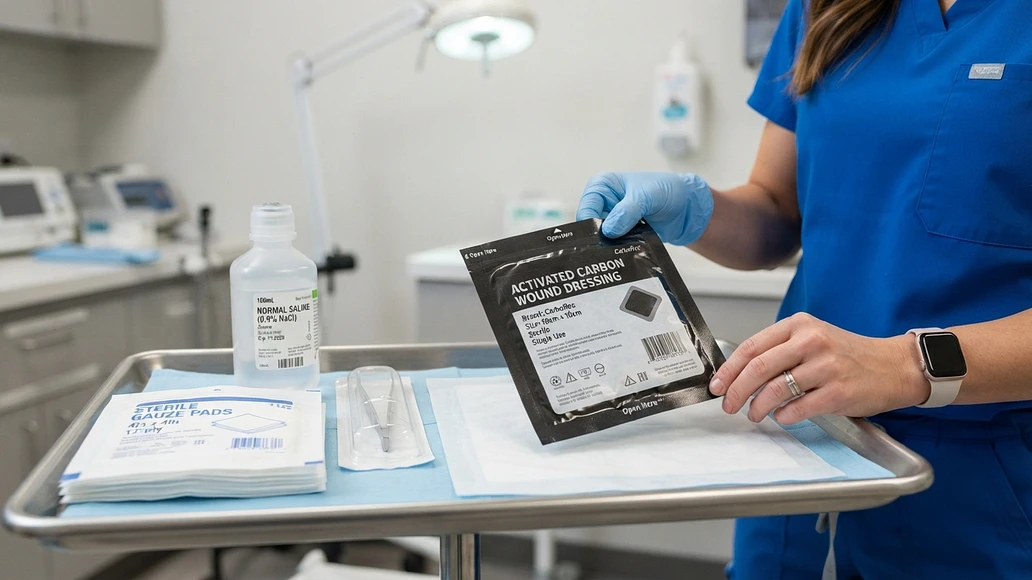
The most relevant evidence for wound care involves activated carbon cloth dressings, not random charcoal powder. Small studies and case series suggest these dressings may help with odor control, drainage management, and the wound environment in some chronic wounds, including difficult leg ulcers. That can make care easier and may support healing as part of a larger treatment plan.
What that evidence does not show is that generic charcoal powder reliably speeds healing in everyday cuts and scrapes. It also does not show that charcoal replaces cleaning, debridement, pressure relief, blood sugar control, antibiotics, or circulation treatment.
What charcoal may do in wound care
In the right product, charcoal may adsorb odor-causing compounds and some excess exudate. In practical terms, that means a wound may smell less and the surrounding skin may stay drier. For chronic wounds with persistent drainage, that can be useful.
What charcoal does not do
Charcoal does not sterilize a wound in any dependable way. It does not close deep tissue gaps. It does not reverse poor circulation. It does not remove all toxins from tissue. It does not replace antibiotics when infection is present.
Activated charcoal dressings versus DIY charcoal poultices
This is the distinction many articles miss. Medical dressings are designed for contact with wounds. They are manufactured to a standard, packaged for cleanliness, and meant to work with other dressing layers. A homemade poultice or powder mix does not offer those safeguards.
| Feature | Medical-grade carbon dressing | DIY charcoal powder or poultice | Why it matters |
|---|---|---|---|
| Sterility or cleanliness standard | Manufactured for medical use | Often uncertain | Open wounds are vulnerable to contamination |
| Particle control | Contained within dressing material | Loose particles may remain in wound | Foreign material can complicate cleaning and healing |
| Intended purpose | Odor and exudate management in wounds | Improvised use | Claims often exceed evidence |
| Ease of removal | Designed to be changed as a dressing | Can stick, smear, or leave residue | Trauma during dressing changes can slow healing |
| Evidence base | Limited but relevant clinical use | Very limited for open wounds | Not all charcoal products can be treated as equivalent |
Basic wound care comes first, before you even think about charcoal
For most minor cuts and scrapes, the basics matter far more than charcoal. Good wound healing depends on cleaning, moisture balance, protection, and watching for infection.
- Stop the bleeding. Apply firm direct pressure with clean gauze or cloth.
- Rinse the wound. Use clean running water or sterile saline to flush out dirt and debris.
- Clean the surrounding skin. Wash nearby skin gently with soap and water, but do not scrub deep into the wound.
- Remove obvious debris if easy to reach. Use clean tweezers if needed. If debris is embedded, seek care.
- Apply a suitable dressing. A simple nonstick dressing or sterile gauze is often enough for a minor wound.
- Keep it slightly moist, not soggy. A protected moist environment usually heals better than letting a wound dry into a hard scab.
- Change the dressing as needed. Replace it when wet, dirty, or loose.
- Monitor daily. Watch for redness, warmth, swelling, worsening pain, pus, bad odor, or fever.
If you are in a remote or survival setting, clean water, pressure control, and a clean dressing are still your priorities. Improvised substances should be a last resort, not a first choice.
When a charcoal-based dressing may be reasonable in a preparedness kit
For a general home first aid kit, charcoal dressings are optional, not essential. If you want them, the most sensible role is as an adjunct for wounds with persistent odor or drainage, especially in longer-term care situations. They make more sense in an advanced home care kit than in a basic everyday first aid pouch.
They are not the first thing to reach for in a fresh kitchen cut, a puncture wound, or a dirty outdoor injury.
| Situation | Could a charcoal dressing help? | Better first priority | Notes |
|---|---|---|---|
| Minor clean cut or scrape | Usually unnecessary | Rinsing, pressure, simple sterile dressing | Standard care is usually enough |
| Chronic wound with odor or heavy drainage | Possibly, as an adjunct | Medical evaluation, moisture control, cause-specific care | Most useful role for carbon dressings |
| Deep puncture wound | No | Cleaning, tetanus review, medical assessment | High infection risk |
| Burn | No, unless directed by a clinician | Cool running water, burn-appropriate care | Burns need specific management |
| Heavily contaminated wound | No | Thorough irrigation and medical care | Debridement may be needed |
| Wound with exposed tendon or bone | No | Urgent medical care | Not a DIY situation |
Safer alternatives and adjuncts worth knowing
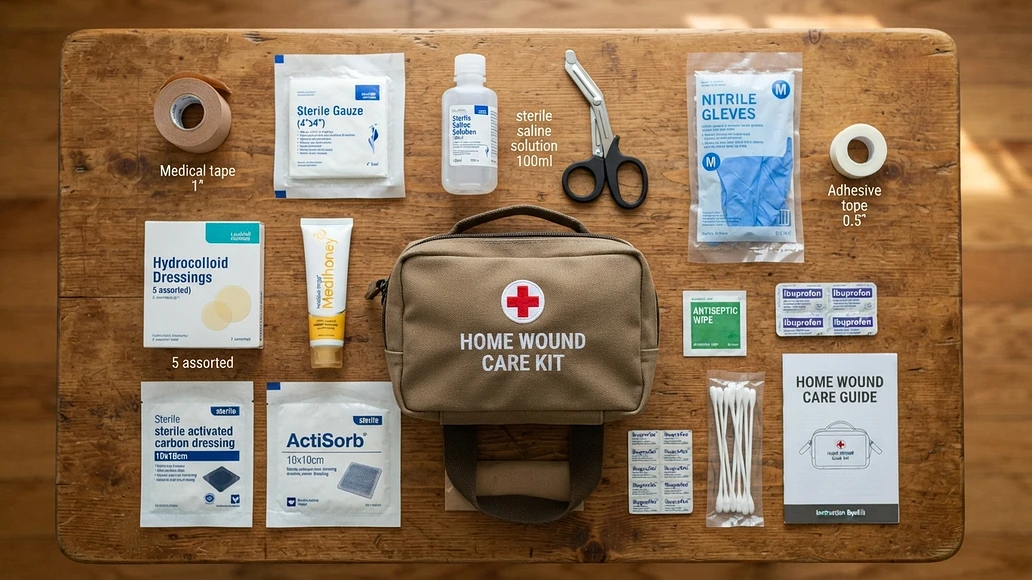
If your goal is practical wound care with a preparedness mindset, there are other options with clearer roles than loose charcoal powder. Some are simple and widely available. Others are more specialized.
| Dressing or approach | Main purpose | Evidence strength | Preparedness value |
|---|---|---|---|
| Sterile gauze and nonstick pads | Protection and absorption | Strong for basic wound care | Essential |
| Hydrocolloid dressings | Moist healing environment for selected minor wounds | Good for appropriate uses | Very useful in home kits |
| Medical honey dressings | Moisture balance and some antimicrobial support | Moderate and practical | Useful adjunct if properly sourced |
| Silver dressings | Antimicrobial support in selected wounds | Mixed to moderate depending on case | More specialized |
| Chitosan-based dressings | Hemostasis and wound support | Promising | Useful if you understand indications |
| Gelatin or advanced hydrogel systems | Moisture support and tissue-friendly coverage | Promising to good depending on product | More advanced option |
| Activated carbon dressings | Odor and exudate control | Limited but promising in chronic wounds | Optional adjunct, not a core item |
Topical charcoal and oral charcoal are not interchangeable
This is worth repeating because confusion here can be dangerous. A charcoal dressing for a wound and activated charcoal taken by mouth are completely different uses. Swallowing charcoal after an injury will not make skin heal faster. It can interfere with medications, cause constipation, and create false reassurance.
Likewise, opening oral charcoal capsules and dumping them into a wound does not turn them into a medical dressing.
| Type | How it works | Appropriate use | Main risks |
|---|---|---|---|
| Topical activated carbon dressing | Adsorbs odor and some exudate at wound surface | Selected wound care situations | Misuse on the wrong wound, delayed proper treatment |
| Oral activated charcoal | Binds certain toxins in the gut | Selected poisonings under supervision | Aspiration, vomiting, constipation, medication interference |
Who should avoid DIY charcoal wound treatments
Some people have a much lower margin for error with wound care. In these groups, experimental home treatment is a bad trade.
| Group | Why extra caution is needed | Best approach |
|---|---|---|
| Children | Smaller bodies, harder assessment, faster dehydration or infection complications | Use standard wound care and seek pediatric advice sooner |
| Older adults | Fragile skin, slower healing, more chronic disease | Keep care simple and monitor closely |
| People with diabetes | Higher infection risk and impaired healing, especially on feet | Get early medical evaluation for concerning wounds |
| People with poor circulation or vascular disease | Reduced blood flow can prevent healing | Address circulation issues, not just the surface wound |
| Immunosuppressed people | Infections can worsen quickly | Low threshold for professional care |
| Pregnant people considering oral charcoal | Medication and nutrient concerns, poisoning care needs supervision | Do not self-treat, contact emergency services or poison control |
When to stop home treatment and get medical help
Preparedness is about knowing your limits, not pretending every problem is a DIY problem. Seek urgent care if any of the following apply.
| Wound problem | Home care may be reasonable? | When to seek medical help |
|---|---|---|
| Small, shallow, clean cut | Yes | If it keeps reopening, becomes infected, or does not improve |
| Bleeding that stops with pressure | Yes | If bleeding restarts easily or the wound gapes widely |
| Bleeding that does not stop after 10 to 15 minutes of firm pressure | No | Get urgent care |
| Deep puncture wound | Usually no | Prompt evaluation is wise |
| Dirty wound with soil, rust, animal bite, or embedded debris | Often not enough | Seek care for cleaning, tetanus review, and infection prevention |
| Spreading redness, warmth, swelling, pus, foul odor, fever | No | Possible infection, get evaluated |
| Wound not improving after 7 to 14 days | No | Needs medical assessment, especially on legs or feet |
| Exposed bone, tendon, or large tissue gap | No | Emergency care |
Common myths about charcoal in first aid and wellness
Myth, charcoal draws toxins out of any wound
Reality, charcoal may adsorb some substances at the surface, but that is not the same as removing infection or toxins from living tissue in a medically meaningful way.
Myth, if charcoal helps poisonings, it must help healing when swallowed
Reality, oral charcoal works in the gut for selected toxins. It does not speed tissue repair after an injury.
Myth, natural means safe
Reality, contamination, delayed treatment, and misuse can make a natural remedy less safe than standard care.
Myth, any charcoal product is good enough
Reality, a medical dressing is not the same as a cosmetic mask, grill charcoal, or powder from an unlabeled supplement.
How to build a practical wound care kit for emergencies
If you are stocking a home or bug-in medical kit, focus first on items with broad usefulness and a clear evidence base. Charcoal dressings belong near the end of the list, not the beginning.
| Priority level | Item | Why it matters |
|---|---|---|
| High | Clean water or sterile saline | Essential for irrigation |
| High | Sterile gauze and nonstick pads | Core wound coverage |
| High | Medical tape and wrap | Secures dressings |
| High | Gloves | Reduces contamination |
| High | Tweezers and trauma shears | Basic wound management tools |
| Medium | Hydrocolloid dressings | Useful for selected minor wounds and blisters |
| Medium | Medical honey dressing | Helpful adjunct in some wounds |
| Medium | Antiseptic for surrounding skin | Supports cleaner dressing changes |
| Optional | Activated carbon dressing | Adjunct for odor and drainage, not a must-have |
How to choose a charcoal product, if you still want one
If you decide to add a charcoal-based dressing to your kit, choose a product clearly labeled for wound care. Look for sealed packaging, clear instructions, and a known manufacturer. Avoid cosmetic charcoal products, bulk powders, or anything that does not state it is intended for wound management.
In general, a prepared household will get more value from extra saline, gauze, and quality dressings than from experimenting with improvised charcoal remedies.
FAQ
Can I sprinkle activated charcoal from a capsule directly onto a cut or scrape?
It is not recommended. Capsule powder is not the same as a sterile wound dressing. Loose particles can contaminate the wound, be hard to remove, and may delay proper care.
Is it safe to use activated charcoal on a wound for my child or an older relative?
Usually not as a DIY treatment. Children and older adults can develop complications faster, and they benefit more from simple standard wound care and early medical advice when a wound is concerning.
Will activated charcoal remove toxins or infection from a wound on its own?
No. It may help with odor or moisture in some dressing products, but it does not reliably eliminate infection or replace cleaning, debridement, or antibiotics.
What kind of charcoal wound dressings should I look for if I want to add them to my emergency kit?
Look for sealed, medical-grade activated carbon dressings intended for wound care. Avoid cosmetic charcoal products and loose powders. Follow product instructions and use them as an adjunct, not as your main treatment plan.
Can I take activated charcoal pills after an injury or surgery to help my body heal faster?
No. There is no good evidence that oral charcoal improves healing after injury or surgery. It can interfere with medications and nutrient absorption, which may make recovery harder.
References
- Activated Charcoal, StatPearls, NCBI Bookshelf
- Activated Charcoal, Benefits, Uses and Risks, WebMD
- Application of 100% Activated Carbon Cloth Dressings in Chronic Wounds, Wounds International
- Charcoal, Activated Monograph for Professionals, Drugs.com
- Canadian Antidote Guide, Activated Charcoal
- Therapeutic Potential of Chitosan-Based and Related Wound Dressings, PMC