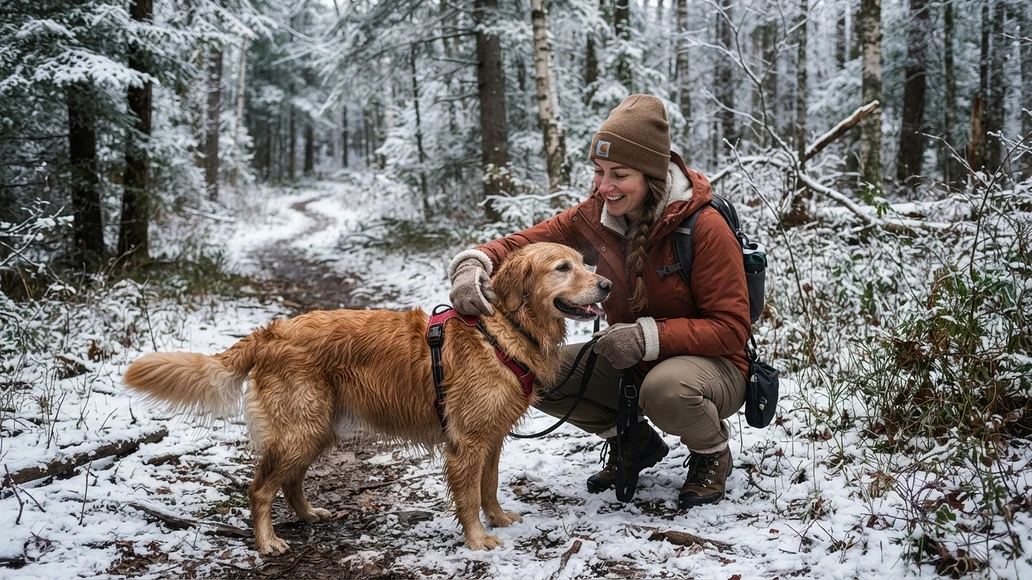
Cold Months, Hidden Ticks: What Winter Really Means for Bite Risk
Ticks do not simply disappear when temperatures drop. Learn how different species survive winter, when they can still bite, what snow and leaf litter do, and how to protect yourself, your family, and pets during cold-weather outdoor time.

Many people assume the first hard freeze ends tick season. It usually does not. Winter often lowers tick activity, but it rarely wipes ticks out. In many parts of the United States, ticks survive cold weather by sheltering in leaf litter, soil, animal nests, and under snow. Some species can even become active and bite during mild winter days when temperatures rise above freezing.
The practical takeaway is simple. Winter may shorten the problem, but it does not eliminate the problem. If you hike, hunt, cut firewood, walk the dog, work in brushy areas, or spend time around woods and tall grass, winter still calls for basic tick precautions.
What people really mean when they ask about ticks in winter
The question is usually not just whether cold kills ticks. What most people want to know is whether winter makes bites impossible, whether Lyme disease risk disappears, and whether they can stop checking themselves, their kids, or their pets after outdoor time.
The better answer is that winter changes tick behavior more than it ends it. Some ticks die in severe conditions, especially if they are exposed and dry out. But many survive by slowing down, conserving energy, and staying protected in small pockets of insulation close to the ground.
That is why the phrase “ticks die in winter” is misleading. A more accurate statement is that cold weather often reduces activity and lowers encounter rates, but surviving ticks can return quickly during thaws and in early spring.
Which U.S. tick species commonly survive winter
Not all ticks behave the same way. Species, life stage, humidity, snow cover, and region all matter. In the U.S., several important human-biting ticks can make it through winter.
| Tick species | Where it is common | Winter survival pattern | Why it matters |
|---|---|---|---|
| Blacklegged tick, also called deer tick | Northeast, Upper Midwest, parts of the Mid-Atlantic and expanding areas | Often survives under leaf litter and snow, adults may quest on mild winter days | Can transmit Lyme disease, anaplasmosis, babesiosis, and other infections |
| Lone star tick | Southeast, South Central states, Mid-Atlantic, expanding northward | Can overwinter in sheltered habitat, activity depends heavily on local winter conditions | Associated with ehrlichiosis and alpha-gal syndrome risk after some bites |
| American dog tick | Eastern U.S., parts of the West Coast, grassy and brushy areas | Survival varies by stage and local climate, generally less active in deep cold | Can transmit Rocky Mountain spotted fever and tularemia in some regions |
| Soft ticks | Localized areas, often linked to rodent nests, cabins, or rustic structures | Protected indoor or nest environments can support winter survival | Some species can spread tick-borne relapsing fever |
Blacklegged ticks are especially important in winter discussions because adults can remain active in cooler months compared with what many people expect. In some regions, they are the species most likely to be found on a person or pet during a winter thaw.
Do ticks hibernate, or do they go dormant?
Ticks do not hibernate the way people often imagine bears hibernating. A better word is dormancy, and in some cases diapause. These terms describe a slowed state that helps them survive unfavorable conditions.
Dormancy
When temperatures drop and conditions become harsh, ticks reduce movement and metabolism. They shelter in protected places and wait for better conditions.
Diapause
Diapause is a more programmed pause in development or activity, influenced by environmental cues such as day length and temperature. It helps ticks time their life cycle to the seasons.
Questing
Questing is the behavior of waiting on vegetation or leaf litter with front legs extended to latch onto a passing host. Winter does not always stop questing completely. During mild spells, some ticks resume host-seeking behavior for short periods.
How cold weather affects tick metabolism and survival
Cold temperatures generally slow ticks down. Their metabolism drops, they move less, and they use energy more slowly. This can actually help survival if they are sheltered and do not dry out.
Extreme cold can kill ticks, especially when they are exposed without insulating cover. But cold alone is not the whole story. Moisture, wind exposure, snow cover, and access to protected microhabitats often matter just as much as the air temperature reported in a weather app.
Ticks are small enough that conditions at ground level can be very different from conditions a few feet above the ground. A yard may feel brutally cold to you while the layer under leaves remains comparatively stable and protective for a tick.
| Life stage | Typical winter strategy | Chance of winter activity | Practical risk note |
|---|---|---|---|
| Larva | Shelters in protected ground-level habitat, survival depends on moisture and cover | Usually low in cold weather | Less likely to be noticed, but some survive into later stages |
| Nymph | Overwinters in leaf litter or soil surface layers | Usually limited in deep winter | Nymphs are small and easy to miss when active in warmer periods |
| Adult | Often the most cold-tolerant active stage in some species, especially blacklegged ticks | Can become active during winter thaws or above-freezing days | Adults are a meaningful source of winter bites in some regions |
Why snow cover can help ticks survive
Snow does not automatically kill ticks. In many cases, it does the opposite. A layer of snow can act like insulation, buffering the ground from sharp temperature swings and severe wind exposure.
That means a snowy winter is not always a tick-killing winter. If snow arrives before repeated deep freezes penetrate the ground, it can create a more stable environment underneath. Ticks tucked into leaf litter and soil may survive better than people expect.
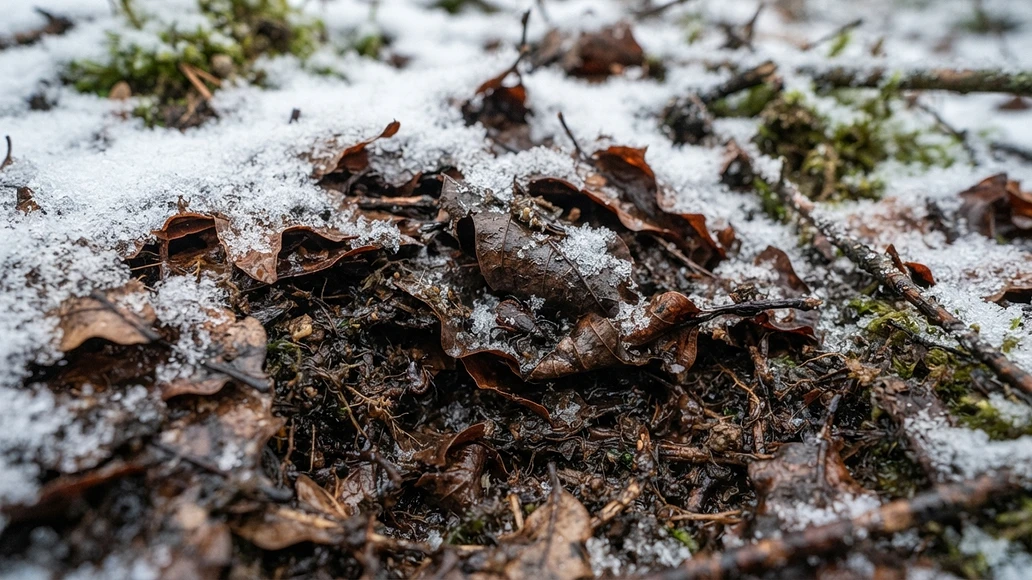
Why leaf litter matters so much
Leaf litter is one of the most important winter shelters for ticks. It traps moisture, blocks wind, and creates a small insulated zone near the soil surface. Brush piles, wood edges, stone walls, and areas where wildlife bed down can offer similar protection.
This is one reason people often encounter ticks on warmer winter days while cleaning up leaves, hauling firewood, or walking along woodland edges. The habitat remains favorable even when the season feels too cold for insects and arachnids to be active.
What temperatures reduce activity, and when ticks can still bite
There is no single magic temperature that applies to every species in every region. In general, sustained freezing conditions reduce movement and host-seeking. But many experts note that some ticks, especially adult blacklegged ticks, can become active when temperatures rise above freezing.
A sunny winter afternoon, a thaw after snow, or a string of mild days can be enough to increase activity. Frozen ground and prolonged deep cold usually lower risk more than a brief cold snap does.
| Weather condition | Likely effect on ticks | Risk to people and pets | What to do |
|---|---|---|---|
| Deep freeze with frozen ground | Activity usually drops sharply | Lower, but not always zero | Keep basic precautions if entering brush, woods, or leaf litter |
| Mild winter day above freezing | Some ticks may resume questing | Meaningful risk in endemic areas | Use repellent, wear protective clothing, do a tick check |
| Snow cover over leaf litter | Can insulate overwintering ticks | Risk may return quickly during thaw periods | Do not assume snow solved the problem |
| Cold rain and damp conditions | Species response varies, moisture can support survival | Usually lower activity than warm spells, but not impossible | Stay alert in wooded or brushy areas |
| Late winter thaw | Can trigger short bursts of activity | Often underestimated by hikers and pet owners | Resume full prevention habits |
Are winter tick bites still risky for Lyme disease and other infections?
Yes. A winter bite can still matter. The season does not make a tick harmless. If the species carries disease in your area, transmission risk remains relevant whenever a tick attaches.
Lyme disease is the best-known concern in many northern states, especially with blacklegged ticks. But it is not the only one. Depending on region and species, ticks may also spread anaplasmosis, babesiosis, ehrlichiosis, Rocky Mountain spotted fever, tularemia, or other infections.
Risk is often lower in the coldest stretches of winter because bites are less frequent, not because the pathogens vanish. That distinction matters. Delaying attention because “it happened in winter” can lead people to miss early symptoms.
Regional differences across the United States
Winter tick risk is not the same everywhere. Southern states, coastal areas, and places with frequent winter thaws can have meaningful activity for more of the year. Northern inland areas with sustained deep freezes often see lower winter encounter rates, but not necessarily zero risk.
Recent trends also point toward longer tick seasons in many places, especially where winters are milder or more variable. Warm spells in January or February can create exposure windows that did not seem normal to many people a generation ago.
| Region | Typical winter pattern | Relative winter risk | Key note |
|---|---|---|---|
| Northeast and Upper Midwest | Lower activity during deep cold, blacklegged adults may still be active on mild days | Low to moderate, depending on weather | Lyme-endemic areas still require caution during thaws |
| Mid-Atlantic | Variable winters with periodic mild spells | Moderate | Winter bites are plausible, especially near woods and brush |
| Southeast and Gulf states | Milder winters support longer activity periods | Moderate to high in some areas | Year-round prevention may make sense for people and pets |
| Mountain West and colder interior regions | Long freezes can suppress activity more strongly | Generally lower in midwinter | Local habitat and species still matter |
| Pacific coastal areas | Cool but not always deeply frozen | Variable | Moist habitats can support winter survival |
Winter prevention steps that actually help
The best winter strategy is not to rely on weather. It is to use the same proven prevention tools recommended during the rest of tick season, adjusted for your exposure level.
| Prevention step | What it does | Helps prevent bites | Helps lower disease risk |
|---|---|---|---|
| EPA-registered repellent on exposed skin | Discourages ticks from attaching | Yes | Yes, by reducing bites |
| Permethrin-treated clothing and gear | Kills or disables ticks on treated fabric | Yes | Yes |
| Long pants, socks, closed footwear | Reduces skin exposure and makes ticks easier to spot | Yes | Yes |
| Staying centered on trails | Reduces contact with brush and leaf litter | Yes | Yes |
| Tick check after outdoor time | Finds attached or crawling ticks early | Sometimes | Yes, especially if removal is prompt |
| Showering soon after coming indoors | Can help wash off unattached ticks and supports a full body check | Sometimes | Yes |
| Drying clothes on high heat, if fabric allows | Helps kill ticks on clothing | Indirectly | Indirectly |
If you use repellents or permethrin products, follow the product label exactly. Do not improvise stronger mixtures or off-label uses. For children, use age-appropriate products according to label directions.
How to do a tick check after cold-weather outdoor time
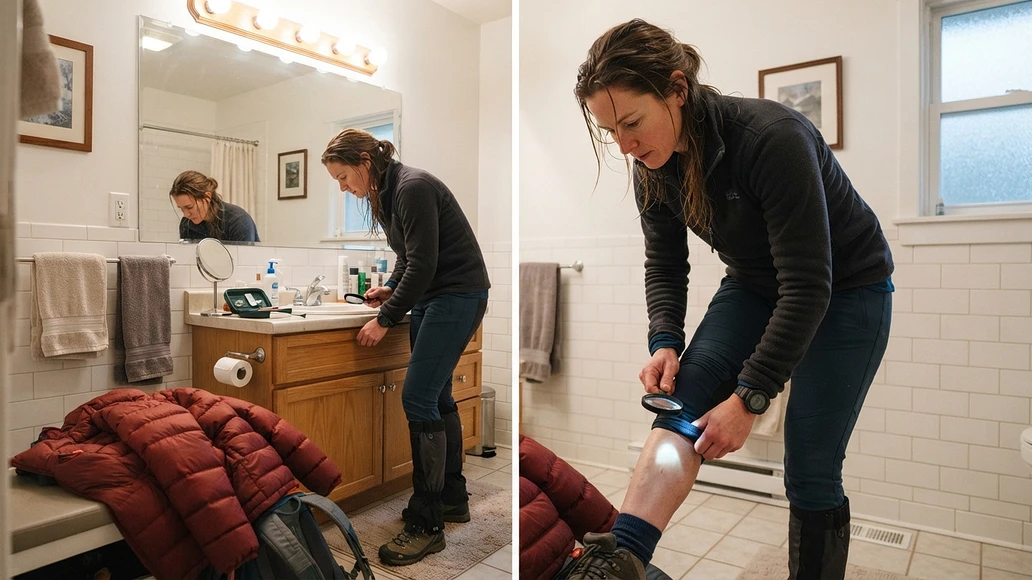
A winter tick check can be quick, but it should be thorough. Focus on warm, hidden areas where ticks like to attach. Check the scalp and hairline, behind the ears, under the arms, around the waist, behind the knees, between the legs, and around sock lines. On children, also check around the neck and along clothing seams. For pets, inspect the ears, collar area, under the legs, between toes, and around the tail base.
Good lighting helps. If possible, shower and change clothes soon after coming indoors. Put outdoor clothing in a dryer on high heat if the care label allows, because washing alone may not reliably kill ticks.
Safe tick removal, what to do right away
If you find an attached tick, remove it as soon as you can with fine-tipped tweezers. Grasp the tick as close to the skin surface as possible and pull upward with steady, even pressure. Do not twist, jerk, burn, smother, or coat the tick with petroleum jelly or chemicals. Those methods are not recommended and can make removal harder.
After removal, clean the bite area and your hands with soap and water, rubbing alcohol, or an iodine-based cleanser. If part of the mouth remains in the skin and does not come out easily, do not dig aggressively into the skin. Watch the area and contact a clinician if you are unsure what remains or if irritation worsens.
You may choose to note the date of the bite, where you were, and what the tick looked like. That information can be useful if symptoms develop later.
Do pets need winter tick prevention?
In many regions, yes. Pets can pick up ticks during winter walks, hunting trips, yard time, or contact with brush and leaf litter. Dogs are especially likely to bring ticks indoors before anyone notices them.
Whether pets need year-round prevention depends on your location, local species, your pet's lifestyle, and your veterinarian's advice. In milder climates or places with frequent winter thaws, year-round prevention is often sensible. Do not start or change a pet medication based only on an article. Use veterinary guidance, because products differ by species, weight, age, and health status.
Common myths about freezing weather and ticks
Myth, one hard freeze kills all ticks
False. Many survive in protected habitats.
Myth, snow means no tick risk
False. Snow can insulate ticks under it.
Myth, winter bites cannot lead to Lyme disease
False. If an infected tick attaches, season alone does not remove disease risk.
Myth, a harsh winter solves next summer's tick problem
Usually false. Severe winters may reduce some populations, but they rarely eliminate ticks across an area.
Myth, you only need prevention in summer
False. In many places, prevention should continue whenever conditions allow tick activity.
When to contact a clinician after a tick bite
Most tick bites do not mean a person will become seriously ill, but some situations deserve prompt medical advice. Do not delay just because the bite happened in cold weather.
| Situation | Why it matters | What to do |
|---|---|---|
| Expanding rash, especially a bull's-eye or enlarging red patch | Can be an early sign of Lyme disease or another reaction needing evaluation | Contact a clinician promptly |
| Fever, chills, severe headache, body aches, unusual fatigue | Possible tick-borne illness symptoms | Seek medical advice soon |
| Facial droop, joint swelling, confusion, or worsening illness | Can signal more serious involvement | Seek urgent medical care |
| Tick attached for a prolonged period or removal was incomplete | May affect risk assessment and next steps | Contact a clinician for guidance |
| Pregnancy, immunocompromised status, or significant chronic illness | May change how exposure is evaluated | Seek individualized medical advice |
| Uncertain tick identification in a high-risk area | Species and region affect disease concerns | Call a clinician or local public health resource |
Antibiotics are not automatically appropriate for every tick bite. Decisions about testing, diagnosis, and treatment depend on the species, region, attachment details, symptoms, and your medical history. A clinician should make those calls.
What winter weather can and cannot do to tick populations
Winter weather can reduce activity, lower encounter rates, and in some years kill a portion of exposed ticks. It can also delay seasonal buildup in some locations. But winter usually cannot be counted on to clear your property or region of ticks.
Ticks persist because they use sheltered microhabitats and because wildlife hosts continue to support their life cycle. A cold season may ease the problem temporarily. It does not remove the need for prevention, awareness, and prompt action after a bite.
If you remember one thing, make it this. Cold weather lowers risk in many situations, but it does not make tick exposure impossible.
References
Centers for Disease Control and Prevention, Ticks
Centers for Disease Control and Prevention, Lyme Disease
Centers for Disease Control and Prevention, Preventing Tick Bites
Centers for Disease Control and Prevention, Removing a Tick
UC Davis Health, Why tick season is lasting longer and how to protect yourself
Adirondack Mountain Club, Ticks In Winter