RIP Ammo and Civilian Ownership, What Federal and State Rules Really Say
RIP ammunition is not a separate legal category under federal law, but that does not make it automatically lawful everywhere. Here is a practical guide to ownership, carry, shipping, range use, hunting limits, and the state-level exceptions that matter most.

If you are asking, are RIP rounds legal for civilian ownership, the short answer is often yes under federal law, but not always in practice once state law, local rules, shipping limits, carry laws, and private range policies are added to the picture. RIP rounds are a branded type of specialty handgun ammunition, not a standalone legal category written into federal statute. That distinction matters, because legality usually turns on how a state treats expanding, fragmenting, or otherwise specialty ammunition, not on the marketing name printed on the box.
This article is general educational information, not legal advice. Ammunition law can change, and some states apply stricter rules to possession, carry, transport, or use than federal law does. If you plan to buy, carry, travel with, or rely on specialty ammunition for self-defense, verify current law through your state statutes, attorney general, state police, or a qualified firearms attorney.
What RIP rounds are, and what they are not
RIP usually refers to a branded handgun projectile marketed as a specialty defensive round. People often discuss it alongside hollow points and fragmenting ammunition, but those terms are not all identical. In legal research, that difference is important because statutes rarely regulate products by brand name. They regulate by design, composition, intended use, or a specific prohibited category such as armor-piercing ammunition.
That means a buyer should avoid assuming that a product called RIP is automatically legal or illegal just because of online chatter. The better question is how the round is classified where you live, and whether your state has special rules for expanding or specialty handgun ammunition.
| Ammunition type | What it generally means | Typical legal treatment | Common issue to check |
|---|---|---|---|
| RIP or similar branded specialty round | Marketing term for a specific projectile design, often discussed as defensive ammunition | Not a separate federal statutory category by brand name | How your state classifies the projectile design |
| Hollow point | Bullet with a cavity in the nose designed to expand | Often legal federally, but some states regulate possession or carry more closely | State-specific carry and transport rules |
| Fragmenting ammunition | Projectile intended to break apart in a certain way on impact | Usually not broadly banned by federal law as a class | State restrictions and range policies |
| FMJ | Full metal jacket practice or general-purpose ammunition | Commonly legal in many jurisdictions | Range-specific or hunting-specific restrictions |
| Armor-piercing ammunition | A distinct legal category defined by federal law and material or design criteria | More heavily restricted | Do not confuse this category with RIP branding |
Federal law, the baseline most buyers start with
At the federal level, there is no broad rule that says civilians may never own RIP rounds simply because they are RIP rounds. Federal law focuses more on defined categories, especially armor-piercing ammunition under 18 U.S.C. § 921(a)(17). That is why many articles correctly say specialty expanding or fragmenting handgun ammunition is generally lawful for civilian ownership under federal law.
But federal legality is only the starting point. A product can be lawful under federal law and still be restricted by a state, limited by a shipping policy, prohibited by a private range, or unsuitable for hunting under wildlife regulations.
Why people confuse RIP rounds with armor-piercing ammunition
Online discussions often blur together any unusual or aggressively marketed ammunition. That is a mistake. Armor-piercing ammunition is a specific legal category tied to statutory definitions, not a catch-all label for ammunition that looks exotic or is sold for defense. In most general discussions, RIP rounds are not automatically treated as armor-piercing ammunition. Still, classification can depend on actual projectile construction and the law being applied, so buyers should verify the exact product specifications rather than relying on a nickname.
| Authority | What it can regulate | What that means for a civilian buyer |
|---|---|---|
| Federal law | Baseline categories such as armor-piercing ammunition, interstate commerce rules, and other national restrictions | A round may be federally lawful but still restricted elsewhere |
| State law | Possession, carry, sale, shipping receipt, transport, and use within the state | This is often the most important layer for everyday ownership |
| Local ordinance | In some places, local rules may affect discharge, storage, or business sales | Check whether your city or county adds limits |
| Private seller or online retailer | Business policies on where they will ship and what documentation they require | A retailer may refuse a sale even if the item is legal |
| Private range | Allowed ammunition types on that property | Legal ownership does not guarantee range use |
State law is where the answer changes
The most accurate broad answer is this: civilians can often own RIP rounds in many US jurisdictions, but legality depends on state law and, in some places, local rules. States with stricter ammunition laws deserve extra caution. New Jersey is one of the most commonly cited examples because it has special rules affecting certain ammunition types, including issues around hollow points and transport exceptions.
That does not mean every specialty round is banned there, and it does not mean every other state is unrestricted. It means you should never stop your research at a federal yes or no. The practical question is whether your state regulates the ammunition by design, by carry status, by place of possession, or by how it is transported.
States that deserve extra verification
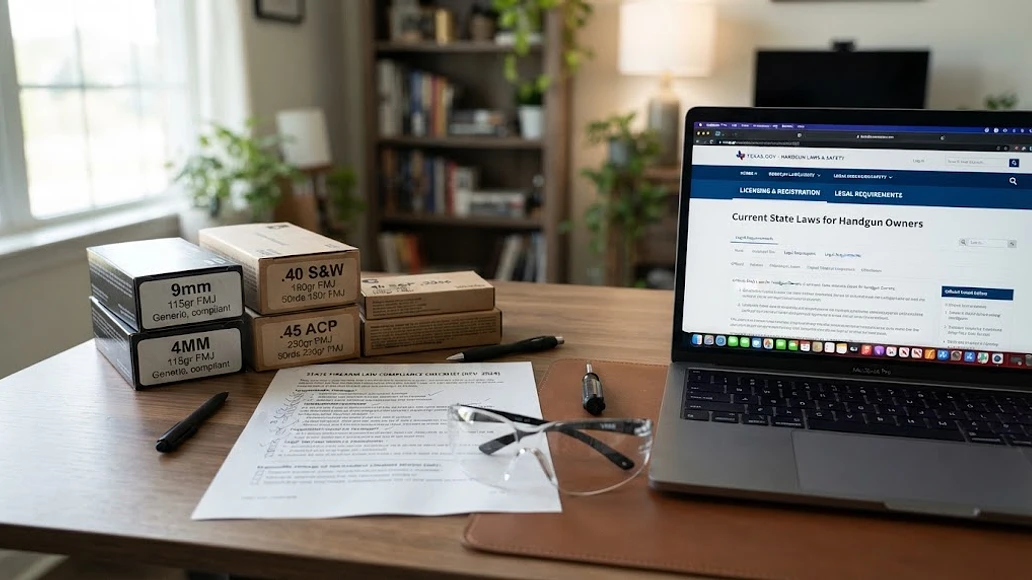
If you live in or travel through a state known for stricter firearms or ammunition regulation, verify all of the following before buying: whether the round can be shipped to you, whether possession is lawful at home, whether carry is allowed with your permit status, whether transport must follow special rules, and whether there are location-based exceptions. Even in states without a direct RIP-specific rule, a broader ammunition statute may still matter.
RIP rounds compared with hollow points
Many readers use these terms interchangeably, but they should not. A hollow point is a broad projectile type. RIP is a product name associated with a particular design concept. Some legal discussions group them together because both may be sold as defensive ammunition, but that does not make them legally identical in every state.
For example, a state may have rules written around hollow point possession or transport, while another state may focus on prohibited projectile materials or other design features. That is why the safest approach is to read the actual statute or official guidance rather than relying on a forum post that says, "RIP is just a hollow point," or, "RIP is totally different so the hollow point rule does not apply." Either claim may be oversimplified.
Buying online, shipping, and receiving at home
In many states, civilians can buy specialty ammunition online, including defensive handgun loads, but online availability is not the same as legal certainty. Retailers often apply their own compliance filters. Some will not ship certain ammunition to certain states, cities, or ZIP codes. Others may require age verification, an ID check, or shipment to a licensed vendor depending on local law.
If an online store blocks your order, that does not automatically mean the ammunition is illegal. It may reflect the seller's internal risk policy. On the other hand, a successful checkout does not prove legality either. Retail systems are imperfect, and the buyer remains responsible for compliance.
| Question | Often true in many states | Why you still need to verify |
|---|---|---|
| Can I buy it online? | Yes, often | Retailers may block certain states or localities |
| Can it ship to my home? | Sometimes | State and local delivery rules vary |
| Does checkout approval mean it is legal? | No | Seller systems are not legal advice |
| Can I bring it across state lines? | Maybe | Transport and destination-state law both matter |
| Can I store it at home? | Often yes | Some jurisdictions or housing rules may add limits |
Carry for self-defense, legal to own is not the same as legal to carry
One of the biggest research mistakes is assuming that if ammunition is legal to buy, it is automatically legal to carry loaded in a defensive handgun. Carry law can be narrower than ownership law. A state may allow possession at home while limiting where, how, or whether certain ammunition can be carried in public.
There is also a practical liability issue. Even where carry is lawful, using unusual or heavily marketed ammunition can become part of the story after a defensive incident. That does not make it illegal, but it is one reason many people prefer mainstream defensive loads with broad law enforcement or industry acceptance. This article is not recommending a specific load. It is simply noting that legal ownership and prudent selection are separate questions.
Range use, private property rules, and why legality is not enough
A private range can prohibit ammunition that state law allows. Indoor ranges may restrict certain projectile types because of backstop wear, ricochet concerns, ventilation issues, cleanup burden, or insurance requirements. Outdoor clubs may have their own safety rules or local agreements.
So if your question is not just ownership but actual use, call ahead. Ask whether the range allows specialty defensive ammunition, fragmenting ammunition, or any nonstandard projectile design. A legal box of ammo can still be turned away at the counter.

Hunting use is a separate legal question
Even if a round is legal to own and legal to carry, that does not make it legal or appropriate for hunting. State wildlife agencies often regulate caliber, bullet type, magazine capacity, season, and approved methods for specific game. Specialty defensive ammunition may be a poor fit for ethical hunting requirements, and some states may effectively rule it out through game laws even without naming the product.
If you are considering any specialty handgun ammunition for hunting, check your state's wildlife code and current season regulations, not just firearms statutes.
How to check your state and local rules before buying
The safest research method is to verify the exact product and the exact activity. Start with the ammunition's published specifications. Then compare those details against your state statutes and any official guidance from the attorney general, state police, or state firearms portal. If your city or county has local rules, check those too. Finally, confirm whether your intended use is home storage, range use, carry, transport, or hunting, because each can be treated differently.
| Before you buy, verify this | Why it matters | Best place to check |
|---|---|---|
| Projectile type and construction | Classification may depend on design details, not marketing language | Manufacturer specs and state statute definitions |
| Home possession rules | Some states treat possession differently from purchase | State statutes and official state guidance |
| Carry rules | Public carry may have separate restrictions | Permit guidance, state police, attorney general |
| Transport rules | Travel can trigger different requirements | State statutes for both origin and destination |
| Shipping and delivery limits | Retailers may require special handling or refuse shipment | Retailer policy and state ammunition sales rules |
| Range policy | Private property rules can block use | Directly from the range |
| Hunting legality | Wildlife regulations may prohibit or discourage it | State fish and wildlife agency |
Common mistakes people make when researching specialty ammo law
The first mistake is treating a brand name as a legal category. The second is confusing RIP rounds with armor-piercing ammunition without checking the statutory definition. The third is assuming that federal legality answers the whole question. The fourth is overlooking carry, transport, and range rules. The fifth is relying on a retailer's checkout page or a forum comment as proof of legality.
A better approach is slower but safer. Read the actual law, use official state sources where possible, and ask a qualified attorney if the answer affects your carry setup, interstate travel, or self-defense planning.
When it makes sense to ask a firearms attorney
You should consider professional legal advice if you live in a restrictive state, if you have a carry permit and want to load specialty ammunition for daily carry, if you travel across state lines, if your state law uses technical ammunition definitions that are hard to interpret, or if you are trying to reconcile conflicting advice from retailers and unofficial websites.
That is especially true when the stakes are high. A small misunderstanding about ammunition law can become expensive very quickly.
Practical alternatives for home defense planning
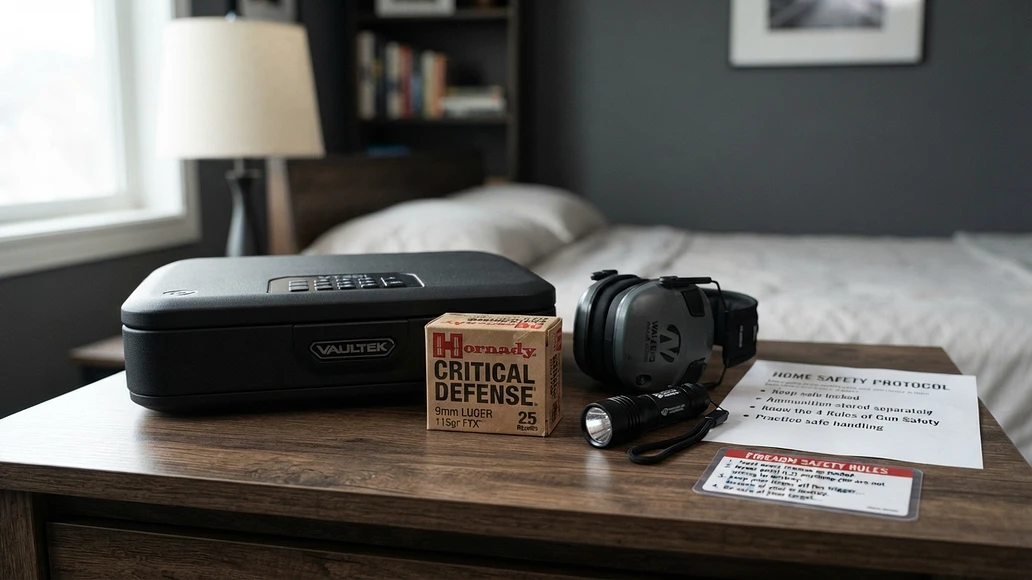
For many households, the more useful question is not whether a specialty round is legal, but whether it is the simplest and lowest-risk choice. Mainstream defensive ammunition from established manufacturers is often easier to research, easier to find in official guidance, and less likely to trigger confusion at the range or during travel. Whatever you choose, focus on lawful ownership, safe storage, reliable function in your firearm, and regular training with range-approved ammunition.
Bottom line
In much of the United States, RIP rounds are often legal for civilian ownership under federal law, but that does not make them universally lawful to buy, ship, carry, transport, use at a range, or use for hunting. RIP is a brand label, not a magic legal category. The real answer depends on state law, local rules, and the exact projectile classification.
If you want the safest takeaway, use this one: verify your state's ammunition rules before purchase, verify carry and transport rules before loading or traveling, and verify private range policy before showing up with specialty ammo.
Frequently asked questions
Are RIP rounds legal to own in every state?
No. Many jurisdictions may allow ownership, but not every state treats specialty ammunition the same way. Some states have stricter rules on possession, carry, or transport, so you need to check your own state's current law.
Are RIP rounds legal to carry for self-defense?
Sometimes, but not everywhere. Carry law can be more restrictive than simple ownership law. Verify your state's carry rules and any ammunition-specific restrictions before using specialty rounds for self-defense.
Are RIP rounds the same as hollow points?
No. Hollow point is a broad projectile type. RIP is a branded product concept. They may be discussed together, but they are not automatically the same in legal analysis.
Are RIP rounds considered armor-piercing ammo?
Not automatically. Armor-piercing ammunition is a separate legal category under federal law. Classification depends on statutory definitions and actual projectile construction, not just marketing language.
Can you buy RIP rounds online and have them shipped to your home?
In many places, possibly yes. In others, maybe not. Retailer policy, state law, and local delivery rules all matter. A seller's willingness to ship is not a substitute for legal verification.
References
- Forced Reset Trigger Legal Status by State (2026): Where FRTs Are ...
- Is Green Tip Ammo Legal: Understanding Armor-Piercing Laws in ...
- Best 9mm Self-Defense Ammo 2026: HST vs Gold Dot, Gel ...
- 9mm Ripper Rounds - 2Ammo
- Are Hollow Point Bullets Legal in Virginia?
- An Official Journal Of The NRA | The War on Ammo Sales
- Armor-Piercing Ammunition Restrictions
- AR-15 Laws by State: 2026 Interactive Map & 50-State Guide