Smarter Home Pain Relief, Natural Options That Can Replace a Tylenol Habit
Looking for gentler ways to handle everyday pain without reaching for acetaminophen first? This guide explains which natural and non-drug options have the best evidence, where they fit best, and when Tylenol or medical care still makes sense.

Many people want fewer pills in their routine, especially for headaches, sore muscles, joint aches, menstrual cramps, and minor injuries. That is a reasonable goal, but it helps to be precise about what you are replacing. Acetaminophen, the active ingredient in Tylenol, is good at easing pain and reducing fever. It is not a strong anti-inflammatory medicine, so it often does not address the underlying cause of pain when swelling, overuse, or tissue irritation are involved.
This guide looks at practical alternatives that may help you rely less on acetaminophen, while staying realistic about safety. Some options are truly useful. Some are slower but may help the problem itself. Others are overhyped, risky, or a poor fit for children, pregnancy, liver disease, or people taking blood thinners. This article is educational only and is not personal medical advice.
What acetaminophen does well, and where it falls short
Acetaminophen is widely used because it can reduce mild to moderate pain and fever without the stomach irritation commonly seen with NSAIDs like ibuprofen. For many adults, it remains a reasonable option when used correctly. The main limitation is that it has little anti-inflammatory effect, so it may not do much for pain driven by swelling or chronic inflammatory conditions.
That difference matters. If your pain comes from a tight muscle, a strained tendon, osteoarthritis, or menstrual inflammation, a natural or non-drug option that targets tension or inflammation may fit better than simply masking discomfort for a few hours.
Why people look for alternatives
Most readers are not trying to avoid acetaminophen because it never works. They are trying to avoid using it too often, or they have a reason to be cautious. Common reasons include liver concerns, regular alcohol use, pregnancy questions, taking multiple medications, or simply wanting a more preventive approach.
Recent safety discussions have also made people more careful. Current labeling continues to stress overdose risk, liver injury, and rare severe skin reactions. There is also ongoing regulatory attention around possible pregnancy-related concerns and a monitored FDA safety signal involving metabolic acidosis. None of that means acetaminophen is banned or unusable. It means it should be used thoughtfully, within labeled limits, and not treated as harmless just because it is over the counter.
Quick safety check before you replace or add anything
Natural does not automatically mean safer. Herbs and supplements can affect bleeding, sedation, liver function, blood pressure, and drug metabolism. Before trying an alternative, ask two questions. First, what kind of pain am I treating? Second, do I have any reason a supplement or herb could be risky for me?
| Situation | Why extra caution matters | Safer first step |
|---|---|---|
| Pregnancy | Both medicines and herbs may affect the fetus, and evidence is incomplete for many supplements | Use non-drug measures first and check with your prenatal clinician before taking any supplement |
| Children | Some herbs act like aspirin and are not appropriate for kids, especially during viral illness | Use pediatric guidance, hydration, rest, and clinician-approved products only |
| Liver disease or regular alcohol use | Acetaminophen and some herbs can raise liver risk | Get individualized dosing advice before using acetaminophen or liver-active supplements |
| Blood thinners | Turmeric, ginger, willow bark, and omega-3s may increase bleeding risk | Do not start supplements without medical guidance |
| Multiple prescriptions | Supplement interactions are common and often missed | Review your full medication list with a pharmacist or clinician |
Match the remedy to the type of pain
The best alternative depends on the pain pattern. A tension headache is different from arthritis. A fresh sprain is different from chronic nerve pain. Choosing by pain type is more useful than asking for one universal natural painkiller.
| Pain type | Best non-drug starting point | Natural or topical options with the best fit | When acetaminophen may still be reasonable |
|---|---|---|---|
| Tension headache | Hydration, rest, neck and shoulder relaxation, screen break | Topical peppermint oil to temples, gentle massage | If pain is mild to moderate and you need short-term symptom relief |
| Muscle strain or post-workout soreness | Cold early, then heat later, rest, gentle movement | Ginger, topical arnica, topical capsaicin for localized pain | If soreness is widespread or interfering with sleep |
| Osteoarthritis or chronic joint pain | Heat, regular low-impact movement, weight management | Turmeric or curcumin, boswellia, ginger, capsaicin cream | For occasional breakthrough pain while longer-term measures build effect |
| Menstrual cramps | Heat to lower abdomen, hydration, light movement | Ginger may help some people | If cramps are not controlled with heat and rest |
| Minor bruise or sprain | Rest, ice, compression, elevation | Topical arnica on intact skin only | If pain remains bothersome after basic care |
| Localized nerve pain | Avoid aggravating pressure, gentle movement | Topical capsaicin | Acetaminophen may help less here than local treatments |
Which natural options have the best support
Among natural approaches, a few stand out as more evidence-backed than the rest. They are not instant replacements for Tylenol in every situation, but they can be useful tools.
| Option | Evidence strength | Main role | Best uses | Key cautions |
|---|---|---|---|---|
| Turmeric or curcumin | Moderate to strong | Helps reduce inflammation over time | Osteoarthritis, chronic joint pain | May interact with blood thinners, may upset the stomach, use caution with gallbladder disease |
| Ginger | Moderate | Eases symptoms and may reduce inflammatory activity | Menstrual cramps, arthritis, muscle soreness | Can increase bleeding risk at higher doses, may cause GI upset |
| Boswellia | Moderate | Anti-inflammatory support over time | Joint pain, arthritis | Long-term data is limited, discuss with your clinician if you take other medications |
| Willow bark | Mixed to moderate | Aspirin-like symptom relief | Headache, some joint pain | Avoid in children, viral illness, aspirin allergy, ulcers, and blood thinner use |
| Topical capsaicin | Moderate to strong | Local symptom relief | Nerve pain, localized joint pain | Can burn or irritate skin, keep away from eyes, use on intact skin only |
| Peppermint oil, topical | Moderate | Local symptom relief | Tension headaches | Do not get in eyes, do not ingest concentrated oil |
| Arnica, topical | Moderate | Local symptom relief | Bruises, soft tissue soreness | Do not use on broken skin, do not take by mouth |
| Heat, cold, rest, gentle movement | Strong practical support | Relieves symptoms and may support recovery | Strains, sprains, stiffness, soreness | Avoid burns and frostbite, use common-sense time limits |
What is often safest to try first for many adults
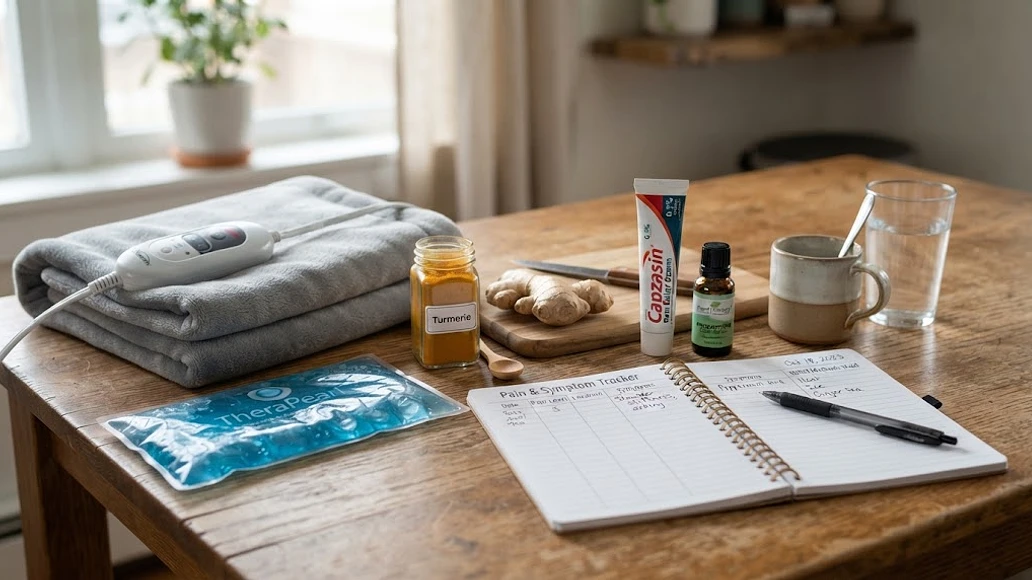
For common aches and pains, the safest starting point is usually not an herb. It is a low-risk non-drug measure matched to the problem. Heat for stiffness and cramps. Cold for a fresh strain or swelling. Rest plus gentle movement for overuse soreness. Better hydration and sleep for tension headaches. These options have fewer systemic risks than swallowing a supplement.
If you want a natural add-on, turmeric or curcumin, ginger, boswellia, and topical remedies usually make more sense than stronger sedative herbs. They are not risk-free, but they have a more practical balance of evidence and safety for many adults.
Turmeric or curcumin
This is one of the better-supported options for chronic joint pain and osteoarthritis. It is not ideal for immediate relief after a sudden headache or injury. Think of it as a longer-game anti-inflammatory support, not a fast rescue tool. Product quality matters. Standardized extracts are generally more predictable than mystery blends.
Ginger
Ginger has a broad practical use range. It may help menstrual cramps, mild inflammatory pain, and muscle soreness. It can be taken as food, tea, or supplement, but concentrated products are more likely to interact with blood thinners or upset the stomach.
Boswellia
Boswellia is mainly used for joint discomfort and inflammatory pain. It is another option that tends to work gradually rather than immediately. It may be worth considering if your goal is to reduce day-to-day reliance on pain medicine for chronic aches.
When local treatment beats another pill
One of the easiest ways to reduce acetaminophen use is to treat pain where it is happening. Local treatment can work well for tension headaches, sore joints, bruises, and nerve irritation.
Topical capsaicin
Capsaicin is useful for localized nerve pain and some joint pain. It works by changing pain signaling in nerve endings over time. The main downside is skin irritation. Wash hands carefully after use and keep it far from eyes and sensitive skin.
Peppermint oil for tension headaches
For some people, diluted peppermint oil applied topically to the temples or forehead can help with tension-type headaches. It is not a migraine cure and should never be used near the eyes. Concentrated essential oils should not be swallowed.
Arnica gel or cream
Topical arnica may help bruising and minor soft tissue discomfort. It belongs on intact skin only. Oral arnica is not a safe substitute and should be avoided.
Heat and cold
Cold is generally best early for swelling, fresh strains, and minor sprains. Heat is often better for stiffness, muscle tightness, and cramps. If you are unsure, start with short sessions and stop if pain worsens.
Massage, TENS, and acupuncture
These are not herbs, but they can reduce the need for medication. Massage may help muscle tension. TENS may help some people with localized pain. Acupuncture has moderate support for back pain, tension headaches, and fibromyalgia when done by a trained practitioner.

Natural options that sound safer than they are
This is where many online articles go wrong. They treat all plant-based remedies as gentle. That is not true.
| Option | Why people try it | Main concern | Bottom line |
|---|---|---|---|
| Willow bark | Aspirin-like pain relief | Bleeding risk, ulcer risk, aspirin allergy concerns, not for children | Not a casual swap for everyone |
| Kava | Sedating, may dull discomfort | Liver concerns, sedation, interaction with alcohol and sleep medicines | Not a routine home pain remedy |
| Wild lettuce and strong sedative herbs | Marketed as natural painkillers | Weak evidence, sedation, unpredictable effects | Better avoided for self-treatment |
| Homeopathic pain products | Perceived as gentle and natural | Evidence is weak, may delay effective care | Do not rely on them for meaningful pain control |
| Proprietary supplement blends | Convenience and marketing claims | Hidden doses, contamination, too many ingredients | Choose single-ingredient or clearly labeled products instead |
Lifestyle changes that reduce pain over time
If you want fewer pain pills in your life, daily habits matter more than any single supplement. Chronic aches often improve when the body is less inflamed, better rested, and moving regularly.
| Strategy | How it helps | Best fit | What to expect |
|---|---|---|---|
| Regular gentle exercise | Improves joint function, circulation, and pain tolerance | Back pain, arthritis, stiffness | Benefits build over weeks |
| Sleep improvement | Poor sleep amplifies pain sensitivity | Headaches, fibromyalgia, chronic pain | Often overlooked but important |
| Weight management | Reduces joint load and inflammatory stress | Knee, hip, and back pain | Long-term payoff |
| Anti-inflammatory eating pattern | May lower background inflammation | Chronic joint and metabolic inflammation | Subtle but meaningful over time |
| Omega-3 intake | Supports inflammatory balance | Joint conditions as an adjunct | Not fast relief, more of a support tool |
| Stress reduction | Muscle tension and pain perception often improve | Tension headaches, neck pain, chronic pain flares | Works best when practiced consistently |
Special situations, pregnancy, breastfeeding, children, and older adults
These groups need extra caution because the usual internet advice can be misleading.
Pregnancy
Pregnant readers should not assume that herbs are safer than acetaminophen. Many supplements have limited safety data in pregnancy. Current public guidance around acetaminophen in pregnancy has become more cautious because of a possible association with certain neurodevelopmental outcomes, but that does not prove causation. The practical takeaway is simple. Use any pain reliever only when clearly needed, start with non-drug measures when possible, and ask your prenatal clinician before using acetaminophen or supplements.
Breastfeeding
Breastfeeding safety varies by product and dose. Topical measures such as heat, cold, and some local treatments may be easier to evaluate than oral supplements. Avoid applying strong topicals where an infant could contact or ingest them.
Children
Willow bark and other salicylate-containing herbs are not appropriate for children, especially during viral illness, because of Reye syndrome concerns. Do not improvise with adult supplements for kids. Pediatric pain and fever treatment should follow age-appropriate guidance.
Older adults
Older adults are more likely to take multiple medications and to be sensitive to sedation, dizziness, and falls. That makes kava and similar sedative herbs a poor choice. Topical and non-drug measures are often a better starting point.
If you have liver disease, kidney disease, or take blood thinners
This is the point where self-treatment gets more complicated. Acetaminophen may still be used in some people with kidney issues, but dose limits matter and liver disease changes the equation. At the same time, several natural options can increase bleeding risk or stress the liver.
| Condition or medication issue | Options that may need extra caution | Why | Practical takeaway |
|---|---|---|---|
| Liver disease | Acetaminophen, kava, unclear multi-herb blends | Liver toxicity risk may be higher | Get clinician guidance before using either OTC pain medicine or supplements |
| Kidney disease | Any supplement without review, dehydration-related remedies | Kidney handling and medication interactions vary | Use clinician-approved options only |
| Blood thinners or clotting disorder | Turmeric, ginger, willow bark, omega-3s | Bleeding risk may increase | Do not start these on your own |
| Alcohol use | Acetaminophen, kava | Liver risk can rise | Be conservative and ask for individualized advice |
| Multiple medications | Most supplements | Interaction risk is easy to miss | Review with a pharmacist before adding anything |
How to build a safer home pain relief plan
A simple stepwise plan works better than grabbing random remedies.
- Identify the pain type. Headache, muscle strain, joint stiffness, cramps, bruise, or nerve pain.
- Start with the lowest-risk measure that fits. Heat, cold, hydration, rest, compression, or gentle movement.
- If pain is localized, try a local treatment before another pill. Peppermint for tension headache, capsaicin for localized nerve or joint pain, arnica for bruising on intact skin.
- If pain is chronic and inflammatory, consider a better-supported supplement such as turmeric, ginger, or boswellia, but only after checking for interactions.
- Use acetaminophen carefully when needed for short-term symptom relief, and count all sources so you do not exceed the labeled daily maximum.
- Track what actually helps. A small notebook or phone note can reveal patterns and reduce unnecessary repeat dosing.
Preparedness-minded pain kit, simple, practical, and safer
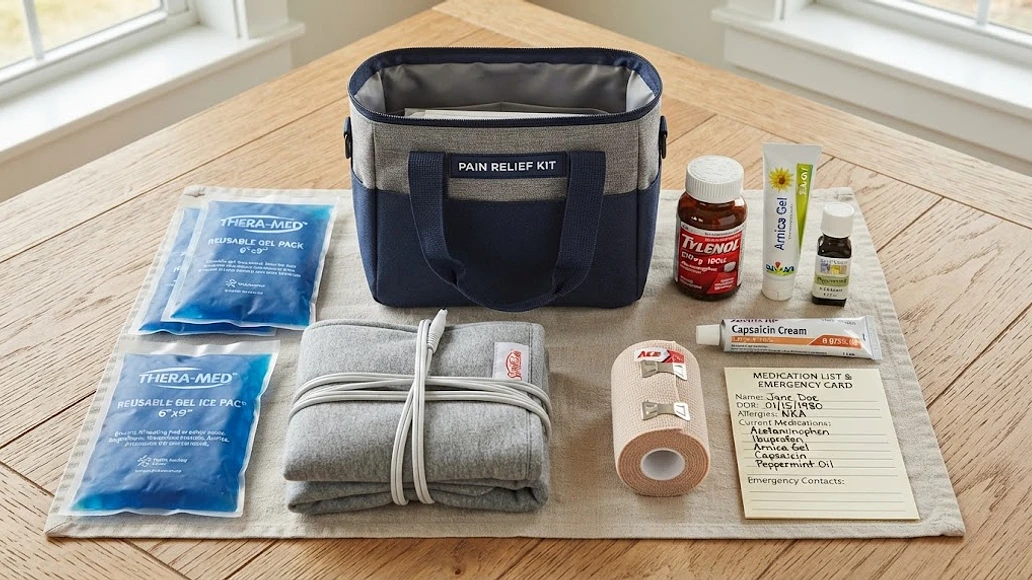
A home kit should focus on versatile, low-risk basics rather than exotic herbs.
| Item | Why include it | Best use | Key caution |
|---|---|---|---|
| Reusable ice pack | Useful for fresh injuries and swelling | Sprains, strains, bruises | Wrap to protect skin |
| Heating pad or hot water bottle | Helps stiffness and cramps | Back tension, menstrual cramps | Avoid sleeping on active heat |
| Elastic wrap | Supports compression | Minor sprains and swelling | Do not wrap so tightly that circulation is reduced |
| Topical capsaicin | Targets local pain without a systemic pill | Nerve pain, sore joints | Can irritate skin and eyes |
| Peppermint oil, topical use only | Useful for tension headaches | Temple application in adults | Keep away from eyes, do not ingest concentrated oil |
| Arnica gel | Helpful for bruises and soft tissue soreness | Minor bumps and strains | Use on intact skin only |
| Acetaminophen | Reliable backup for pain and fever | Short-term symptom relief | Track total daily dose from all products |
| Medication and supplement list card | Prevents interaction mistakes | Everyday safety and emergencies | Keep it updated |
When home remedies are not enough
Seek urgent or same-day medical care if pain is sudden and severe, if you have chest pain, the worst headache of your life, severe abdominal pain, trouble breathing, confusion, a stiff neck with fever, major injury, deformity, weakness, numbness, or loss of function. Get prompt help if pain keeps worsening over several days despite reasonable home care.
Also seek urgent care for possible acetaminophen overdose or liver injury symptoms, including nausea, vomiting, loss of appetite, confusion, abdominal pain, dark urine, or yellowing of the skin or eyes.
FAQ
What is the safest natural alternative to Tylenol for everyday aches and pains?
For many adults, the safest first alternative is not a supplement but a non-drug measure such as heat, cold, rest, hydration, or gentle movement. If you want a natural add-on, topical options and better-supported supplements like ginger or curcumin are usually more practical than sedative herbs, but safety depends on your medications and health conditions.
Can I use natural pain relievers instead of Tylenol during pregnancy?
Do not assume natural means pregnancy-safe. Many herbs and supplements lack good pregnancy data. Start with non-drug measures and ask your prenatal clinician before using either acetaminophen or any supplement.
Is willow bark really safer than Tylenol, and can kids take it?
Not necessarily. Willow bark has aspirin-like effects and can raise bleeding and stomach risks. It should be avoided in children and teenagers, especially during viral illness, because of Reye syndrome concerns.
How long does turmeric or ginger take to work compared with Tylenol?
Tylenol usually works much faster for symptom relief. Turmeric, boswellia, and sometimes ginger are better thought of as gradual support tools, especially for inflammatory pain. They often need consistent use rather than one-time dosing.
Can I take Tylenol and natural supplements like turmeric or kava together?
Sometimes, but not casually. Turmeric may affect bleeding risk and kava raises liver and sedation concerns. Combining remedies makes interaction mistakes more likely, especially if you also drink alcohol or take prescriptions. Check with a clinician or pharmacist first.