Body-Grip Traps Explained for Homesteads, Property Protection, and Safer Use
A practical guide to Conibear style body-grip traps, including how they work, common sizes, legal limits, humane concerns, and the safety steps that matter most for people, pets, and non-target wildlife.

Conibear style traps, often called body-grip traps, are powerful tools designed to catch and usually kill an animal by closing two square jaws with strong springs. They are widely discussed in trapping, nuisance wildlife control, and preparedness circles because they are compact, effective in the right setting, and available in several sizes. They are also one of the easiest traps to misuse. A poor set can injure the user, catch a pet, violate state law, or cause prolonged suffering instead of a quick dispatch.
This guide gives a general overview for readers who want to understand what these traps are, when they may be used, and what safety limits should come first. It is not a substitute for state regulations, trapper education, or professional wildlife control advice. Before using any body-grip trap, check your local wildlife agency rules, permit requirements, trap-check intervals, and restrictions on land sets, water sets, and euthanasia methods.
What a Conibear Style Trap Is and How It Works
A body-grip trap uses two pivoting jaws powered by heavy coil springs. When the trigger is disturbed, the jaws rotate shut with significant force. The intended goal is to strike the neck or upper chest area of the target animal. In ideal placement, that can produce a rapid kill. In poor placement, the trap may catch the abdomen, hips, or limbs, which can lead to a slower death, escape with injury, or a live animal in distress.
These traps differ from foothold traps and cage traps in important ways. A foothold trap restrains. A cage trap captures alive. A body-grip trap is generally intended as a lethal device. That makes legal compliance, set location, and species targeting especially important.
Main parts you will hear mentioned
| Part | What it does | Why it matters for safety |
|---|---|---|
| Jaws | The square frames that rotate shut | Can crush fingers or hands if contacted during setting |
| Springs | Provide the closing force | Store enough energy to cause serious injury |
| Trigger | Wire assembly the animal contacts | Improper adjustment can increase misses or poor strikes |
| Dog | Latch that holds the trap in the set position | If it slips unexpectedly, the trap can fire during handling |
| Safety hooks or catches | Temporary retainers on compressed springs | Critical backup while positioning the trap |
Common Sizes and Typical Target Animals
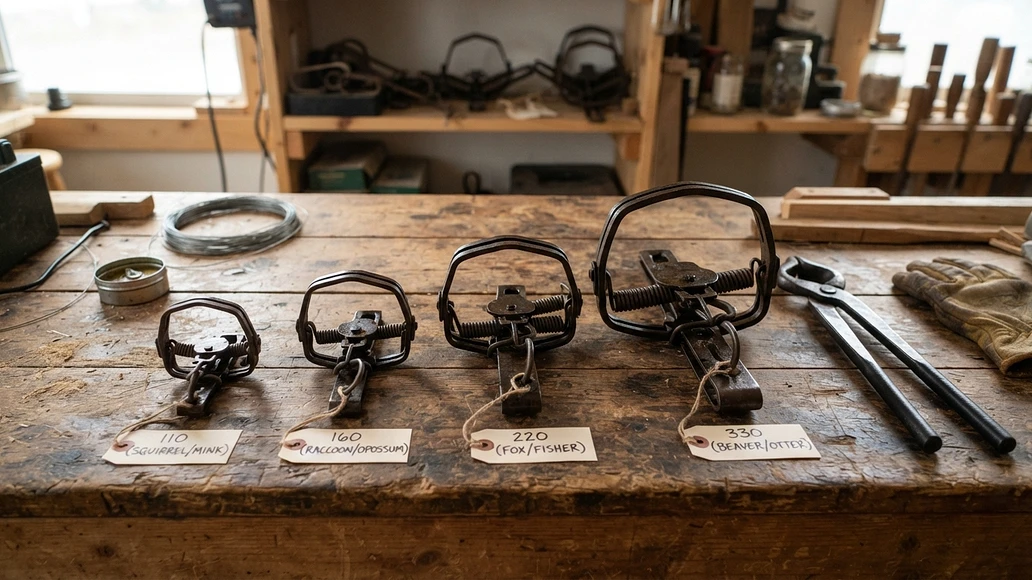
Body-grip traps are sold in several standard sizes. Exact dimensions vary by maker, and legal use may vary by state. Bigger is not better. Matching trap size to the target species and set type is one of the most important decisions for both effectiveness and humane outcomes.
| Trap size | Typical target animals | Common use setting | Notes and limits |
|---|---|---|---|
| #110 | Muskrat, mink, weasel | Runs, small channels, den entrances | Often used where a smaller opening helps reduce non-target captures |
| #160 | Large muskrat, mink, squirrel in some legal contexts | Tight travel ways, boxes, restricted entrances | Can be more versatile than a #110, but still requires careful placement |
| #220 | Raccoon, opossum, similar medium animals where legal | Boxes, cubbies, trail pinch points, some water-edge sets | High pet risk on land. Frequently restricted or regulated more tightly |
| #330 | Beaver, otter where legal | Submerged channels, dam breaks, castor mound approaches | Very powerful. Serious injury risk to users. Often limited to water or permit-based use |
The larger the trap, the greater the danger to hands, pets, and non-target wildlife. Many jurisdictions treat #220 and #330 style traps more strictly than smaller body-grip traps, especially for dry-land use.
Are Body-Grip Traps Humane?
The short answer is that the humane question is contested, and the answer depends heavily on trap size, placement, species, and set conditions. Trapping manuals and product descriptions often describe body-grip traps as quick-kill devices. Animal welfare groups and some policy reviews argue that real-world outcomes are less consistent, especially when the strike is off target or when aquatic sets lead to drowning rather than immediate unconsciousness.
That does not mean every set performs poorly. It does mean users should be skeptical of simple claims like instant kill. In practice, humane performance depends on precise placement, legal set design, frequent checking where required, and a willingness to use alternatives when conditions are not right.
| Claim or concern | What supporters say | What critics say | Practical takeaway |
|---|---|---|---|
| Quick kill design | Proper neck or chest strike can dispatch some animals rapidly | Misplacement can cause prolonged distress or escape injuries | Set quality matters more than marketing language |
| Aquatic use | Common for beaver and muskrat control | Some animals may lose consciousness only after minutes underwater | Know your local rules and the welfare debate before using water sets |
| Efficiency | Compact and effective in travel routes | Non-selective, can kill pets and protected wildlife | Only use where species targeting is realistic and lawful |
| Humane reputation | Often considered more humane than some older trap types | Evidence is mixed in field conditions | Avoid overconfidence and use the most controlled set possible |
Where These Traps Are Legal, and Under What Conditions
There is no single national rulebook for body-grip traps in the United States. State laws, and sometimes county or local rules, can differ sharply. Some places allow certain sizes only in water. Some require nuisance wildlife permits. Some specify enclosure openings, setback distances, tagging, or trap-check intervals. Others restrict or prohibit certain body-grip uses altogether.
Because laws change, the safest approach is to treat every planned set as a legal research task. Do not rely on a forum post, an old trapping manual, or a retailer description.
| Regulatory issue | How rules often vary | Why it matters |
|---|---|---|
| Permit requirement | Some states require a nuisance wildlife permit or special trapping authorization | Using a trap without the proper permit can lead to fines or confiscation |
| Land versus water sets | Some jurisdictions allow larger body-grip traps only when fully submerged | This is one of the most common legal limits on larger traps |
| Trap-check interval | Intervals may differ by species, trap type, and whether the set is on land or in water | Missing a required check can create both legal and humane problems |
| Trap size and enclosure rules | Some places regulate opening size or require recessed boxes for dry-land sets | These rules are meant to reduce pet and non-target captures |
| Euthanasia standards | Some states specify acceptable dispatch methods for live-caught animals | Improper follow-up can be unlawful even if the trap itself was legal |
Examples often cited in current discussions include states that require special permits for nuisance wildlife trapping and states that are revising older restrictions. That trend cuts both ways. Some jurisdictions are tightening rules around body-grip traps, while others are loosening permit requirements. That is another reason to verify current law directly with your wildlife agency before setting anything.
Personal Safety Comes First
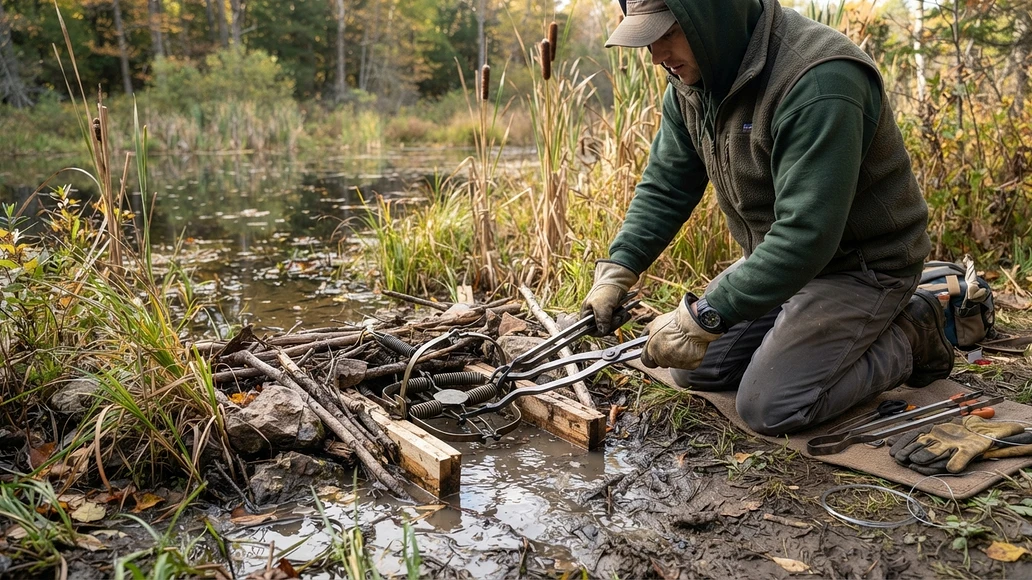
Body-grip traps are not beginner-friendly tools. The springs are strong enough to bruise badly, cut skin, or break fingers. Larger traps can be extremely difficult to control without proper setting tongs. If you have never handled one before, formal instruction from a state trapper education course or an experienced mentor is the safest starting point.
At a minimum, safe handling means using the right tool for the trap size, keeping your thumbs and fingers outside the jaw path, and leaving the spring safety hooks engaged until the trap is fully positioned and stabilized.
| Safety step | Why it matters | Common mistake to avoid |
|---|---|---|
| Use setting tongs sized for the trap | Gives better leverage and control over strong springs | Trying to compress large springs by hand |
| Wear sturdy gloves and eye protection | Reduces cuts, pinches, and debris injuries | Handling rusty or muddy traps barehanded |
| Engage safety hooks on compressed springs | Provides a backup if your grip slips | Removing safeties too early |
| Keep hands outside the jaws | Prevents crush injuries if the trap fires | Reaching through the frame while adjusting the trigger |
| Stabilize the trap before final arming | Helps prevent accidental firing during placement | Balancing the trap loosely in a run or box |
| Transport and store traps secured | Protects children, pets, and anyone sharing the space | Leaving set or partially set traps in a truck bed or shed corner |
If a trap snaps on a hand, do not panic. Larger traps may require a second person or proper tongs to release safely. If there is severe swelling, numbness, deformity, or broken skin, seek medical care promptly.
How to Reduce Risk to Pets, Children, and Non-Target Wildlife
Body-grip traps are non-selective. They do not know the difference between a raccoon and a dog, or between a target furbearer and a protected species. That is why set location matters as much as trap choice.
As a general rule, the risk rises sharply when traps are placed near yards, trails, recreation areas, livestock paths, or anywhere dogs roam. Dry-land sets for medium and large body-grip traps deserve especially careful scrutiny. In many situations, a cage trap, exclusion repair, or professional wildlife operator is the safer option.
| Risk area | Why it is dangerous | Safer practice |
|---|---|---|
| Near homes and outbuildings | Pets and children may encounter the trap first | Avoid lethal sets in shared residential spaces |
| Along visible trails | Non-target wildlife and dogs use the same travel routes | Use only highly controlled, legal set designs away from public access |
| Open dry-land placement | Large opening invites unintended captures | Use legal enclosures or recessed boxes where allowed |
| Suburban nuisance control | High chance of neighbor, pet, or public conflict | Consider cage traps, exclusion, or licensed wildlife control instead |
| Protected species habitat | Accidental take can trigger serious penalties | Consult wildlife authorities before trapping in sensitive areas |
Good targeting often involves physical guidance, such as narrow runs, underwater channels, or legal enclosures that limit access by larger non-target animals. But no setup removes risk completely. If the area cannot be controlled, do not set a body-grip trap there.
Placement Basics, Without Turning This Into a Step-by-Step Setting Manual
Because body-grip traps carry real injury and legal risk, it is better to focus on principles than on a novice how-to. Effective and safer placement usually means identifying a natural choke point where the target species already travels, choosing a trap size that matches that animal, and stabilizing the trap so the strike zone aligns with the head and shoulders rather than the midsection.
In practical terms, that often means:
- smaller traps in tighter runs for smaller furbearers,
- larger traps primarily in controlled aquatic or permit-authorized nuisance settings,
- avoiding broad, open approaches where non-target animals can enter from odd angles,
- and refusing to set when you cannot predict what else may use the location.
If you are not confident in species identification, travel pattern reading, and legal set construction, that is a sign to stop and get training first.
Trap-Check Duties and Humane Follow-Up
Even though body-grip traps are intended as lethal devices, users still have responsibilities after the set is made. Laws may require checks at specific intervals. Ethical use also means planning in advance for what you will do if the animal is alive, if a non-target is caught, or if weather and water conditions change the set.
| Situation | Why it matters | Best general response |
|---|---|---|
| Target animal dead in trap | Needs prompt removal and lawful handling | Follow local rules for tagging, disposal, or fur handling |
| Animal alive but badly injured | Creates urgent welfare and legal concerns | Use only lawful dispatch methods, or contact a licensed professional if you are not trained |
| Non-target wildlife captured | May involve protected species or reporting duties | Contact wildlife authorities if required, especially for protected animals |
| Pet captured | Immediate veterinary emergency may exist | Release only if safe to do so, then seek urgent veterinary care |
| Trap left unchecked too long | Raises suffering, spoilage, and legal issues | Do not set traps unless you can meet the required check schedule |
If you do not know the lawful and humane next step for a live-caught animal, you are not ready to set the trap. That is a hard rule worth keeping.
Alternatives That Often Solve the Problem Better
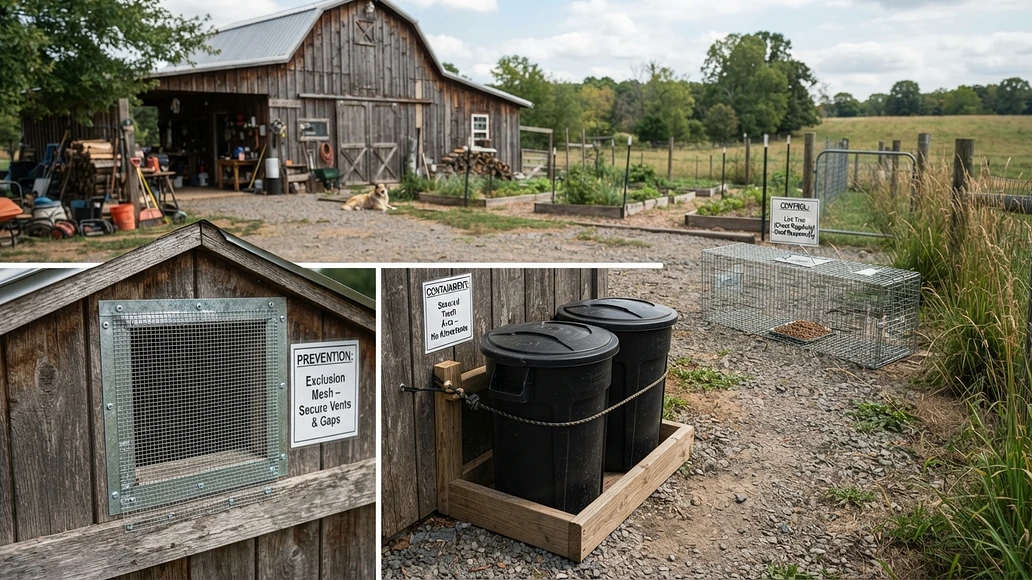
Many nuisance wildlife problems are really habitat and access problems. If food, shelter, water flow, denning space, or entry points remain unchanged, removing one animal may only create a temporary break before another moves in.
| Method | Best use case | Advantages | Limitations |
|---|---|---|---|
| Exclusion repair | Animals entering buildings, crawlspaces, sheds | Addresses the root cause, non-lethal | Must be done thoroughly and at the right season |
| Habitat modification | Reducing attractants such as feed, garbage, cover, or standing water | Long-term prevention | May take time and repeated effort |
| Cage traps | Situations where live capture is legal and practical | More selective than body-grip traps | Requires a plan for lawful relocation or dispatch |
| Licensed wildlife control operator | Complex, high-risk, or regulated nuisance cases | Professional knowledge of law and humane practice | Costs more than do-it-yourself methods |
| Body-grip trap | Controlled, legal, species-specific travel routes | Compact and effective in the right hands | High safety risk, non-target risk, legal complexity |
For many homeowners, exclusion and habitat changes are the better first move. Trapping may still have a place, especially in rural property protection or food procurement contexts, but it should not be the automatic answer.
Where Body-Grip Traps Fit in Preparedness and Homesteading
Preparedness-minded readers often look at trapping through the lens of food security, fur use, and protecting gardens, ponds, culverts, or timber from repeated animal damage. In that context, body-grip traps can make sense when the user is trained, the species is lawful to trap, the set is controlled, and the alternatives have been considered.
They make less sense in dense neighborhoods, around free-roaming pets, or in places where legal restrictions are complex enough that a mistake is likely. Self-reliance includes knowing when a tool is appropriate and when it creates more trouble than it solves.
Common Mistakes That Lead to Trouble
| Mistake | What goes wrong | Better approach |
|---|---|---|
| Using the wrong trap size | Poor strike placement, escapes, or unnecessary suffering | Match trap size to species and set type |
| Setting near pet traffic | Dog or cat capture becomes likely | Choose controlled locations far from domestic animal activity |
| Ignoring permit and set rules | Fines, confiscation, or criminal penalties | Read current state regulations before every season or nuisance job |
| Handling without tongs or safeties | Hand injuries during compression and placement | Use proper tools and keep safeties engaged until final positioning |
| Leaving traps unchecked | Legal violations and poor humane outcomes | Set only what you can monitor on schedule |
| Using lethal trapping as the only solution | Wildlife conflict returns because attractants remain | Combine trapping, if legal, with exclusion and habitat correction |
Maintenance and Storage
A neglected trap is less predictable and more dangerous. Rust, bent triggers, weak or damaged springs, and worn dogs can all affect performance. After use, clean mud and organic material off the trap, dry it thoroughly, inspect moving parts, and store it where children and unauthorized adults cannot access it.
| Maintenance task | Purpose | What to look for |
|---|---|---|
| Cleaning | Removes debris that interferes with operation | Mud, hair, plant matter, corrosion |
| Inspection | Checks safe function before reuse | Cracks, bent frames, weak springs, trigger damage |
| Dry storage | Reduces rust and accidental contact | Locked cabinet, labeled container, no set traps left exposed |
| Tool check | Keeps setting equipment reliable | Worn tongs, damaged grips, missing safety catches |
Ethical Questions Worth Asking Before You Set One
Before using a body-grip trap, ask yourself whether the problem is immediate enough to justify a lethal method, whether a non-lethal fix has been tried, whether pets or protected species could reasonably encounter the set, and whether you are prepared for the possibility that the outcome will not be as clean as intended.
That is not anti-trapping. It is responsible trapping. The more powerful and final the tool, the more discipline it requires.
Policy Trends to Watch
Body-grip traps remain part of an active policy debate. Some lawmakers and animal welfare groups continue to push for tighter restrictions or outright bans, especially for larger dry-land sets and situations with high non-target risk. At the same time, some states are revising permit systems and training requirements in ways that may expand access. For users, the practical lesson is simple. Rules can change quickly, and assumptions from a few years ago may no longer be safe.
How to Learn Safely and Legally
If you want to use body-grip traps, the best next step is formal education. Start with your state wildlife agency, trapper education courses, hunter education resources, or a licensed nuisance wildlife professional. Hands-on instruction matters here more than internet confidence. A short lesson from a qualified mentor can prevent a painful injury, a dead pet, or a citation.
References
- What are the different types of traps used in trapping?
- Wildlife Trapping in Massachusetts
- Trapping and Penning | Animal Welfare Institute
- Washington Wildlife Removal Laws: What Property Owners Need ...
- Use of traps
- Office of the Revisor of Statutes
- Trapping Fur-Bearing Animals: Pelts for Warmth and Trade
- How to Start Trapping: 11 Tips for Beginners