RIP Ammunition and Civilian Law, Federal Rules, State Limits, and Practical Checks
RIP rounds are often legal for civilian ownership under federal law, but that does not settle the question everywhere. Here is how to separate federal definitions, state restrictions, carry rules, shipping limits, range policies, and hunting regulations before you buy.

If you are asking, Are RIP rounds legal for civilian ownership?, the short answer is often yes under federal law, but not always in practice. RIP rounds are a branded type of specialty handgun ammunition, not a standalone legal category written into most statutes. That matters, because the real legal answer usually depends on how your state treats expanding or specialty ammunition, whether local rules add limits, and whether you are talking about buying, possessing, carrying, transporting, or using it.
This article is general educational information, not legal advice. Ammunition law can change, and some states apply special rules that make a simple yes or no misleading. If you plan to carry specialty ammunition for self-defense, order it online, or travel across state lines with it, verify current law through your state statutes, attorney general, state police, or a qualified firearms attorney.
What RIP rounds are, and what they are not
RIP usually refers to a marketed projectile design intended to behave differently from standard full metal jacket ammunition. In plain language, people often discuss RIP rounds alongside hollow points and other defensive loads because they are sold as specialty handgun ammunition. Legally, though, the name itself does not create a unique federal category.
That is one of the biggest points of confusion online. A product name is not the same thing as a statutory definition. Courts and regulators usually care more about projectile construction, intended use, and the wording of state or federal law than about the marketing label on the box.
| Ammunition type | What it generally means | Common civilian use | Typical legal concern |
|---|---|---|---|
| RIP or similar specialty defensive loads | Branded handgun ammunition with nonstandard projectile design | Personal defense, limited testing | State classification, carry rules, range policy, shipping restrictions |
| Hollow point | Expanding bullet with a cavity in the nose | Self-defense, some hunting uses | State-specific restrictions in a few jurisdictions |
| Fragmenting ammunition | Projectile designed to break apart under certain conditions | Specialty defensive or training use | How state law defines restricted ammunition |
| FMJ | Full metal jacket, non-expanding in ordinary use | Training, range use | Usually fewer ammo-specific restrictions, but still subject to general law and range rules |
| Armor-piercing ammunition | A legally defined category under federal law based on composition and design | Heavily restricted category | Federal statutory restrictions and additional state rules |
Federal law, the baseline most people start with
At the federal level, the key point is that there is no broad federal ban that automatically makes RIP rounds illegal for civilian ownership. That is why many people can lawfully buy and possess specialty defensive handgun ammunition in the United States.
Federal law does, however, regulate certain ammunition categories, especially armor-piercing ammunition. The important distinction is that RIP rounds are not automatically treated as armor-piercing just because they are marketed as specialized or aggressive defensive ammunition. Those are different concepts.
In general, federal law asks whether a projectile fits a statutory definition, not whether the box uses dramatic branding. That is why people should avoid assuming that every unusual bullet design is prohibited, but also avoid assuming that every specialty round is unrestricted everywhere.
Why people confuse RIP rounds with armor-piercing ammunition
Many online discussions blur together terms like armor-piercing, fragmenting, expanding, and hollow point. Federal law does not treat all of those as the same thing. A specialty defensive round may be unusual without falling into the federal armor-piercing category. The legal analysis depends on the actual construction and the wording of the law.
| Question | Federal answer in general | Why the answer can still change |
|---|---|---|
| Can a civilian own RIP rounds? | Often yes | State law may still restrict possession or related conduct |
| Can a civilian buy RIP rounds? | Often yes | Seller policies, shipping rules, age checks, and state law may limit sales |
| Can a civilian carry RIP rounds? | Not answered by federal baseline alone | Carry law and ammunition restrictions are often state-specific |
| Are RIP rounds armor-piercing by default? | No, not by default | Classification depends on design and legal definitions |
| Can a range ban them? | Yes, a private range can set rules | Private property policy can be stricter than state law |
State law is where the answer often changes
Even when federal law does not broadly prohibit civilian ownership, states can impose their own ammunition rules. Some states focus on who may buy ammunition, some regulate specific projectile types, and some create special rules for possession, carry, or transport. A state may also have separate rules for handguns, hunting, or magazine and firearm combinations that indirectly affect how people use certain ammunition.
New Jersey is one of the most commonly cited examples because it has special rules involving certain ammunition types, especially in discussions about hollow points and defensive carry. That does not mean every specialty round is automatically illegal there, but it does mean residents and travelers should not rely on broad internet summaries.
California is another example where ammunition regulation can involve more than simple possession. Purchase procedures, vendor requirements, and other state-specific rules can affect what is practical or lawful even if the ammunition itself is not categorically banned.

What legal to own does not necessarily mean
Ammunition can be legal to possess in your home but still raise separate issues for public carry, vehicle transport, mailing or shipping, hunting use, or range use. That is why the phrase legal to own is only the starting point.
| Activity | What to verify | Why it matters |
|---|---|---|
| Buying in person | State age rules, ID requirements, seller policy | Some states regulate the sale process even when possession is lawful |
| Buying online | Shipping restrictions, vendor compliance, destination state law | Many sellers block shipments to certain jurisdictions |
| Keeping at home | State possession law, safe storage expectations | Ownership may be lawful even when carry is restricted |
| Carrying for defense | Concealed carry law, ammunition restrictions, local enforcement climate | Carry rules can differ sharply from simple possession rules |
| Transporting in a vehicle | State transport rules, container requirements, interstate travel issues | Crossing state lines can change the legal picture quickly |
| Using at a range | Range policy, backstop rules, projectile restrictions | Private facilities can prohibit specialty ammunition |
| Using for hunting | Wildlife regulations, caliber rules, projectile rules | Game laws often differ from self-defense law |
RIP rounds compared with hollow points
RIP rounds and hollow points are often discussed together because both are usually sold as defensive ammunition, but they are not the same thing. A hollow point is a broad projectile category. RIP is a brand or product style within the larger world of specialty ammunition. Depending on the jurisdiction, a law may mention hollow points specifically, may use broader language about expanding ammunition, or may not address either category directly.
That means you should not assume that a rule about hollow points automatically answers the question for RIP rounds. In some places the practical answer may be similar. In others, the wording of the statute may matter a great deal.
Can civilians buy RIP rounds online?
In many states, civilians can buy specialty ammunition online, but online sales add another layer of compliance. The seller has to decide whether it can legally ship to your address, and many retailers use conservative shipping rules. Even if your state allows possession, a seller may refuse shipment because of unclear local law, county restrictions, or internal policy.
Before ordering, check whether your state requires ammunition background checks, licensed vendor transfer, age verification, or other purchase conditions. Also confirm whether your city or county has local rules that are stricter than state law. A failed order is inconvenient. A mistaken order into a restricted jurisdiction can be much worse.
Can you carry RIP rounds for self-defense?
This is one of the most state-dependent questions. In many jurisdictions, if the ammunition is lawful to possess and you are lawfully carrying a handgun, specialty defensive ammunition may also be lawful to carry. But that is not universal. Some states or localities may have special rules, and prosecutors or law enforcement may view unusual ammunition differently in a defensive incident even when possession itself is lawful.
That does not mean specialty ammunition is automatically a legal problem. It means readers should separate two issues. First, is the ammunition lawful under the statute? Second, is it a wise choice from a legal risk and evidence standpoint? Those are not always the same question.
For many ordinary gun owners, a mainstream defensive load with a long record of law enforcement or civilian use may create fewer practical questions than a niche product with aggressive marketing. That is not a statement about performance superiority. It is a reminder that legal clarity and predictability matter.
Range use, private property rules, and why legality is not the whole story
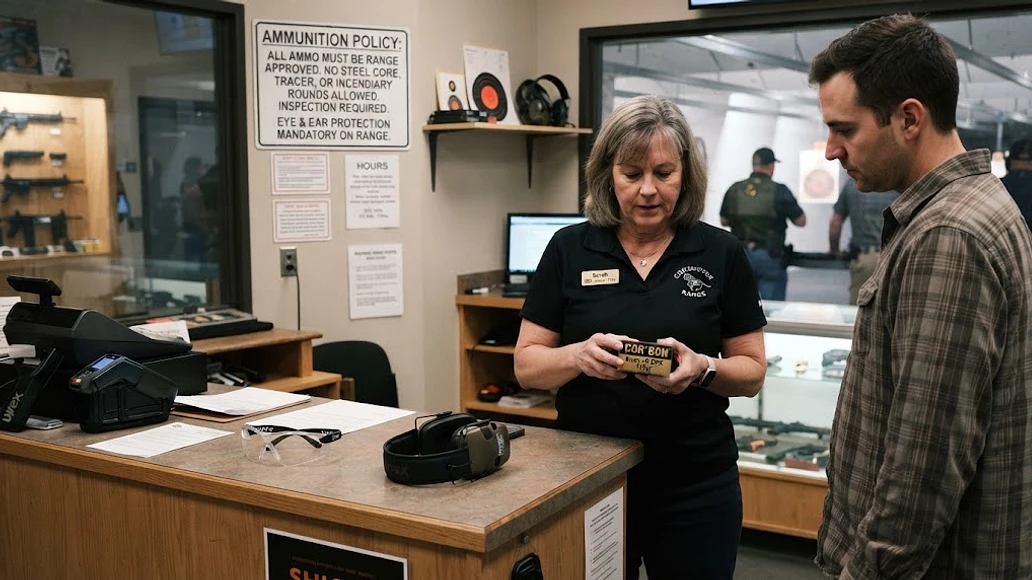
Even if your state allows ownership, a private range can still prohibit certain ammunition. Some ranges ban steel-core projectiles, tracer rounds, incendiary rounds, or any specialty ammunition that could damage backstops or create safety concerns. Others may prohibit fragmenting or unusual projectiles simply because they do not want uncertainty on the firing line.
Always check the posted range rules before bringing specialty ammunition. If the policy is unclear, call ahead and ask. A range employee may want to inspect the box or the projectile type before approving use.
| Who sets the rule | What they can control | Example |
|---|---|---|
| Federal government | National statutory categories and baseline restrictions | Armor-piercing definitions under federal law |
| State government | Purchase, possession, carry, transport, and hunting rules | Special ammunition restrictions or sales procedures |
| Local government | Possible local ordinances where allowed by state law | City-level sales or discharge rules |
| Private range | Facility use rules on private property | No specialty or fragmenting ammunition allowed |
| Private seller or online retailer | Business policy and shipping compliance | No shipment to selected states or cities |
Are RIP rounds legal for hunting?
Hunting law is its own category. A round that is legal to own for home possession may still be a poor fit or an unlawful choice for hunting. State wildlife agencies often regulate caliber, projectile type, season, species, and humane harvest standards. Some states require expanding bullets for certain game. Others may effectively rule out unusual defensive handgun ammunition because of caliber or method restrictions.
If you are thinking about hunting use, check your state wildlife agency regulations, not just firearms statutes. Hunting rules are often published separately and updated on their own schedule.
How to check your state and local law before buying
The safest approach is to verify the question in layers. Start with your state statutes and official guidance. Then check whether your state police, attorney general, or department of justice has plain-language ammunition guidance. After that, review local ordinances if your state allows local regulation. Finally, check the seller and range policies that apply to your actual purchase and use.
| Step | What to look for | Best source |
|---|---|---|
| 1 | Definitions of prohibited or restricted ammunition | State statutes and legislative code |
| 2 | Rules on possession, carry, and transport | State police, attorney general, state DOJ |
| 3 | Purchase and shipping requirements | State agency guidance and retailer compliance pages |
| 4 | Local restrictions if applicable | City or county code, local law enforcement guidance |
| 5 | Range and hunting use limits | Private range rules, state wildlife agency regulations |
| 6 | Unclear edge cases | Qualified firearms attorney in your state |
Common research mistakes to avoid
One common mistake is assuming that federal legality settles everything. Another is treating RIP rounds, hollow points, and armor-piercing ammunition as interchangeable terms. A third is relying on forum posts or old articles that do not cite statutes or official state guidance.
People also get into trouble by asking only whether they can buy the ammunition, instead of asking whether they can carry it, transport it, or use it at a range. Those are separate questions. Finally, many buyers forget that private businesses can be more restrictive than the law requires.
When it makes sense to ask a firearms attorney
Consider professional legal advice if any of the following apply to you. You live in a state known for ammunition-specific restrictions. You plan to carry specialty ammunition for self-defense. You travel across state lines with firearms and ammunition. You have a prior legal issue that could affect firearms or ammunition possession. Or you cannot tell from the statute whether a specific projectile design falls inside or outside a restricted category.
Paying for a short consultation can be cheaper than guessing wrong.
Practical alternatives if your goal is lawful home defense
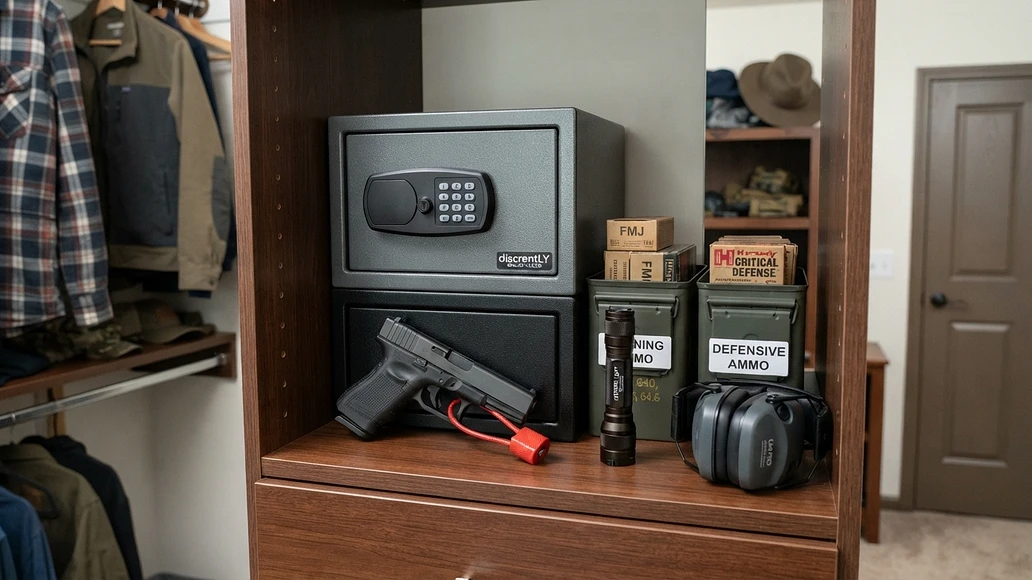
If your main concern is lawful, defensible home protection, many people are better served by widely available, mainstream defensive ammunition that is clearly marketed for ordinary self-defense use and easier to research under state law. Standard, reputable hollow point loads often have more public testing, broader availability, and fewer gray-area questions than niche specialty rounds.
This is not a recommendation of any specific product, and it is not a claim that one load is universally best. It is simply a reminder that legal clarity, reliability in your firearm, and compliance with local rules should come before marketing claims.
Bottom line
For most Americans, RIP rounds are often legal for civilian ownership under federal law. But that broad answer is only the beginning. State law, local rules, online sales policies, carry restrictions, range rules, and hunting regulations can all change what you may actually do with that ammunition.
If you want the safest practical takeaway, use this one. Do not rely on the product name. Verify how your state defines restricted ammunition, confirm whether carry or transport rules differ from simple possession, and check private range or seller policies before you spend money.
FAQ
Are RIP rounds legal to own in every state?
No. They are often legal in many jurisdictions, but not every state treats specialty ammunition the same way. Some states have special restrictions or related rules that can affect ownership, purchase, or carry.
Are RIP rounds legal to carry for self-defense?
Sometimes, but this is highly state-dependent. A round may be legal to possess yet still raise separate carry issues. Verify your state carry law and any ammunition-specific restrictions before relying on it for defense.
Are RIP rounds the same as hollow points?
No. Hollow point is a broad ammunition type. RIP is a branded specialty design. They may be discussed together, but they are not identical legal categories.
Are RIP rounds considered armor-piercing ammo?
Not automatically. Armor-piercing ammunition is a specific legal category under federal law. A specialty defensive round does not become armor-piercing just because it has unusual marketing or design features.
Can you buy RIP rounds online and have them shipped to your home?
In many places, yes. But shipping depends on your state, local law, and the retailer's compliance policy. Some sellers will not ship specialty ammunition to certain jurisdictions even if possession may be lawful there.
References
- Cornell Legal Information Institute, 18 U.S.C. § 921
- Bureau of Alcohol, Tobacco, Firearms and Explosives, ammunition guidance and regulatory resources
- State of New Jersey, statutes and official guidance
- California Department of Justice, firearms and ammunition guidance
- National Shooting Sports Foundation, ammunition basics and legal overview