Cold Months, Hidden Threats, What Winter Really Means for Ticks
Freezing weather lowers tick activity, but it rarely wipes ticks out. Learn which species survive winter, when bites still happen, how snow and leaf litter protect ticks, and what practical steps reduce risk for people and pets.

A hard freeze can make the outdoors feel safer, but winter does not reliably end tick risk. In many parts of the United States, ticks survive cold weather by sheltering in leaf litter, soil, brush, animal nests, and even under snow. Some species become less active for stretches of time, then start questing again during mild spells. That means the better answer is not, “Do ticks die in winter?” but, “How much does winter reduce activity where you live, and when does risk return?”
For most households, the practical takeaway is simple. Winter may shorten the problem, but it usually does not eliminate it. If you hike, hunt, cut firewood, walk dogs, work in brushy areas, or spend time in yards with woods nearby, cold weather alone is not enough protection.
What people really mean when they ask about ticks in winter
The question usually has three parts. First, do ticks survive freezing temperatures? Second, can they still bite during winter? Third, does a cold season lower the chance of Lyme disease or other tick-borne infections? The answer to all three depends on species, life stage, local weather, and habitat.
Ticks are not insects. They are arachnids, and many are well adapted to surviving seasonal cold. They do not need to stay fully active all winter to remain a problem. If they can conserve energy and avoid drying out, many can make it through until conditions improve.
Key terms that make the winter question clearer
Dormancy means reduced activity and metabolism during unfavorable conditions. Diapause is a more programmed pause in development or activity that helps survival through seasonal stress. Questing is the behavior of waiting on vegetation or leaf litter edges with front legs extended, ready to latch onto a host. A tick can spend part of winter inactive, then resume questing during a thaw.
Which U.S. tick species are most likely to survive winter
Not all ticks behave the same way. Species differences matter, especially for winter activity and disease risk.
| Tick species | Typical winter pattern | Where winter risk is more likely | Main concern |
|---|---|---|---|
| Blacklegged tick, also called deer tick | Often survives well in leaf litter and can become active on mild winter days | Northeast, Upper Midwest, Mid-Atlantic, some milder nearby areas | Lyme disease, anaplasmosis, babesiosis and other infections |
| Lone star tick | Winter activity usually drops, but survival can remain high in sheltered habitat and milder climates | Southeast, South Central states, expanding northward in some regions | Ehrlichiosis, alpha-gal syndrome risk association, other illnesses |
| American dog tick | Adults are less active in deep cold, but populations often persist through winter | Much of the eastern U.S. and parts of the West | Rocky Mountain spotted fever risk in some areas, tularemia |
| Soft ticks | Often live in nests, dens, cabins, or sheltered animal sites, protected from outdoor weather swings | Regional and habitat specific | Relapsing fever in certain settings |
Blacklegged ticks deserve special attention because they are among the species most often discussed in winter. In some regions, adults remain active whenever temperatures rise enough for movement and host-seeking, even if snow is still on the ground.
Life stage matters as much as species
Larvae, nymphs, and adults do not all overwinter in the same way. Some life stages are more vulnerable to drying out or extreme exposure, while others are better protected in ground cover.
| Life stage | Winter survival pattern | Typical winter activity | Practical risk note |
|---|---|---|---|
| Larva | Often survives best in protected microhabitats, not out in open exposure | Usually low visible activity in winter | Less commonly noticed by people during cold months |
| Nymph | Can overwinter in sheltered ground cover | Often less active in deep cold | Important later because nymphs are small and easy to miss |
| Adult | Many adults survive winter well if insulated by litter or snow | Can quest during mild spells above freezing | Adult blacklegged ticks are a notable winter bite risk in some regions |
This is one reason winter can be misleading. You may not see obvious tick activity for days or weeks, then encounter adults as soon as a warmer stretch arrives.
Do ticks hibernate, or do they go dormant?
People often say ticks hibernate, but that is not the most accurate description. Many ticks enter a state of reduced activity rather than true hibernation. Their metabolism slows, movement drops, and they shelter in places that buffer them from the worst air temperatures.
That distinction matters because reduced activity is not the same as death. A tick that is inactive during a cold snap may become active again when conditions improve. This is why a sunny winter afternoon can still bring exposure, especially in brushy edges, deer paths, wood piles, and leaf-covered ground.
How cold weather affects tick survival
Cold weather can reduce tick activity and sometimes kill exposed individuals, especially when severe cold combines with dryness and little shelter. But winter outcomes are highly context dependent. Snow cover, moisture, wind exposure, and the temperature at ground level can matter more than the number on a weather app.
Ticks near the soil surface or under leaves may experience a much less extreme environment than the open air. In practical terms, a week of bitter air temperatures does not necessarily mean the local tick population has collapsed.
Temperature thresholds are useful, but not universal
Many ticks become more active when temperatures rise above freezing, but there is no single magic number that applies everywhere. Species, sunlight, humidity, and local adaptation all matter. A thaw after a cold stretch can bring a short window of activity, especially for adult blacklegged ticks.
| Winter condition | Likely effect on ticks | What it means for people |
|---|---|---|
| Deep freeze with frozen ground and little cover | Activity drops sharply, some exposed ticks die | Risk is lower, but not guaranteed to be zero |
| Stable snow cover over leaf litter | Insulates ticks and improves survival | Do not assume snow has killed them off |
| Mild day above freezing | Some species may resume questing | Winter hikes and yard work can still lead to bites |
| Wet leaf litter in sheltered woods | Helps maintain humidity and survival | Brushy, shaded areas remain higher risk than open lawns |
| Repeated freeze-thaw swings | Effects vary, but activity can return during warm intervals | Risk becomes less predictable, so prevention still matters |
Why snow cover and leaf litter can protect ticks
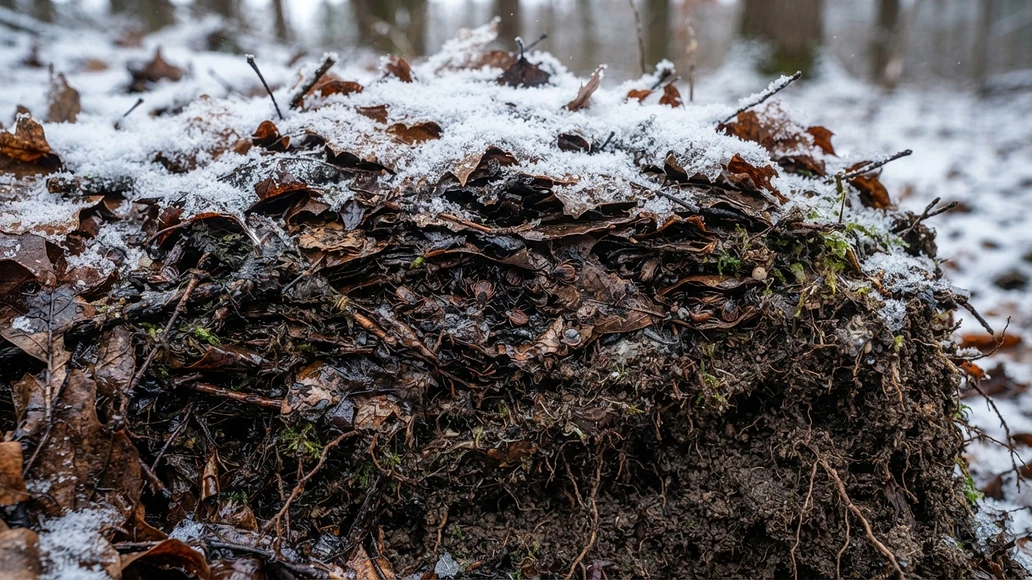
Snow is often thought of as a natural tick killer, but it can act more like a blanket. A layer of snow reduces temperature swings near the ground and helps preserve moisture. Leaf litter does something similar. It creates a buffered microclimate where ticks can avoid direct exposure to wind and extreme cold.
This is why wooded edges, brush piles, and uncleared leaves can remain important winter habitat. Even when the air feels brutally cold, the environment under that cover may be survivable.
When ticks can still bite in winter
Winter bites are most likely during mild spells, in southern and coastal regions, and in sheltered habitats where ground conditions stay favorable. Adult blacklegged ticks are especially known for cold-season activity in some areas. People often get exposed while hiking, hunting, collecting firewood, clearing brush, or walking pets on trails and woodland edges.
Risk is usually lower than in peak warm-season months, but lower is not the same as absent. If the ground is not deeply frozen and temperatures rebound, a tick can still find a host.
Are winter tick bites risky for Lyme disease and other infections?
Yes. The season does not make a bite harmless. If an infected tick attaches, transmission risk depends on the pathogen, the species, and how long the tick was attached, not simply on the calendar month. In areas where blacklegged ticks carry Lyme disease, a winter bite can still matter.
Other infections also remain relevant, depending on region and species. That includes anaplasmosis, babesiosis, ehrlichiosis, Rocky Mountain spotted fever in some settings, and less common illnesses. Do not delay evaluation for symptoms just because the bite happened in cold weather.
Regional differences across the United States
Winter tick risk is not evenly distributed. Northern inland areas with prolonged deep freezes usually see lower winter activity than milder coastal, southern, or transitional climates. But even in colder states, sheltered habitat and warm spells can support activity.
| Region type | Typical winter tick pattern | Practical takeaway |
|---|---|---|
| Far northern inland areas with long freezes | Lower activity for longer periods | Risk drops, but occasional exposure can still happen during thaws |
| Northeast and Upper Midwest wooded areas | Blacklegged ticks may remain a concern during mild winter days | Use prevention for hiking, hunting, and yard work near woods |
| Mid-Atlantic and coastal areas | More frequent winter activity during moderate weather | Do not stop tick checks just because it is winter |
| Southeast and South Central states | Meaningful year-round survival and periodic activity | People and pets may need more consistent prevention |
| Mountain and high exposure zones | Conditions vary sharply by elevation and cover | Local habitat can matter more than broad regional averages |
Winter prevention that actually helps
Weather is not a prevention plan. The most reliable protection still comes from barriers, repellents, checks, and prompt removal.
| Prevention step | What it does | Prevents bites, lowers disease risk, or both |
|---|---|---|
| Wear long pants, long sleeves, and closed footwear | Reduces exposed skin and makes ticks easier to spot | Primarily helps prevent bites |
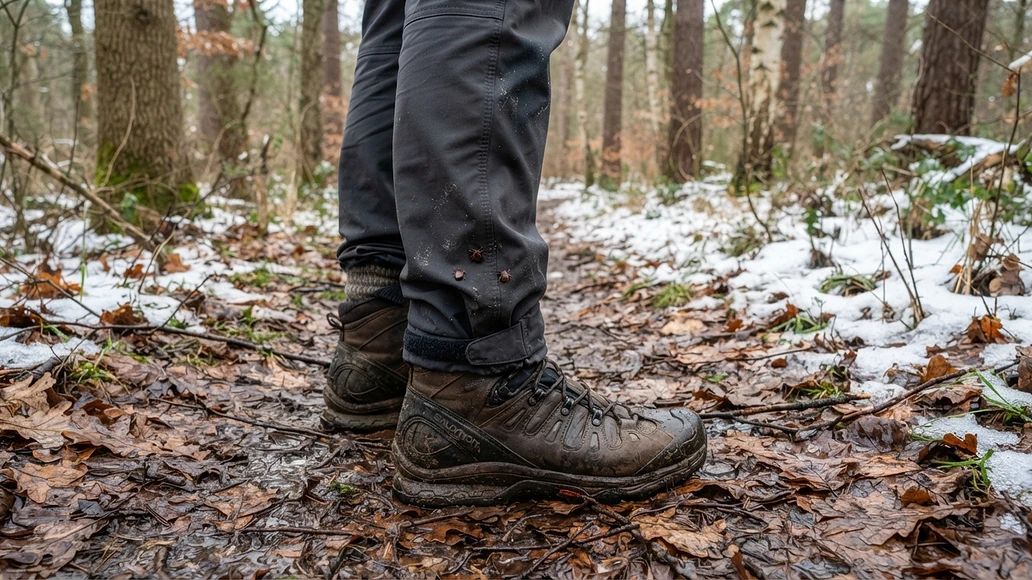
| Tuck pants into socks or gaiters in brushy areas | Creates a barrier at a common entry point | Primarily helps prevent bites |
| Use an EPA-registered repellent on skin as directed | Discourages ticks from attaching | Primarily helps prevent bites |
| Use permethrin-treated clothing and gear, never directly on skin | Kills or disables ticks on treated fabric | Helps prevent bites and may lower disease risk by reducing attachment |
| Stay centered on trails and avoid brushing vegetation | Reduces contact with questing ticks | Primarily helps prevent bites |
| Do a full tick check after outdoor time | Finds ticks before they stay attached longer | Can lower disease risk by shortening attachment time |
| Shower soon after coming indoors when practical | Helps wash off unattached ticks and supports a body check routine | Helps prevent bites and may lower disease risk |
| Prompt, proper tick removal | Reduces ongoing attachment time | Mainly lowers disease risk after a bite has occurred |
How to do a tick check after cold-weather outdoor time
A winter tick check should be just as thorough as a summer one. Ticks can be small, and dark winter clothing can make them harder to notice.
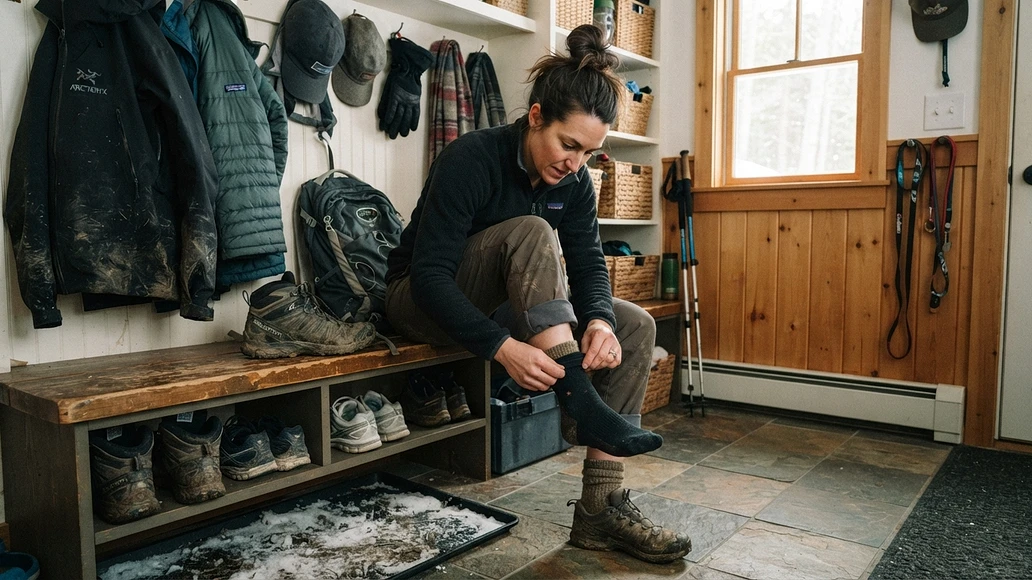
- Check clothing before entering the main living area.
- Look closely at pant cuffs, socks, boot tops, waistbands, and jacket hems.
- Inspect the scalp, behind the ears, neck, underarms, belly button, groin, behind knees, and along waistlines.
- Use a mirror or ask for help checking hard-to-see areas.
- Place outdoor clothes in a dryer on appropriate heat if garment care allows, or wash according to care instructions.
- Check pets, especially around ears, collar area, toes, armpits, and belly.
Safe tick removal, what to do right away
If you find an attached tick, remove it as soon as you can with fine-tipped tweezers.
- Grasp the tick as close to the skin's surface as possible.
- Pull upward with steady, even pressure.
- Do not twist, jerk, burn, crush, or cover the tick with petroleum jelly or other substances.
- After removal, clean the bite area and your hands with soap and water, rubbing alcohol, or another appropriate skin-safe cleanser.
- If practical, note the date of the bite and where exposure likely happened.
If mouthparts remain in the skin, do not dig aggressively. If you cannot remove remaining parts easily, or the area becomes increasingly irritated, contact a clinician. Treatment decisions, including whether any medication is appropriate, should be made by a medical professional.
Do pets need winter tick prevention?
In many regions, yes. Dogs can pick up ticks on winter walks, especially during thaws or in milder climates. Cats with outdoor access can also be exposed. Whether year-round prevention makes sense depends on your location, your pet's habits, and veterinary guidance.
If your dog regularly goes into woods, tall grass, brush, or leaf litter, winter may not be the time to stop thinking about ticks. Ask your veterinarian what schedule fits your area. Do not use dog products on cats unless the label specifically says they are safe for cats.
Common myths about freezing weather and ticks
Myth, a cold winter kills all the ticks
False. Severe cold can reduce some exposed ticks, but sheltered ticks often survive.
Myth, snow means no tick risk
False. Snow can insulate the ground and help ticks overwinter.
Myth, winter bites cannot lead to Lyme disease
False. If the tick is infected and attaches long enough, the season does not remove the risk.
Myth, you only need prevention in summer
False. In many places, prevention should continue whenever outdoor exposure is possible.
When to contact a clinician after a tick bite
Not every tick bite leads to illness, and antibiotics are not automatically needed for every bite. Still, some situations deserve prompt medical advice.
| Situation | Why it matters | Action |
|---|---|---|
| Expanding rash, especially a bull's-eye style rash | Can be a sign of Lyme disease or another reaction needing evaluation | Contact a clinician promptly |
| Fever, chills, severe headache, body aches, unusual fatigue | Possible early tick-borne illness symptoms | Seek medical advice promptly |
| Facial droop, severe joint pain, confusion, shortness of breath, worsening illness | Possible serious complication or advanced infection | Seek urgent medical care |
| Tick attached for a prolonged period or you are unsure how long | Longer attachment can increase concern for some infections | Ask a clinician what follow-up is appropriate |
| Removal was incomplete or the site becomes more inflamed | May need evaluation for retained parts or infection | Contact a clinician |
| Pregnancy, immunocompromised status, or major chronic illness | Risk decisions may differ based on health status | Seek personalized medical advice |
What winter weather can and cannot do to tick populations
Winter can reduce activity, shorten the period of frequent encounters, and in some years lower survival for exposed ticks. What it usually cannot do is solve the problem on its own. Ticks are protected by habitat, by host animals, and by their ability to slow down until conditions improve.
Recent public health and extension reporting has also pointed toward longer tick seasons and more winter activity during mild spells in some areas. That does not mean every winter day is risky. It means the old assumption of a clean seasonal shutdown is less dependable than it used to be.
The most accurate bottom line is this. Winter often eases tick pressure, but it should not be treated as a guaranteed reset. If you spend time outdoors in likely habitat, keep using practical prevention and take bites seriously no matter the month.