Body Grip Traps Explained for Property Owners, Trappers, and Preparedness Readers
Learn what Conibear style body grip traps are, how common sizes are used, where legal restrictions often apply, and the key safety steps that help reduce risks to people, pets, and non target wildlife.

Conibear style traps, often called body grip traps, are widely discussed in trapping, homesteading, and preparedness circles because they are compact, powerful, and intended to dispatch certain animals quickly when used correctly. They are also one of the most controversial trap types in use today. For beginners, the biggest mistake is treating them like simple gear. They are not. They are high force devices with real injury potential, and in many places their use is tightly regulated.
This guide gives a practical overview of what these traps are, what common sizes are meant to do, why legal rules vary so much, and what safety limits matter most. It is general information only. Before buying, carrying, setting, or transporting any body grip trap, check your state and local wildlife laws, land access rules, and trap check requirements. If you are dealing with nuisance wildlife near homes, pets, or public access, a licensed wildlife control operator is often the safer choice.
What a Conibear Style Trap Is
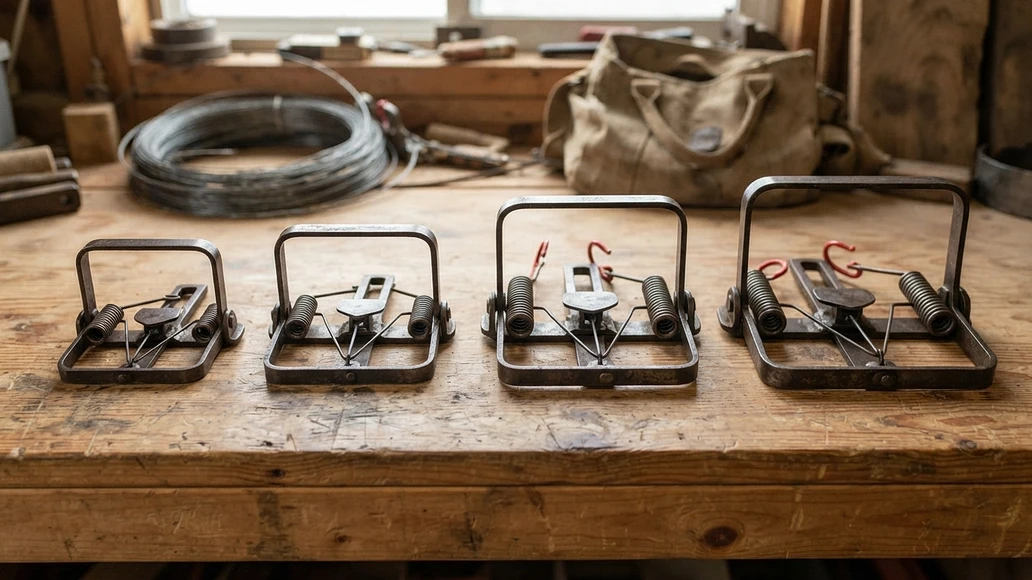
A Conibear trap is a spring powered body grip trap made to close around an animal as it passes through the opening. The design uses two square or rectangular jaws, strong coil springs, a trigger, and a locking mechanism often called the dog. When the trigger is disturbed, the jaws rotate shut with significant force.
Unlike a live cage trap, a body grip trap is not designed for capture and release. Unlike a foothold trap, it does not restrain by the foot. Its intended purpose is to strike the neck, chest, or upper body of a target animal in a way that causes rapid unconsciousness or death. In practice, results depend heavily on trap size, placement, animal position, and set conditions. That is one reason these traps generate both support and criticism.
Common Sizes and Typical Target Animals
Body grip traps are usually identified by size number. Exact dimensions can vary slightly by maker, but the size class generally points to the intended target range. Choosing the wrong size can increase the odds of a poor strike, a live catch, or a non target injury.
| Trap size | Typical opening class | Common target animals | Typical set context | Main cautions |
|---|---|---|---|---|
| #110 | Small | Muskrat, mink, weasel | Runs, den entrances, small channels, boxed sets | Too small for larger animals, poor placement can lead to non lethal catches |
| #160 | Small to medium | Mink, muskrat, marten in some regions, similar sized furbearers | Trail sets, cubbies, restricted enclosures | Land use may be restricted, enclosure design matters for pet safety |
| #220 | Medium | Raccoon, opossum, similar sized animals, small beaver in some contexts | Boxed sets, trail pinch points, some water sets | High non target risk on land, especially for dogs |
| #330 | Large | Beaver, otter where legal | Submerged channels, dam breaks, castor mound approaches | Very high force, serious user injury risk, often subject to strict legal limits |
Why size matters so much
A body grip trap works best when the animal enters squarely and the trap contacts the intended area. A trap that is too small may catch the body poorly. A trap that is too large may allow a smaller animal to enter at an angle, increasing the chance of a bad strike. Size choice is not just about effectiveness. It is also a humane use issue.
Are Body Grip Traps Humane
Supporters often describe Conibear style traps as quick kill devices. That claim is partly true in ideal conditions, but it is not guaranteed. A well matched trap, placed correctly in a controlled travel path, may produce a rapid kill. A poorly placed trap, a side entry, a partial strike, or a water set that does not hit the intended area can lead to prolonged distress.
This is where the debate becomes important. Trapping manuals and experienced trappers may emphasize speed and efficiency. Animal welfare groups point to evidence that some animals, especially in aquatic sets, may take minutes to lose consciousness if the strike is not immediately fatal. Both points matter if you want an honest overview. The practical takeaway is simple. Do not assume the trap itself guarantees a humane outcome. Set quality, legal compliance, and frequent checking still matter.
Where These Traps Are Legal, Restricted, or Prohibited
There is no single national rule for body grip traps in the United States. Some states allow broad use during regulated trapping seasons. Others limit them to submerged sets, require special permits for nuisance wildlife control, restrict jaw spread on land, require trap enclosures, or prohibit certain uses entirely. Local ordinances and public land rules can add another layer.
That means the first step is not learning how to set one. The first step is learning whether you can legally possess and use one in your exact location and for your exact purpose.
| Jurisdiction example | Possible rule pattern | What to verify before use | Why it matters |
|---|---|---|---|
| States with regulated trapping seasons | Allowed only during season, with license and species rules | Season dates, license, legal species, landowner permission | Out of season use can bring fines or confiscation |
| States with nuisance wildlife permits | Special permit may be required for damage control | Permit type, reporting rules, approved trap types, euthanasia standards | Property damage does not automatically make trapping legal |
| States restricting land sets | Body grip traps may need to be submerged or enclosed | Jaw spread limits, enclosure opening size, distance from trails or dwellings | These rules are often aimed at reducing pet and non target captures |
| Areas with local restrictions | County, city, or park rules may be stricter than state law | Local ordinances, HOA rules, public land regulations | Legal at the state level does not mean legal everywhere |
Recent policy trends also matter. Some jurisdictions are moving toward tighter restrictions because of humane and non target concerns. Others are considering looser access with training or registration requirements. Do not rely on old forum advice or a trap package label. Regulations change.
Personal Safety Comes First
The springs on a body grip trap can injure hands badly. Finger fractures, bruising, and crush injuries are real risks, especially with larger sizes. If you are new to these traps, the safest decision is to get hands on instruction from a state approved trapping course, wildlife agency program, or experienced mentor before attempting to set one alone.
At a minimum, safe handling means using the correct setting tool for the trap size, wearing sturdy gloves, keeping thumbs and fingers outside the jaw path, and leaving safety hooks engaged until the trap is fully positioned and stabilized. Never test the trigger with your hands inside the frame. Never carry a set trap casually in a truck cab, on an ATV rack, or where a child or pet can reach it.
| Risk | How it happens | Potential impact | Safer practice |
|---|---|---|---|
| Hand or finger injury | Spring slips during setting or trap fires unexpectedly | Bruising, cuts, fractures | Use setting tongs, maintain control of springs, keep hands out of jaw path |
| Accidental firing during transport | Trap is not secured or safety hooks are not used | Injury to user or passenger, damaged gear | Transport unset when possible, secure trap, use safeties, store in rigid container |
| Pet capture | Trap placed on open trail, near yard edge, or in unsecured cubby | Severe injury or death | Use only where legal, avoid public access areas, use exclusion boxes and restricted openings |
| Non target wildlife capture | Trap placed in mixed use habitat without species control measures | Protected species injury, legal trouble | Target specific travel ways, avoid broad open placement, know local species presence |
| Legal violation | Wrong set type, no permit, missed check interval | Fines, charges, loss of equipment | Read current regulations before every season or nuisance control action |
Placement Basics and Non Target Risk Reduction
Body grip traps are non selective. They do not know the difference between a raccoon and a dog, or between a legal furbearer and a protected species. That is why placement is everything. The more open and accessible the set, the greater the risk.
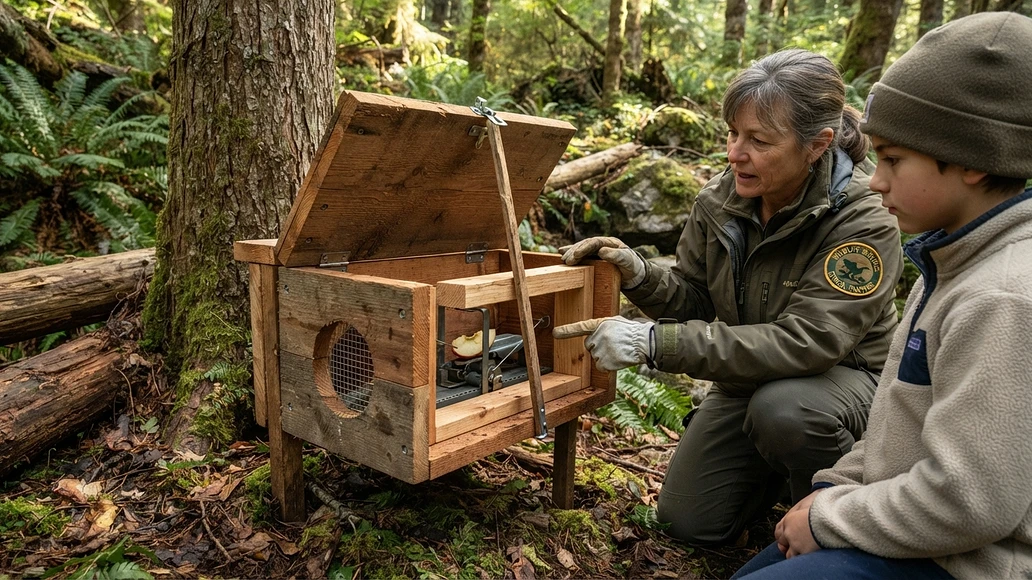
Safer practice usually means setting only in highly controlled travel paths that match the target species, and only where legal. For many larger body grip traps, water sets or fully submerged sets are treated differently under the law because they reduce some public contact risks. On land, many jurisdictions require recessed boxes, cubbies, or enclosure openings sized to limit access by pets and larger non targets.
Red flag locations include suburban greenbelts, edges of walking trails, near off leash dog areas, around children’s play spaces, and anywhere neighbors are likely to encounter the set. If you cannot confidently control access, do not set a body grip trap there.
Trap Check Duties and Humane Follow Up
Even when a trap is intended as lethal, trap checks still matter. Laws may specify exact intervals, and those intervals vary by state, species, and set type. More frequent checks can reduce suffering, improve pelt condition where relevant, and reduce the chance of a non target animal remaining in the trap for long periods.
If an animal is caught alive, the next steps are both legal and ethical. Some states require specific methods for dispatch. Some protected or non target captures must be reported. If a pet is caught, immediate veterinary care is the priority. If you are not trained and legally authorized to handle live trapped wildlife, stop and contact a licensed wildlife control operator or your state wildlife agency for instructions.
Alternatives That Often Solve the Root Problem Better
Many wildlife conflicts are really habitat and attractant problems. Removing one animal may give temporary relief, but if food, water, shelter, or access remain unchanged, another animal may move in. For that reason, lethal trapping is often best viewed as one tool, not the default answer.
| Method | Best use case | Main advantage | Main drawback | Good fit for homeowners |
|---|---|---|---|---|
| Body grip trap | Specific furbearer travel routes, often in regulated trapping contexts | Compact and effective when perfectly matched to species and placement | High injury risk, legal complexity, non target danger | Usually only with training and clear legal authority |
| Live cage trap | Raccoons, opossums, skunks, and similar nuisance animals where legal | More selective and easier for many beginners to understand | Still requires legal release or dispatch plan | Often more practical than body grip traps near homes |
| Exclusion and repair | Animals entering sheds, crawlspaces, attics, gardens | Addresses the access point directly | May require labor and materials | Usually the best first step |
| Habitat modification | Repeated wildlife attraction from food or cover | Long term prevention | Results may take time | Excellent for recurring problems |
| Licensed wildlife control operator | Complex, risky, or legally sensitive situations | Professional handling and legal familiarity | Service cost | Strong option when pets, neighbors, or public access are involved |
When Body Grip Traps Make Sense in Preparedness or Homesteading
For some rural readers, body grip traps may have a place in a broader self reliance plan, especially where legal trapping for furbearers or property protection is part of local practice. They are compact, durable, and can be effective in the hands of trained users. In a true preparedness context, they may be considered for food gathering, fur use, or damage control.
But they are not beginner friendly survival gear. They are not a substitute for hunting skills, gardening, food storage, or exclusion work. They also carry legal and ethical baggage that many other preparedness tools do not. If your goal is practical resilience, it usually makes more sense to master lower risk skills first.
Common Mistakes That Cause Trouble
The most common errors are predictable. People buy the wrong size, set traps in open areas, ignore local rules, skip safety tools, or assume a lethal trap does not need close oversight. Another frequent mistake is copying a set from a video without understanding why that set worked in that exact habitat and legal framework.
A poor setup can fail in several ways at once. It may miss the target species, catch a pet, injure the user, and violate local law. That is why body grip traps demand more discipline than many newcomers expect.
Maintenance and Storage
Like any spring driven tool, body grip traps need inspection. Check for bent frames, weak or damaged springs, worn trigger wires, corrosion, and faulty safeties. Light rust can often be cleaned, but a trap with compromised structure should be retired rather than trusted.
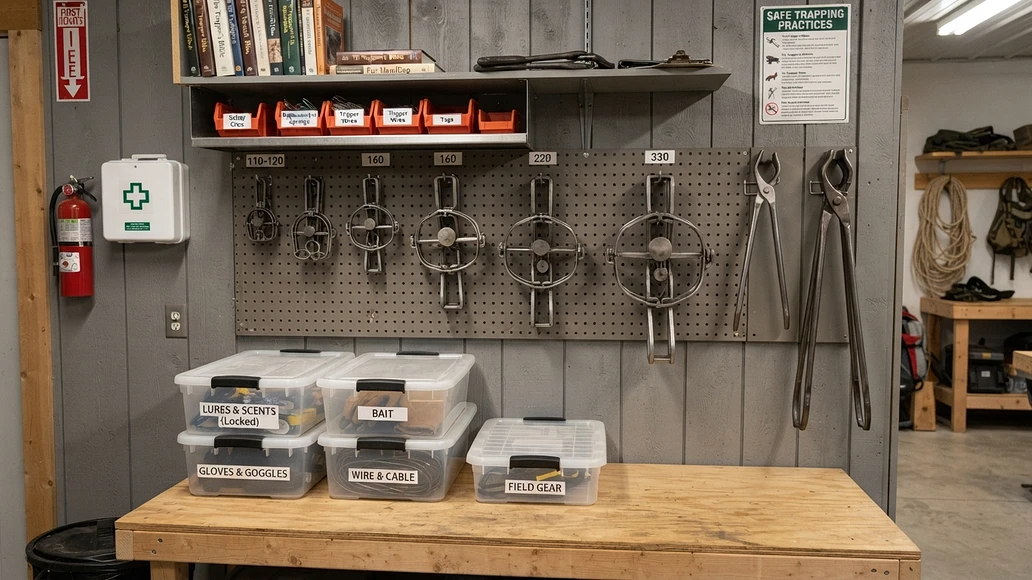
Storage should be dry, organized, and inaccessible to children, visitors, and pets. Keep traps clearly separated by size, with setting tools nearby, and avoid loose piles where springs and triggers can snag. If local law requires secure storage or transport conditions, follow those rules exactly.
Ethical Questions to Ask Before You Set One
Before using a body grip trap, ask whether lethal control is necessary, whether non lethal options were tried, whether the target animal is truly causing measurable harm, and whether you can reduce the chance of a non target capture to a very low level. Also ask whether you are prepared to handle the outcome responsibly if the set does not go as planned.
Preparedness is about responsibility as much as self reliance. A trap that solves one problem but creates injury, public conflict, or unnecessary suffering is not a good preparedness decision.
How to Learn Safely and Legally
If you want to learn trapping, start with your state wildlife agency, hunter education office, or a recognized trapper education course. Formal instruction can teach species identification, legal set types, humane considerations, and safe handling in a way internet clips cannot. Mentorship matters here. A few hours with a qualified instructor can prevent expensive and painful mistakes.
Bottom Line
Conibear style body grip traps are powerful, specialized tools. They can be effective for certain furbearers when the trap size, set location, and legal conditions all line up. They can also injure people, kill pets, catch protected wildlife, and create major legal problems when used carelessly.
If you are considering them for nuisance control or preparedness, treat legality, safety, and humane use as the starting point, not the fine print. When in doubt, choose exclusion, habitat modification, a live cage trap where legal, or professional wildlife control instead.
References
- What are the different types of traps used in trapping?
- Wildlife Trapping in Massachusetts
- Trapping and Penning | Animal Welfare Institute
- Washington Wildlife Removal Laws: What Property Owners Need ...
- Use of traps
- Office of the Revisor of Statutes
- Trapping Fur-Bearing Animals: Pelts for Warmth and Trade