Powdered Butter in the Pantry, Smart Storage, Real Shelf Life, and Better Fat Backups
Butter powder can add compact calories and familiar flavor to emergency meals, but it is not magic. Learn what it is, how long it really lasts, how to store it correctly, and when ghee or clarified butter may be the better shelf-stable fat.

Butter powder appeals to preppers for a simple reason. Emergency food plans often end up heavy on grains, beans, pasta, and freeze-dried meals, but light on fats. A shelf-stable butter product can help fill that gap, improve flavor, and make stored food easier to eat. Still, butter powder is not a miracle pantry item, and it is not the same thing as regular butter in a different form.
If you are thinking about storing it for emergencies, the useful questions are practical ones. What exactly is it? How long does it really last? What ruins it fastest? Is it better than ghee, clarified butter, or other shelf-stable fats? The answers depend on formulation, packaging, and storage conditions, not just the label on the front.
What butter powder is
Butter powder is a dehydrated butter-based product designed to store longer than fresh butter. In many commercial products, butterfat is combined with dairy solids and sometimes carriers or anti-caking ingredients so it can be dried into a powder. That means one brand may be mostly butterfat, while another may include a meaningful amount of milk solids, whey, or maltodextrin.
This matters because two products sold as butter powder may behave differently in storage, mix differently with water, and provide different nutrition per serving. It also means you should not assume every powdered butter product is a pure fat source.
How it differs from similar products
| Product | What it is | Typical storage profile | Main advantage | Main caution |
|---|---|---|---|---|
| Regular butter | Solid dairy fat with water and milk solids | Perishable, best refrigerated or frozen | Best familiar flavor and texture | Not a long-term pantry fat |
| Butter powder | Dehydrated butter-based product, often with added dairy solids or carriers | Shelf-stable when sealed and stored cool and dry | Compact, lightweight, easy to portion | Shelf life varies a lot by brand and packaging |
| Ghee | Butter with water removed and milk solids mostly removed | More established shelf-stable option when unopened | High fat content, cooking friendly | Still degrades with heat, light, and oxygen |
| Clarified butter | Butter with much of the water and solids removed | Often more stable than regular butter, but product-specific | Useful for cooking | Not identical to ghee in flavor or shelf life |
| Butter flavor powder | Flavoring product, not the same as butter powder | Varies widely | Adds butter taste | May provide little actual fat |
How butter powder is made
Commercial butter powder is generally made by turning butter or butterfat into a dry, free-flowing product through industrial dehydration methods. Manufacturers may blend the fat with milk-derived ingredients or carriers to improve stability, texture, and mixability. The exact process is product-specific, which is one reason shelf-life claims differ so much.
For preparedness buyers, the key takeaway is simple. Manufacturing quality and packaging quality matter as much as the ingredient name. A well-packed product in a sealed oxygen-limited container will usually hold quality better than a loosely packed powder in a thin pouch stored in a hot closet.
Is butter powder really shelf-stable?
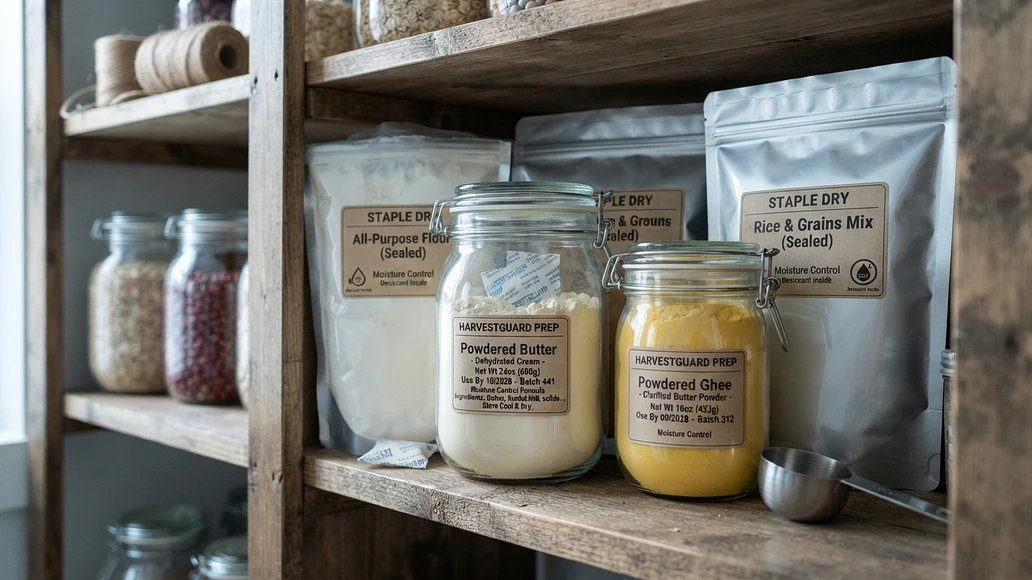
Yes, many commercial butter powder products are shelf-stable when unopened and stored correctly. But shelf-stable does not mean permanent, and it does not mean immune to rancidity. Fat breaks down over time, especially when exposed to heat, oxygen, moisture, and light.
That is why aggressive claims about butter powder lasting forever or for decades should be treated carefully unless the manufacturer clearly documents the packaging method, storage temperature, and testing basis. In real homes, shelf life is usually shortened by warm rooms, humidity, repeated opening, and poor sealing after use.
Butter powder vs butter, ghee, and clarified butter
Each option solves a different problem. Butter powder is convenient for dry storage and lightweight transport. Ghee and clarified butter are often better choices when you want a ready-to-cook fat with fewer added ingredients. Regular butter is best for everyday use, but not for long-term pantry storage.
| Option | Best use | Refrigeration need | Shelf-stable strength | Preparedness downside |
|---|---|---|---|---|
| Butter powder | Baking, dry mixes, backpacking, emergency meal flavor | Usually no refrigeration while sealed, reconstituted product should be refrigerated | Good if sealed and stored cool and dry | Can be expensive per calorie and sensitive to moisture |
| Regular butter | Daily cooking and table use | Yes for safe longer storage | Low for long-term pantry use | Perishable |
| Ghee | Cooking, frying, calorie-dense storage | Often pantry-stable unopened | Very good compared with regular butter | Heavier than powder and not ideal for dry mixes |
| Clarified butter | Cooking and flavor | Product-specific | Better than regular butter | Less standardized than ghee for storage expectations |
How long butter powder lasts
The honest answer is that shelf life varies widely. Some brands market very long storage times, but those numbers usually assume sealed packaging and cool, dry conditions. Once opened, the clock speeds up because oxygen and humidity enter the container every time it is used.
A practical approach is to trust the manufacturer date range first, then shorten your expectations if your storage area is warm, humid, or frequently accessed. If you want the longest useful life, buy products in smaller containers you can rotate instead of one large container that stays open for months.
Storage conditions and quality impact
| Storage condition | Expected effect on quality | Main risk | Practical note |
|---|---|---|---|
| Cool, dry pantry | Best everyday home option | Normal slow oxidation over time | Keep away from stove, dishwasher, and sunny shelves |
| Warm pantry | Shorter flavor life | Faster fat breakdown | Rotate faster and avoid bulk buying |
| Humid kitchen | Higher chance of clumping and spoilage | Moisture exposure | Use a dry scoop and reseal immediately |
| Garage or shed | Poor choice for long storage | Heat swings and pests | Do not count on label shelf life in these spaces |
| Repackaged airtight container in cool indoor storage | Can help after opening if done cleanly and dry | Contamination during transfer | Only repackage if you can keep moisture out |
Best storage conditions for butter powder
Store butter powder in a cool, dry, dark place inside the home. Stable indoor temperatures are better than outbuildings. Moisture is the biggest day-to-day enemy, because it causes clumping and can shorten quality quickly.
If the original package is sturdy and resealable, keeping it in that package may be best. If not, transfer it to a clean, dry airtight container. Use only a dry spoon, close it promptly, and avoid opening it over steaming pots. If you buy in bulk, dividing it into smaller containers can reduce repeated exposure to air and humidity.
Does butter powder need refrigeration after opening?
Usually, unopened commercial butter powder does not require refrigeration if the manufacturer labels it as shelf-stable and you store it properly. After opening, refrigeration is not always required for the dry powder, but cool storage helps preserve quality. The more important rule is to keep it dry and tightly sealed.
Once you reconstitute butter powder with water, treat it like a perishable dairy product. Refrigerate leftovers promptly and do not leave the mixed product sitting out for extended periods. If it smells off, tastes odd, or has been mishandled, discard it.
How to tell if butter powder has gone bad
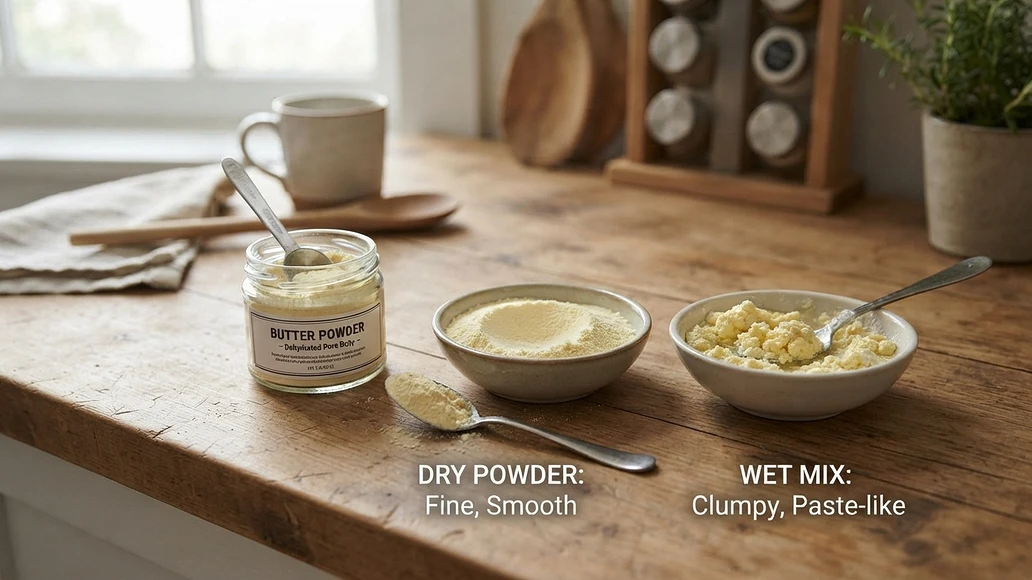
Do not rely on the date alone. Use your senses and common food safety judgment. Rancid fats often smell paint-like, stale, bitter, or soapy. Moisture damage may show up as hard clumps, caking, or uneven color. Visible mold or insect contamination means it should be thrown out.
| Sign | What it may mean | What to do |
|---|---|---|
| Paint-like, soapy, bitter, or stale odor | Rancidity or oxidation | Discard |
| Hard clumps after moisture exposure | Humidity damage, reduced quality | If only minor and odor is normal, quality may be reduced. If odor is off, discard |
| Discoloration | Age, oxidation, or contamination | Do not use if color change is significant or paired with off smell |
| Visible mold | Moisture contamination | Discard immediately |
| Insects or pest evidence | Storage failure | Discard immediately |
| Off taste after mixing | Quality loss or spoilage | Stop using it |
Nutritional value of butter powder
Butter powder can be useful because emergency diets often need more fat for calories and satiety. It can also improve taste, which matters more than people think during stressful situations. But it is not a complete food. It does not replace protein, fiber, vitamins, minerals, or a balanced storage plan.
Read the nutrition label carefully. Some products contain added milk solids or carbohydrates, which changes the calorie profile. If you are buying it mainly as a dense fat source, compare calories, total fat, saturated fat, sodium, and ingredient list across brands.
Best uses for butter powder in emergency food storage
Butter powder shines when you want butter flavor and some added fat without refrigeration. It works well in dry baking mixes, instant potatoes, rice dishes, pasta sides, biscuit mixes, oatmeal, and some freeze-dried meal upgrades. It is also useful in backpacking because it is lighter and less messy than carrying jars of fat.
It is especially handy when your stored foods are bland and carb-heavy. A little added fat can improve texture and morale. In a short emergency, that can make simple pantry meals much easier to eat consistently.
| Use case | How well butter powder fits | Why it works | Limitation |
|---|---|---|---|
| Baking mixes | Very good | Easy to pre-mix into dry ingredients | Brand mixing ratios vary |
| Emergency cooking | Good | Adds flavor to rice, potatoes, pasta, and soups | Not ideal as your only stored fat |
| Backpacking | Good | Lightweight and compact | Needs moisture protection |
| Long-term pantry storage | Moderate to good | Useful if rotated and stored well | Shelf life depends heavily on packaging and temperature |
| High-heat frying | Poor to moderate | Possible in some recipes after mixing | Ghee is usually the better fit |
When butter powder is a poor choice
Butter powder is not the best answer for every preparedness plan. If your main goal is the cheapest shelf-stable calories, other fats may offer better value. If you want a ready-to-cook pantry fat for sautéing or frying, ghee is often more practical. If your storage area is hot or humid, butter powder becomes harder to protect.
It is also a poor choice if you expect it to replace all fat storage. A resilient pantry usually includes more than one type of fat so you are not relying on a single product, flavor, or packaging format.
Common mistakes that shorten shelf life
The biggest mistake is storing it in heat. A close second is exposing it to moisture by opening the container in a steamy kitchen or dipping in a damp spoon. Another common mistake is buying a giant container because the date looks long, then opening it repeatedly for a year.
People also get into trouble by assuming all butter powders are equal. Some are better packaged, some contain more fillers, and some are intended more for flavor than for meaningful fat storage. Reading the label matters.
Is butter powder worth the price?
That depends on what problem you are trying to solve. If you want compact storage, dry-mix convenience, and familiar butter flavor in emergency meals, it can be worth keeping. If you are focused on the lowest cost per calorie, it is often not the winner.
Compare it against ghee, clarified butter, vegetable oils with appropriate rotation, peanut butter powder blends, and the fats already built into freeze-dried meals. In many pantries, butter powder works best as a specialty support item, not the main fat reserve.
Safety cautions for people with dairy restrictions or chronic illness
Butter powder is a dairy product. Anyone with a true dairy allergy should avoid it. People with lactose sensitivity may still react depending on the formulation, because some products contain milk solids or other dairy components beyond butterfat.
Adults with pancreatitis, gallbladder disease, lipid disorders, or medically prescribed fat-restricted diets should be cautious with concentrated fat products. If you are pregnant or managing a chronic condition with diet restrictions, general preparedness advice is not a substitute for personal medical guidance. If a product was stored improperly, became wet, developed mold, or was exposed to pests, do not try to salvage it.
What to buy, packaging quality, and label reading
Look for a clear ingredient list, a manufacturer shelf-life statement, and packaging designed to limit air and moisture exposure. Smaller containers are often smarter for home use because they reduce repeated opening. If the label is vague and the seller makes extreme lifespan claims without storage details, be skeptical.
Check serving size, calories, total fat, saturated fat, sodium, and whether the product includes fillers or flavoring agents. If your goal is emergency calories, compare cost per serving and cost per 100 calories, not just container price.
Building a balanced survival fat plan
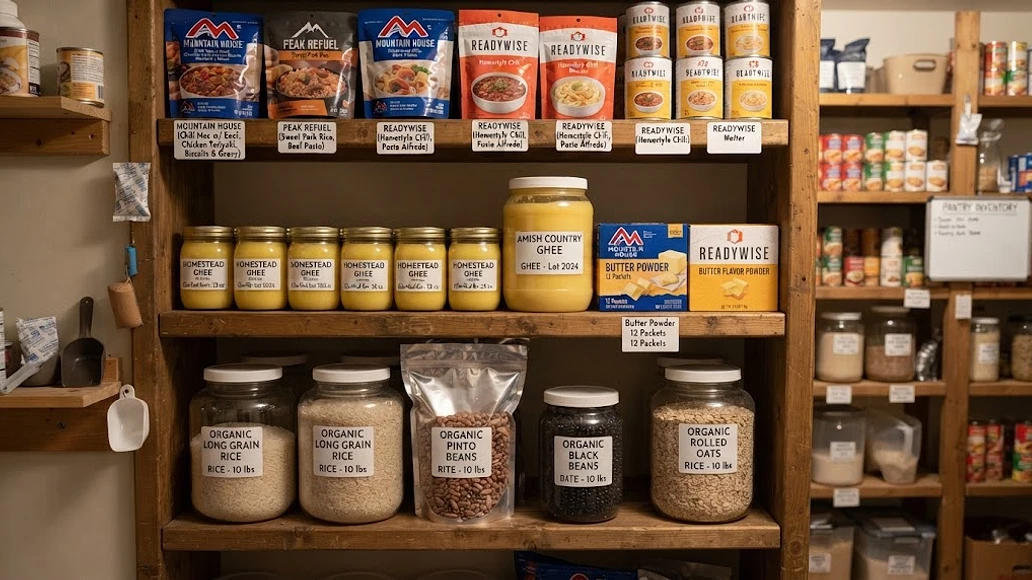
Butter powder is most useful as one part of a broader fat strategy. A balanced plan might include a cooking fat, a baking-friendly fat, and fats already present in shelf-stable foods you rotate regularly. That approach spreads risk across different products and uses.
For many households, ghee or clarified butter may be the better primary shelf-stable butter-like fat, while butter powder serves as a backup for baking, dry storage, and lightweight travel. The best plan is the one you will actually rotate, store correctly, and use before quality drops.
Quick storage checklist for butter powder
| Checklist item | Why it matters |
|---|---|
| Store indoors in a cool, dry, dark place | Reduces oxidation, heat damage, and moisture exposure |
| Keep it in sealed packaging or a dry airtight container | Limits oxygen and humidity |
| Use a dry scoop only | Prevents clumping and spoilage risk |
| Avoid garages, sheds, and hot kitchens | Heat swings shorten shelf life |
| Rotate by date and by first opened | Helps preserve quality and reduces waste |
| Treat reconstituted product like perishable dairy | Improves food safety |
| Discard if rancid, moldy, pest-exposed, or wet-damaged | Prevents unsafe use |
| Do not rely on it as your only survival fat | Supports a more resilient food plan |
References
- U.S. Food and Drug Administration, Buy, Store, Serve Safe Food
- USDA FSIS, Food Safety Basics
- Penn State Extension, Food Safety and Storage
- University of Minnesota Extension, Storing Food Safely
- Food Allergy Research and Education, Food Allergy 101
- National Institute of Diabetes and Digestive and Kidney Diseases, Digestive Diseases