Wild Lettuce and Other So Called Morphine Like Plants, What They Are and the Safety Facts
Many people searching for a plant that "works like morphine" are really hearing about wild lettuce. Here is what it is, how it differs from opium poppy and kratom, what the evidence actually shows, and when self-treatment is not a safe choice.

Searches for a natural painkiller plant that resembles morphine usually point to wild lettuce, sometimes called opium lettuce in folk use. That nickname can be misleading. Wild lettuce is not opium poppy, it does not contain morphine in meaningful amounts, and it should not be treated as a proven substitute for medical pain care. What it does have is a long history of traditional use, a milky latex that looks superficially similar to poppy latex, and a limited research base suggesting some sedative or pain-modulating effects from compounds such as lactucin and lactucopicrin.
For a preparedness minded reader, the practical question is not just what the plant is called. The real questions are whether it is correctly identified, whether it is likely to help, what the risks are, and when pain needs professional evaluation instead of home experimentation. This guide focuses on those decision points.
What people usually mean by a plant that resembles morphine
The phrase can mean three very different things, and mixing them up causes most of the confusion.
| Meaning of the claim | What it actually refers to | Why it matters |
|---|---|---|
| Visual resemblance | A plant produces milky latex, as wild lettuce does | Milky sap does not mean the plant contains morphine or opium alkaloids |
| Traditional use resemblance | A plant was historically used for calming, sleep, or discomfort | Traditional use can be interesting, but it is not the same as proof in modern human trials |
| Pharmacologic resemblance | A plant or extract has opioid-like or sedating effects | This is the most important distinction, because some plants with stronger opioid-like effects, such as kratom products, carry much higher safety risks |
In plain language, wild lettuce is often compared to morphine because of old herbal traditions and the appearance of its latex, not because it is chemically the same as morphine.
Wild lettuce is not the same as opium poppy
Opium poppy, Papaver somniferum, is the well-known plant source of opium alkaloids including morphine and codeine. Wild lettuce, usually Lactuca virosa or related species discussed in herbal circles, belongs to a different plant group and has different chemistry. That difference is not a technical footnote. It is the core safety point.
| Plant | Main compounds discussed | Common reason people bring it up | Reality check | Risk level |
|---|---|---|---|---|
| Wild lettuce | Lactucin, lactucopicrin, bitter sesquiterpene compounds | Traditional calming and pain relief claims | Limited evidence, not a source of morphine | Moderate, due to sedation, misidentification, and unreliable dosing |
| Opium poppy | Morphine, codeine, related opiate alkaloids | True opiate source | Chemically and legally very different from wild lettuce | High, due to opioid effects and legal concerns |
| Kratom | Mitragynine, 7-hydroxymitragynine | Opioid-like effects and self-treatment claims | Not FDA approved, stronger safety concerns than wild lettuce | High, due to dependence, contamination, liver injury, seizures, and overdose concerns |
What lactucarium is, and why the comparison to opium exists
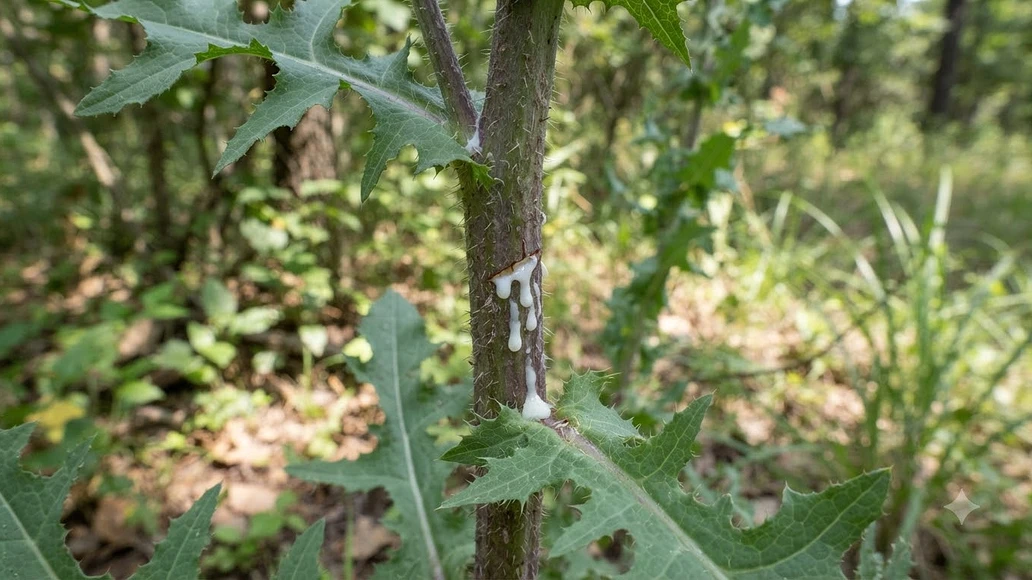
When wild lettuce stems or leaves are cut, they can release a white milky substance sometimes called lactucarium. Historically, that latex was one reason people compared the plant to opium. The comparison is mostly about appearance and old herbal use, not about matching chemistry.
That is why the phrase natural morphine can be so misleading online. A plant can have a bitter latex and still be chemically unrelated to true opiates. Readers should treat any article or product page that blurs this distinction with caution.
What the research says about pain relief
The evidence for wild lettuce as a pain reliever is limited. There is traditional use and some preclinical research suggesting sedative or analgesic activity from compounds in the plant, but that is not the same as strong human evidence. There are not robust, standardized clinical trials showing that homemade wild lettuce preparations reliably treat pain in real-world settings.
| Claim | Evidence level | Practical takeaway |
|---|---|---|
| Wild lettuce contains morphine or codeine | Weak to false | Do not assume it is an opiate source |
| Wild lettuce may reduce discomfort or promote calm | Limited and mixed | Possible traditional or preclinical signal, but not a proven treatment |
| Wild lettuce is a reliable substitute for prescription pain medicine | Unsupported | Unsafe framing, especially for severe or persistent pain |
| Kratom has opioid-like effects | Well supported for risk, mixed for benefit | This is a separate plant with a very different risk profile |
| Natural products are automatically safe | False | Plant products can still cause sedation, interactions, toxicity, and delayed care |
The short version is simple. Wild lettuce may have some biologic activity, but current evidence does not justify treating it as a dependable stand-in for morphine, nor as a safe answer for serious pain.
How wild lettuce is identified, and why lookalikes matter
Correct plant identification is essential. Wild lettuce is usually described as a tall, often weedy plant with lobed leaves, a central stem, yellow dandelion-like composite flowers, and milky sap when cut. Depending on species and growing conditions, leaf shape and stem features can vary. That variability is one reason casual foraging can go wrong.
A safe rule is this: if you are not fully confident in identification from multiple characteristics, do not harvest it for internal use. A single feature, such as milky sap, is not enough.
| Identification point | What to look for | Why one feature alone is not enough |
|---|---|---|
| Latex | White milky sap from cut tissue | Other plants can also produce latex |
| Flowers | Small yellow composite flowers | Many wild plants have similar flower color |
| Leaves | Lobed or irregular leaves, often clasping or alternating on stem depending on species | Leaf shape changes with maturity and environment |
| Growth habit | Tall upright stem, often roadside or disturbed ground habitat | Habitat alone does not confirm identity |
How to avoid dangerous lookalikes
Do not rely on social media clips or one photo. Use a regional field guide, compare several plant stages, and confirm with a local extension resource or experienced botanist if possible. Avoid harvesting from roadsides, industrial edges, sprayed lots, or contaminated soil. Even a correctly identified plant can be unsafe if it is polluted with herbicides, heavy metals, or vehicle residue.
Why homemade dosing is unreliable
One of the biggest gaps in online herbal advice is the assumption that a home-prepared tea, tincture, or latex extract has a predictable strength. It does not. Potency can vary by species, plant age, growing conditions, harvest timing, plant part used, and preparation method. That means two batches made the same way can still differ substantially.
Because of that variability, giving extraction steps or implying a dependable home dose would be irresponsible. The practical safety point is that homemade concentration increases uncertainty, not precision.
Forms people talk about, and what the risks are
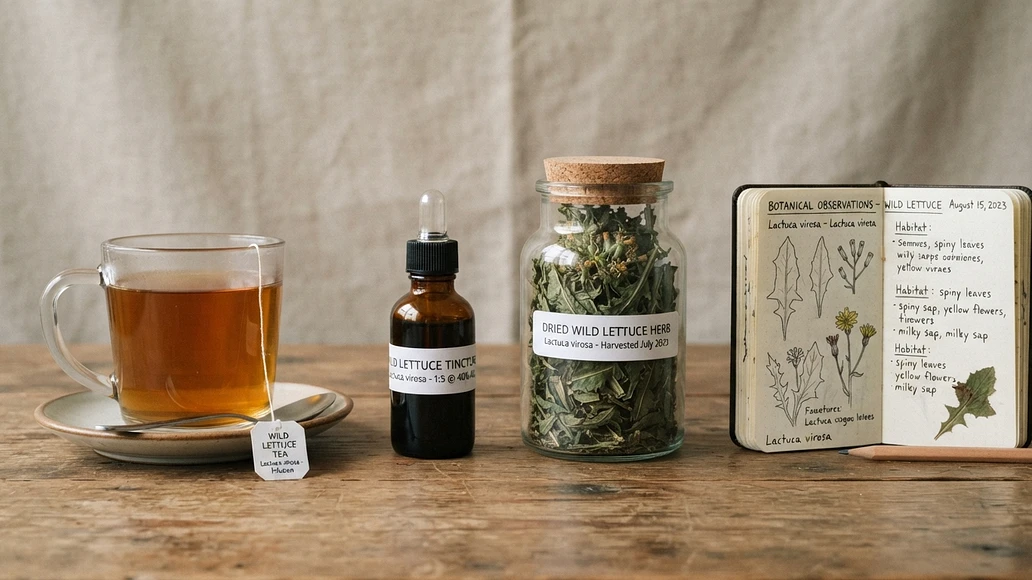
Wild lettuce is commonly discussed as tea, tincture, dried herb, latex, or concentrated extract. The more concentrated the preparation, the less predictable the effect tends to be outside a standardized product setting. Sedation, stomach upset, dizziness, and delayed response to worsening pain become more concerning as people chase stronger effects.
| Form | Why people use it | Main concern |
|---|---|---|
| Tea | Traditional, simple preparation | Unknown strength, may still cause sedation or stomach upset |
| Tincture | Convenient storage and use | Variable concentration, alcohol base may add interaction concerns |
| Dried herb | Easy to store | Potency varies widely, identity and freshness matter |
| Latex or resin-like material | Often described as stronger | Most unpredictable form, higher chance of overuse and adverse effects |
| Commercial extract | Marketed for convenience | Quality control and labeling may be inconsistent |
Side effects and interaction risks that matter most
Even if a plant is not a true opiate, it can still cause problems. Wild lettuce is most often associated with sedation-related concerns in folk use discussions. That matters if someone is driving, supervising children, operating tools, or mixing it with other substances that slow the central nervous system.
| Risk area | Why it matters | Who should be especially cautious |
|---|---|---|
| Sedation or dizziness | Can impair judgment, balance, and reaction time | Older adults, anyone driving or using tools |
| Drug interactions | Effects may add to alcohol, sleep medicines, benzodiazepines, opioids, or other sedatives | Anyone taking CNS-active medications |
| Allergy or intolerance | Plant products can trigger reactions or stomach upset | People with known plant sensitivities |
| Delayed care | Masking symptoms can postpone diagnosis of a serious condition | Anyone with new, severe, or unexplained pain |
| Contamination | Wild harvested plants may carry pesticides, road residue, or heavy metals | Foragers using non-pristine sites |
Who should avoid wild lettuce or similar sedating botanicals
Some groups should avoid self-treating with wild lettuce entirely unless a qualified clinician says otherwise. That includes pregnancy, breastfeeding, children, and people with complex medication regimens or medical conditions that raise the stakes of sedation or interactions.
| Group or condition | Why avoidance is recommended |
|---|---|
| Pregnant or breastfeeding people | Insufficient safety data, possible risk to parent or child |
| Children and teens | Unpredictable effects and lack of reliable dosing data |
| Older adults | Higher fall risk, more medication interactions, greater sensitivity to sedatives |
| People taking opioids, benzodiazepines, sleep medicines, alcohol, or other sedatives | Combined effects may increase impairment and adverse events |
| People with liver disease, seizure history, substance use disorder history, or significant mental health conditions | Potential for added risk, poor tolerance, or harmful interactions |
Wild lettuce vs kratom vs opium poppy
These plants are often lumped together online, but they should not be. Wild lettuce is usually discussed as a mild traditional sedative or discomfort remedy with limited evidence. Kratom has more clearly documented opioid-like effects and much more serious safety concerns. Opium poppy is the true source of morphine-related alkaloids and sits in a completely different legal and pharmacologic category.
| Feature | Wild lettuce | Kratom | Opium poppy |
|---|---|---|---|
| Contains morphine | No meaningful amount | No | Yes, opium alkaloids are associated with this plant |
| Main online reputation | Folk pain relief and calming | Natural opioid alternative | Source plant for opiates |
| Evidence for human pain treatment | Limited | Mixed and controversial | Opioid chemistry is well established, but this is not a DIY remedy topic |
| Main safety concern | Sedation, misidentification, unreliable potency | Dependence, contamination, liver injury, seizures, overdose concerns, especially with concentrated 7-OH products | Opioid toxicity and legal issues |
| Preparedness takeaway | Do not overstate it | Do not treat it as benign because it is plant-derived | Not comparable to wild lettuce |
Recent public health attention has focused especially on kratom concentrates and 7-hydroxymitragynine products. Those are far more concerning than ordinary discussions of wild lettuce, and they should not be grouped together as if all natural pain plants carry the same level of risk.
When a plant remedy is not the right choice
Pain is a symptom, not a diagnosis. A home remedy may briefly change how pain feels without addressing the cause. That is why severe, persistent, or unusual pain deserves a different standard than a minor temporary ache after routine activity.
| Situation | Why self-treatment is a poor fit |
|---|---|
| Chest pain or trouble breathing | Could signal a medical emergency |
| Severe abdominal pain | Could reflect appendicitis, gallbladder disease, obstruction, or bleeding |
| Pain after a fall, crush injury, or suspected fracture | Needs assessment for structural injury |
| One-sided weakness, numbness, confusion, or severe headache | Could indicate a neurologic emergency |
| Black stool, bloody stool, or vomiting blood | Possible internal bleeding |
| Fever with worsening pain | May indicate infection |
| Pain that keeps returning or is getting worse | Needs diagnosis, not repeated masking |
What to try instead for short term pain relief
For mild, clearly explained aches, safer first steps usually involve non-drug basics rather than chasing a stronger herb. Rest, hydration, gentle movement when appropriate, ice or heat depending on the situation, and avoiding re-injury are often more useful than an unstandardized botanical. Over the counter medicines may also be appropriate for some adults, but they have their own risks and label directions matter. People with ulcers, kidney disease, liver disease, blood thinners, or other medical conditions should be careful and ask a clinician or pharmacist when unsure.
If pain is chronic, repeated, or affecting sleep and function, the better path is evaluation of the cause. Long-term self-treatment with sedating botanicals can delay diagnosis and create a false sense of control.

How to interpret online claims about natural morphine
When you see a headline claiming a backyard plant works like morphine, ask four questions. First, does the article mean visual resemblance, traditional use, or true opioid chemistry. Second, does it mention human evidence, or only folklore and animal studies. Third, does it discuss interactions, contamination, and who should avoid use. Fourth, does it tell readers when to seek medical care instead of self-treating.
If those points are missing, the article is probably oversimplifying a health topic that needs more caution.
Legal and regulatory context in the U.S.
Wild lettuce is not generally discussed in the same legal category as opium poppy. But legal availability should never be confused with proof of safety or effectiveness. Products sold online may vary in quality, labeling, and concentration. Kratom products deserve extra caution because federal agencies and major medical centers have repeatedly warned about safety issues, lack of FDA approval, and the risks of concentrated products.
Preparedness planning works best when it separates folklore, botany, and evidence. A plant being easy to grow or easy to buy does not make it a reliable medical tool.
Bottom line
The plant most often meant by a so called morphine-like backyard painkiller is wild lettuce. It is not opium poppy, it does not meaningfully contain morphine, and the evidence for dependable pain relief in humans is limited. The biggest practical risks are misidentification, contamination, sedation, interactions, and delayed care for a more serious condition. If pain is severe, persistent, unexplained, or tied to red-flag symptoms, skip the experiment and get medical help.
References
- FDA, FDA and Kratom
- Yale Medicine, Kratom, What Is It and Is It Safe
- University of Utah Health, Kratom, What You Need to Know About This Natural Opioid
- Encyclopaedia Britannica, Kratom
- PubMed, review on kratom analgesic potential and safety caveats
- ScienceDaily, Natural product shows pain-killing properties
- Chulalongkorn University, Analgesic, Anti-Inflammatory, and Narcotic Detoxification