Nest Box Timing for Safer Eggs, What Backyard Keepers Need to Know
Learn how long eggs can reasonably remain in the coop, how weather changes the risk, and what to do with late-collected eggs. This guide covers freshness, storage, washing, vulnerable households, and practical collection routines.

If you keep chickens, you will eventually face the same question, especially in summer, winter, or during a busy week. How long can an egg sit in the nest box before quality drops or safety becomes questionable? The short answer is that daily collection is the best practice, and twice-daily collection is smarter in hot weather, damp conditions, or larger flocks. In a clean, cool, dry coop, eggs may remain usable for several days, and sometimes longer, but the risk rises with heat, dirt, cracks, pests, and time.
For most backyard keepers, the safest rule is simple. Collect at least once a day, refrigerate promptly if you wash the eggs, and discard eggs with cracks, slime, mold, strong odors, or signs of pest damage. If someone in your household is pregnant, elderly, very young, or immunocompromised, handle backyard eggs more conservatively and cook them thoroughly.
This article offers general backyard egg safety guidance. It does not replace advice from a doctor, veterinarian, extension agent, or local health authority. Follow national and local food safety regulations, especially during disease outbreaks affecting poultry in your area.
Why coop timing matters after an egg is laid
A freshly laid egg leaves the hen with a natural protective coating called the bloom, also called the cuticle. That coating helps slow moisture loss and reduces the movement of bacteria through the shell. The longer an egg sits in a nest box, the more that protection is challenged by manure, damp bedding, temperature swings, pecking, and shell damage.
Even when an egg still looks fine, time in the coop can affect both quality and safety. The white becomes thinner as the egg ages, the yolk becomes flatter, and the air cell grows. Warm conditions speed those changes. Dirty or cracked shells increase the chance that bacteria can enter. That is why a clean, shaded, well-ventilated coop buys you some margin, but it does not replace regular collection.
Reasonable timelines for eggs left in the coop
There is a difference between what may still be usable and what is best practice. Best practice is daily collection. In very favorable conditions, eggs left in a clean nest box may still be edible after several days, but quality declines and risk gradually increases. Heat shortens that window sharply.
| Condition | Approximate time in coop | Quality trend | Main caution |
|---|---|---|---|
| Cool, dry, clean coop | Best collected within 24 hours, sometimes usable for several days, up to about 7 to 10 days only with strong caution | Freshness slowly declines | Risk rises with hidden cracks, dirt, pests, and unknown laying date |
| Mild spring or fall weather | Collect daily | Usually good quality if gathered promptly | Rainy spells and damp bedding increase contamination risk |
| Hot or humid weather | Collect at least twice daily, sooner during heat waves | Quality drops faster | Bacterial growth risk increases quickly |
| Freezing weather | Collect early and often | Eggs may freeze and crack | Cracked or freeze-damaged eggs should be discarded |
If you do not know how long an egg has been sitting, treat it as higher risk. Use stricter screening, refrigerate it promptly after collection, and reserve it for fully cooked dishes if it passes inspection.
How heat, cold, and humidity change the answer
Hot weather
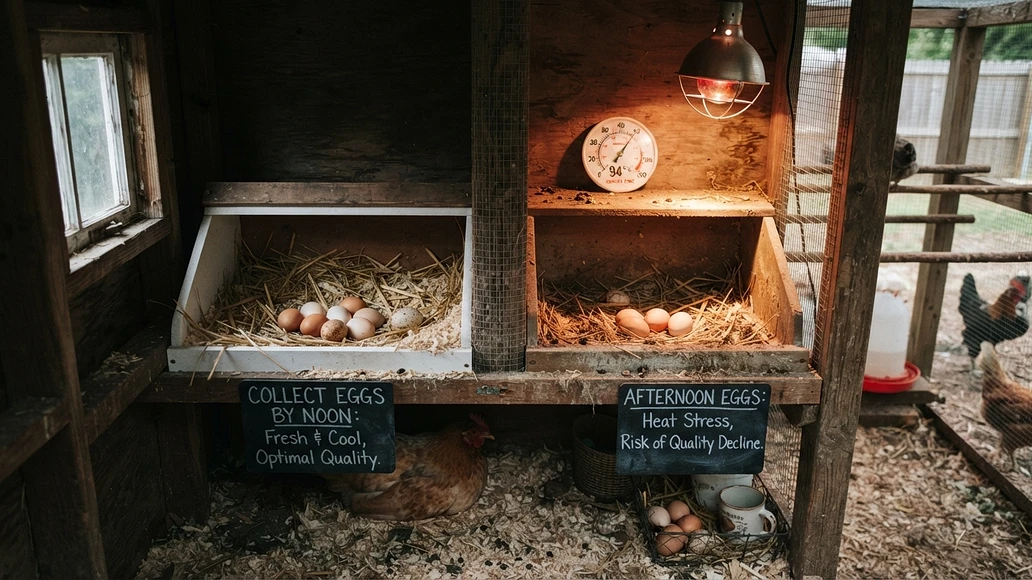
Heat is the biggest reason not to stretch coop time. In summer, eggs warm up quickly, especially in dark nest boxes, metal sheds, or coops with poor airflow. High temperatures speed quality loss and can create better conditions for bacterial growth. During hot spells, once-daily collection is often not enough. Morning and late afternoon checks are a better routine.
Cold weather
Winter creates a different problem. Eggs can freeze in the nest box, and frozen eggs often crack, even if the crack is tiny. Once the shell is compromised, bacteria can enter more easily. If an egg froze hard or shows any crack after thawing, it is safest to discard it. Repeated freeze-thaw cycles make the risk worse.
Humidity and damp bedding
Moisture weakens your margin for error. A damp coop, wet litter, or muddy nesting material increases shell contamination and can damage the bloom. Even in moderate temperatures, a wet environment means eggs should be collected promptly and sorted carefully.
Collection routines that work for different flock sizes
The right schedule depends on flock size, weather, and how many hens tend to lay in the same few boxes. More birds usually means more traffic, more manure, and more chances for breakage.
| Season or condition | Small flock, 3 to 6 hens | Medium flock, 7 to 15 hens | Notes |
|---|---|---|---|
| Cool, dry weather | At least once daily | At least once daily, midday preferred if many hens lay early | Earlier collection helps keep shells clean |
| Warm weather | Once daily minimum, twice is better | Twice daily recommended | Heat and crowding increase breakage and contamination |
| Heat wave | Morning and late afternoon | Two to three checks daily | Prioritize shaded boxes and rapid collection |
| Freezing weather | Morning and early afternoon | Twice daily | Reduce freeze risk and shell cracking |
| Broody hen present | Check more often | Check more often | Broody hens may hold eggs in the nest longer than intended |
Fertile eggs, broody hens, and mixed flocks
Fertile eggs are not automatically unsafe, but they do require more attention if a hen has been sitting on them. Warm incubation conditions can start early development if the temperature is high enough and the hen stays on the nest. If you are collecting for eating, eggs that have been under a broody hen for days are not ideal table eggs.
In a mixed flock with a broody hen, gather eggs more often and mark nesting areas if needed so you can tell fresh eggs from older ones. If you are unsure how long a broody hen has been sitting on an egg, do not treat it the same as a freshly laid table egg.
How to recognize an egg that should not be eaten
Some eggs fail the safety check before they ever reach the kitchen. Shell condition and cleanliness matter because contamination often starts on the outside.
| Egg condition | Recommended action | Why |
|---|---|---|
| Clean shell, no cracks | Keep and store properly | Lowest risk among backyard eggs |
| Light dirt only | Keep if shell is intact, dry clean if possible | Minor dirt is less concerning than washing unnecessarily |
| Hairline crack or obvious crack | Discard | Cracks allow bacteria to enter |
| Heavy manure, mud, slime, or mold | Discard | High contamination risk |
| Bad odor from shell or after cracking | Discard immediately | Strong sign of spoilage |
| Rodent chew marks or predator damage | Discard | Direct contamination risk |
| Frozen and cracked | Discard | Shell integrity is lost |
If you crack an egg into a bowl and notice an unusual smell, odd color, or abnormal texture, throw it out. Do not taste a questionable egg to decide.
Freshness checks for late-collected eggs
Freshness tests can help you sort older eggs, but they do not guarantee safety. They are screening tools, not a substitute for good handling.
Float test
Place the egg in a bowl of water. A very fresh egg usually sinks and lies flat. An older egg may stand upright. A floating egg has a larger air cell and is much older. That does not prove it is spoiled, but it should be treated cautiously and often discarded if the age is unknown.
Candling
Candling means shining a bright light through the shell in a dark room. It can help you see the air cell size and sometimes identify internal defects. For backyard keepers, it is useful when you suspect an egg sat too long or may have been incubated by a broody hen.
Crack into a separate bowl
If an egg was collected late, crack it into a bowl before adding it to a recipe. That lets you check odor, yolk shape, and white thickness without ruining the whole dish.
Bloom, washing, and why collection timing affects storage later
Unwashed eggs keep their bloom, which is why many backyard eggs can be stored at room temperature for a limited time if they were collected clean and kept dry. Once you wash an egg, that protective layer is reduced or removed, and the storage rules become stricter.
If an egg is visibly dirty, many keepers prefer to use it soon rather than store it long term. If you do wash eggs, use water warmer than the egg, avoid soaking, and dry them promptly. After washing, refrigerate at 40 degrees Fahrenheit or below.
Do not wash every egg automatically if the shells are already clean. Unnecessary washing can shorten storage life by removing the bloom.

After collection, how long eggs last on the counter or in the fridge
Coop time is only one part of the timeline. Storage after collection matters just as much.
| Storage situation | Approximate timeline | Best use | Key caution |
|---|---|---|---|
| Unwashed eggs at room temperature | Often about 2 to 4 weeks | Short-term use in a cool home | Shorter life in warm kitchens |
| Unwashed eggs refrigerated | Often up to about 3 months | Best overall for longer storage | Store consistently cold |
| Washed eggs refrigerated | Use within a shorter practical window than unwashed refrigerated eggs | Good for clean, cold storage | Must be refrigerated promptly |
| Eggs left in hot coop before collection | Highly variable, often not worth the risk | Only if clearly sound and fully cooked soon | Heat exposure shortens safe use sharply |
If you sell, share, or gift eggs, remember that local rules may differ from home use practices. When in doubt, refrigerate.
Coop and nest box setup that reduces egg risk
A cleaner coop gives you more flexibility, but not unlimited flexibility. Good nest management reduces contamination and breakage while eggs wait to be collected.
| Coop factor | Why it matters | Practical improvement |
|---|---|---|
| Clean bedding | Reduces manure and moisture on shells | Replace soiled nesting material often |
| Adequate nest boxes | Prevents crowding and breakage | Add boxes if hens pile into one area |
| Shade | Lowers egg temperature in summer | Block direct afternoon sun |
| Ventilation | Helps control heat and humidity | Improve airflow without creating drafts on roosts |
| Rodent and wild bird control | Reduces contamination and disease pressure | Secure feed, patch gaps, use exclusion methods |
| Frequent egg gathering | Limits pecking and accidental breakage | Build collection into morning and evening chores |
Biosecurity, Salmonella, and bird flu concerns
Backyard eggs can be safe to eat, but only if flock hygiene and kitchen hygiene are taken seriously. Wash hands after handling birds, eggs, bedding, or manure. Clean baskets and surfaces that contact dirty eggs. Keep rodents and wild birds away from feed and nesting areas as much as possible.
During avian influenza outbreaks, public health advice generally remains the same for eggs intended for eating. Handle them carefully and cook them thoroughly. Avoid raw or lightly cooked egg dishes, especially for vulnerable household members. If your flock shows sudden illness, unusual deaths, or a sharp drop in production, stop using the eggs until you get guidance from a veterinarian or local agriculture authority.
Extra caution for pregnant people, children, older adults, and immunocompromised households
Some people should use a narrower safety margin. If your household includes pregnant people, very young children, older adults, or anyone with a weakened immune system, be more conservative with backyard eggs.
| Group | Collection and storage approach | Cooking guidance | Risk note |
|---|---|---|---|
| Healthy adults | Collect daily, refrigerate if washed or if longer storage is planned | Cook thoroughly when age is uncertain | Moderate risk if handling is poor |
| Pregnant people | Use only promptly collected, well-stored eggs | Avoid raw or runny eggs, cook fully | Higher consequence from foodborne illness |
| Young children | Use conservative storage timelines | Cook fully | More vulnerable to dehydration and illness |
| Older adults | Prefer refrigerated, promptly collected eggs | Cook fully | Higher risk from Salmonella complications |
| Immunocompromised people | Use the strictest handling and shortest timelines | Cook to 160 degrees Fahrenheit | Highest risk group |
Preparedness planning, weekends away, and power outages
Preparedness-minded keepers often want a realistic answer for times when life interrupts the ideal routine. If you are away for a weekend, eggs may still be usable when you return if the weather stayed cool, the coop remained clean and dry, and no broody hen or pests disturbed the nests. But that is a fallback, not a preferred system.
If you expect to be gone, ask someone to collect eggs daily if possible. If that is not possible, reduce risk beforehand by refreshing nest bedding, improving shade and ventilation, and removing any eggs before you leave. In hot weather, do not plan to leave eggs sitting in the coop for days.
During a power outage, unwashed eggs that were collected clean may offer more flexibility than washed eggs, but temperature still matters. If refrigeration is unreliable, use the oldest eggs first, keep them in the coolest practical place, and reserve uncertain eggs for fully cooked dishes only if they pass inspection.
Traditional long-term storage options and their limits
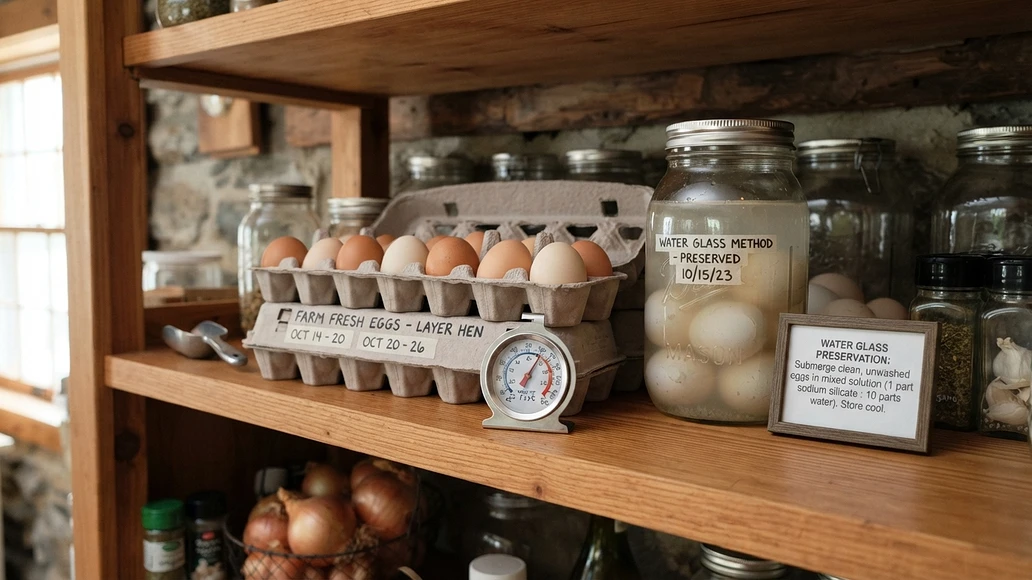
Some homesteaders preserve clean, unwashed eggs in lime water for longer storage. This old method can extend usability for months, but it is less standardized than ordinary refrigeration and requires careful technique, clean shells, and close attention to food safety. It is better viewed as an advanced preparedness method than a casual shortcut.
If you are new to backyard eggs, master collection, cleaning, dating, and refrigeration first. Long-term preservation should come after you have a reliable system for handling fresh eggs safely.
Common mistakes people make with eggs left in the coop
Many egg problems come from routine shortcuts rather than dramatic mistakes. Leaving eggs through a heat wave, assuming a clean-looking shell means the egg is safe, washing all eggs before deciding how to store them, and ignoring hairline cracks are common errors. Another frequent mistake is failing to date eggs after collection, which makes it harder to rotate stock and judge freshness later.
One more myth is worth clearing up. The float test does not certify an egg as safe. It only gives clues about age. A contaminated egg can still sink.
When to discard eggs and focus on flock health instead
Sometimes the right answer is not to salvage the eggs. If your flock is sick, if you find repeated shell defects, if nests are heavily contaminated, or if rodents have been active in the coop, discard questionable eggs and address the source problem first. A sudden drop in laying, lethargy, respiratory signs, or unexplained deaths should prompt a call to a veterinarian, extension office, or local poultry authority.
If several people become ill after eating backyard eggs, contact a clinician. Fever, diarrhea, vomiting, and severe stomach cramps can be signs of foodborne illness. Save packaging or date notes if you have them, and consider contacting your local health department for guidance.
FAQ
Can I leave eggs in the coop while I am on a weekend trip?
Only as a backup plan, not a routine. In cool, dry weather, some eggs may still be usable after a weekend, but quality and safety are less certain. In hot weather, this is much riskier. If possible, have someone collect daily.
What should I do with eggs that froze in the nest box?
If they cracked, discard them. If they froze without visible cracking, many keepers still treat them cautiously because shell damage can be hard to see. For table use, the safest choice is to discard any egg that froze hard or went through freeze-thaw cycles.
Are eggs still safe if a hen has been sitting on them for a few days?
They are less suitable as table eggs because warmth from a broody hen can start development and reduce quality. If you are unsure how long they were sat on, do not treat them like freshly laid eggs.
Is it okay to eat backyard eggs that were laid but not collected during a heat wave?
That is where caution should be highest. Heat can shorten safe coop time dramatically. If the eggs sat through extreme heat, especially in a poorly ventilated coop, discarding them is often the wiser choice.
Do I have to wash every egg I collect from the coop?
No. If the shell is clean and dry, leaving it unwashed preserves the bloom. Wash only when needed, use proper technique, and refrigerate washed eggs promptly.
References
- How Long Do Farm-Fresh Eggs Last In The Refrigerator
- How Long Do Farm Fresh Eggs Last and How to Store
- How to Clean and Store Fresh Eggs
- Buying Backyard Eggs: Safety Tips and Storage Guide
- How to Keep Eggs Clean, From Coop to Kitchen
- How Long Do Eggs Last, Facts About Farm Fresh Eggs
- Are Backyard Chicken Eggs Safe to Eat?