The Quiet Readiness Skills That Matter Most When Minutes Count
The most life-saving preparedness abilities are usually not flashy. Learn which overlooked skills help ordinary households prevent emergencies, respond safely, and bridge the gap until professional help arrives.

When people picture preparedness, they often think of shelves of supplies, expensive gear, or dramatic worst-case scenarios. In real emergencies, the skills that save lives are usually quieter than that. They are the habits and abilities that help you notice danger early, act calmly, give basic aid, communicate clearly, and avoid making a bad situation worse.
If there is one underappreciated preparedness skill that deserves top billing, it is basic emergency response, especially bleeding control, CPR, and calm scene management. But the safest and most useful answer is broader than a single trick. Life-saving preparedness is a stack of practical skills that work together. A household that can spot hazards, stop severe bleeding, call for help, manage stress, and follow a simple plan is far better prepared than one that only owns more stuff.
This guide focuses on ordinary home, neighborhood, travel, and weather emergencies. It is not a substitute for professional training or medical care. Layperson skills are meant to bridge the gap until trained responders arrive. For severe bleeding, chest pain, trouble breathing, stroke symptoms, major trauma, altered mental status, or any situation that feels beyond your ability, call 911 right away.
What makes a preparedness skill truly underappreciated
An underappreciated skill is one that does not get much attention in survival culture, but shows up again and again in real emergencies. These skills are often low-cost, teachable, and useful in everyday life. They also tend to work across many scenarios, from a car crash to a storm outage to a kitchen accident.
Quiet skills beat flashy skills because they reduce risk before a crisis, and they help you function when stress is high. A flashlight is useful. Knowing how to move through a dark house safely, check for hazards, and keep everyone together is more useful. A first aid kit matters. Knowing what to do in the first three minutes matters more.
| Scenario | Critical skill | Helpful gear | What happens without the skill |
|---|---|---|---|
| Car crash with severe bleeding | Bleeding control, scene safety, calling 911 | Tourniquet, gloves, trauma kit, phone | Gear may sit unused while blood loss becomes life-threatening within minutes |
| Cardiac arrest at home | CPR, AED awareness, directing others | AED if available, phone | Delay in action sharply reduces survival chances before EMS arrives |
| House fire | Exit planning, smoke awareness, family drill practice | Smoke alarms, fire extinguisher | People lose time, choose unsafe exits, or become separated |
| Heat wave and power outage | Heat illness recognition, hydration planning, neighbor check-ins | Water, fans, backup power, thermometers | Vulnerable people may deteriorate before anyone notices warning signs |
| Storm damage at home | Hazard assessment, shutoff knowledge, communication plan | Flashlights, radio, basic tools | Small hazards escalate into injury, contamination, or delayed evacuation |
The strongest life-saving skill for most households
If you want one answer, choose basic first aid with an emphasis on bleeding control and CPR. This is where evidence is strongest, training is widely available, and the time window is often short enough that bystander action can make the difference.
Severe bleeding can become fatal in minutes. Cardiac arrest also demands immediate action. These are not rare movie scenarios. They can happen after falls, vehicle crashes, tool accidents, kitchen injuries, workplace incidents, sports injuries, or sudden medical events at home.
That does not mean everyone should try advanced medical procedures. It means ordinary people should learn the safe, recognized basics: how to keep themselves safe, call for help, apply direct pressure, use a tourniquet if trained, begin CPR, use an AED if available, and monitor a person until professionals take over.
| Topic or skill area | Evidence strength | Shortens the problem or eases symptoms | Notes |
|---|---|---|---|
| Bleeding control, including direct pressure, wound packing, and tourniquet use | Well supported | Shortens the problem | Structured public training exists, and rapid action can prevent death from hemorrhage |
| CPR and basic airway support | Well supported | Shortens the problem | Widely standardized through major organizations and public classes |
| Basic wound care and infection prevention | Well supported | Shortens the problem over hours or days | Important in both routine injuries and prolonged disruptions |
| Fracture immobilization and safe movement decisions | Well supported | Shortens the problem | Helps prevent further injury, but moving a person can also be dangerous |
| Hypothermia and heat illness recognition | Well supported | Shortens the problem if recognized early | Especially relevant during outages, storms, and outdoor exposure |
| Situational awareness and risk literacy | Strong but more observational | Mainly prevents problems | Useful across crime prevention, evacuation, and accident avoidance |
| Stress management techniques | Mixed but generally positive | Mostly eases symptoms, indirectly shortens problems | Helps people think clearly and follow plans under pressure |
| Community ties and social support | Well supported | Prevents and shortens problems | Disaster outcomes are often better where people know and help each other |
| Navigation and map skills | General guidance | Mainly prevents secondary problems | Useful when GPS, cell service, or familiar routes fail |
| Basic repair and improvisation | General guidance | Mainly prevents escalation | Practical value is high even if formal evidence is limited |
| Lock picking and improvised access skills | Weak guidance, high misuse risk | Unclear | Not appropriate as a mainstream preparedness priority |
| Unverified secret survival tricks | Weak or absent | Usually neither | Entertainment is not training |
Situational awareness, the skill that prevents emergencies before they start
Many emergencies are survivable because someone noticed the warning signs early. Situational awareness sounds abstract, but it is simply the habit of paying attention to your surroundings, your people, and the next likely problem.
At home, that means knowing where extinguishers are, which doors stick, where the gas and water shutoffs are, and which family member will need help evacuating. In public, it means noticing exits, bottlenecks, aggressive behavior, weather changes, and whether your phone battery and route home are adequate. On the road, it means seeing fatigue, ice, floodwater, or mechanical trouble before it becomes a crisis.
You can practice this without becoming fearful. When you enter a building, identify two exits. When you park, note the path back out. During storms, check local alerts early rather than waiting for conditions to worsen. This skill is quiet, but it prevents injuries, delays, and bad decisions.
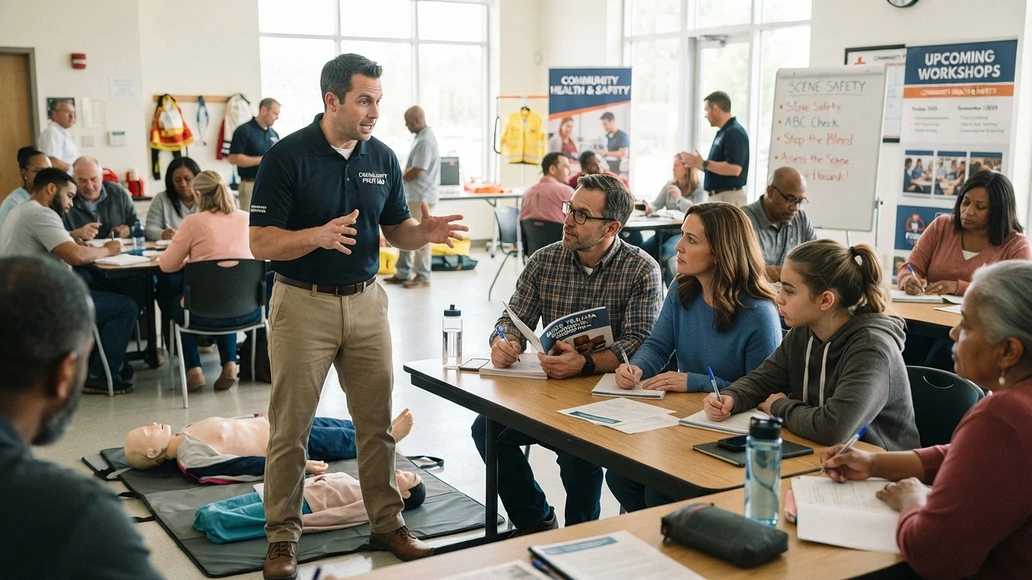
Bleeding control and first aid, the fastest path to real-world readiness
Bleeding control deserves special attention because the timeline can be so short. A person with severe bleeding may need help before EMS can arrive. Public training programs such as Stop the Bleed have made this skill more accessible, and that is a good development for households, schools, workplaces, and faith communities.
For laypeople, the safe priorities are straightforward. Make sure the scene is safe enough to approach. Call 911 or direct someone specific to call. Apply firm direct pressure to the wound. If the bleeding is life-threatening and does not stop, use a tourniquet if you are trained and have one available. Stay with the person, keep them as still as practical, and monitor responsiveness and breathing until help arrives.
Do not go beyond your training. This is not the place for improvised surgery, advanced medications, or internet folklore. The goal is to stabilize, not to replace professional care.
| Medical skill | What it does | Where to learn | Home practice idea |
|---|---|---|---|
| Bleeding control | Helps stop life-threatening blood loss | Stop the Bleed classes, Red Cross, local hospitals, EMS outreach | Review your trauma kit, practice locating gloves, gauze, and tourniquet quickly |
| CPR and AED use | Maintains circulation and supports survival until advanced care arrives | American Heart Association, Red Cross, community centers | Walk through who calls 911, who meets responders, and where nearby AEDs are located |
| Basic wound care | Reduces infection risk and supports healing | First aid classes, medically reviewed public health resources | Organize clean dressings, soap, irrigation supplies, and written instructions |
| Burn care basics | Limits further tissue damage and reduces complications | First aid classes, MedlinePlus, Red Cross | Review safe cooling steps and when burns need urgent evaluation |
| Fracture support and safe movement decisions | Prevents worsening injury | First aid and wilderness first aid courses | Practice gathering pillows, wraps, and communication tools without moving a mock patient |
| Heat illness and hypothermia response | Helps correct dangerous temperature stress early | First aid classes, CDC, Red Cross | Build a hot-weather and cold-weather checklist for your home and vehicle |
CPR and airway support, buying time until professionals arrive
CPR is another skill many people assume they will never need, until they do. Cardiac arrest often happens at home, and the first few minutes matter. Modern public guidance has also made entry easier, with compression-only CPR emphasized in many layperson situations for unresponsive people who are not breathing normally.
The best next step is formal training. A short class can teach body position, compression depth and rate, AED use, and how to coordinate with 911 dispatchers. Videos can help refresh memory, but they should not be your only training source.
If someone is unresponsive, not breathing normally, or has collapsed suddenly, call 911 immediately. Follow dispatcher instructions. If an AED is available, use it as directed. The machine is designed to guide lay responders.
Wound care and infection prevention matter more than many preppers realize
Preparedness conversations often focus on dramatic trauma, but many real problems come from small injuries handled poorly. A cut, puncture, blister, or minor burn can become a bigger issue if it is not cleaned, protected, and monitored. During outages, storms, and cleanup work, these injuries become more common.
Underappreciated skill here means knowing how to clean hands, irrigate a wound, apply a clean dressing, change it safely, and watch for red flags such as spreading redness, fever, worsening pain, foul drainage, or swelling. It also means knowing when a wound needs urgent professional care, such as deep punctures, animal bites, facial injuries, uncontrolled bleeding, or signs of infection.
For prolonged disruptions, cleanliness is a survival skill. Soap, clean water, gloves, and disciplined wound care often matter more than exotic supplies.
Mental resilience is not hype, it is performance under stress
Panic narrows attention and leads to mistakes. Calm does not mean feeling nothing. It means being able to do the next right thing. This is why stress management belongs in preparedness, even if it sounds less exciting than gear reviews.
Useful techniques are simple. Slow your breathing. Speak in short, clear sentences. Give one task at a time. Use names. Repeat the plan. If you are the least panicked person in the room, you become a stabilizing force for everyone else.
Households can practice this by running short drills. Turn off the lights and rehearse a nighttime evacuation. Simulate a phone outage and see whether everyone knows the backup contact. Practice who grabs medications, who helps the dog, who checks on the grandparent, and who meets firefighters outside. Repetition reduces panic.
Family planning and communication are preparedness skills, not paperwork
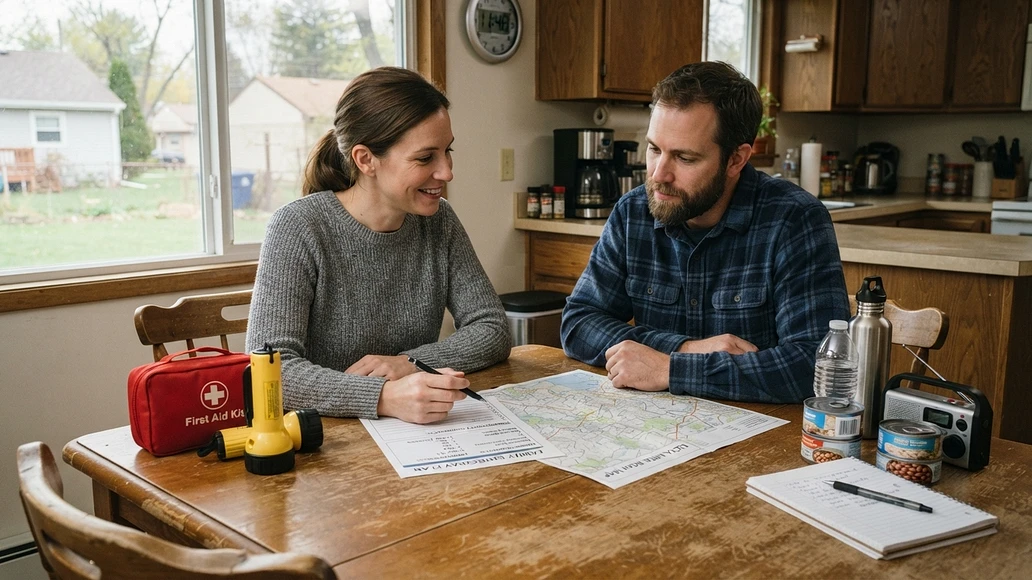
A written family emergency plan is one of the most overlooked life-safety tools because it feels boring. In reality, it reduces confusion when stress is high. A good plan answers a few basic questions. How do we get out? Where do we meet? Who needs help? Who do we call if local networks fail? What if the emergency happens while we are apart?
Children benefit from simple repetition, not long lectures. Older adults and people with disabilities benefit from plans built around mobility, hearing, vision, cognition, and medication needs. If someone in the home uses oxygen, refrigerated medication, dialysis, or power-dependent equipment, your plan should include clinician-guided backup arrangements and utility outage contingencies.
| Time available | Suggested action | Skill focus | Typical cost or access level |
|---|---|---|---|
| 1 hour | Write meeting points, out-of-area contact, medication list, and utility shutoff locations | Planning and communication | Free |
| Half day | Run a home fire drill, storm shelter drill, and phone failure drill | Execution under stress | Free |
| Weekend | Take a CPR or first aid class | Immediate life-saving response | Low to moderate cost, often community-based |
| Ongoing monthly | Rotate supplies, review contacts, and practice one scenario | Retention and habit building | Low cost |
| Longer-term | Join CERT, neighborhood preparedness, or local volunteer training | Community resilience and coordination | Often free or low cost |
Community ties are a survival multiplier
Preparedness culture sometimes overvalues isolation. Disaster research and common sense both point the other way. People do better when they know their neighbors, understand local resources, and have a few trusted relationships before a crisis starts.
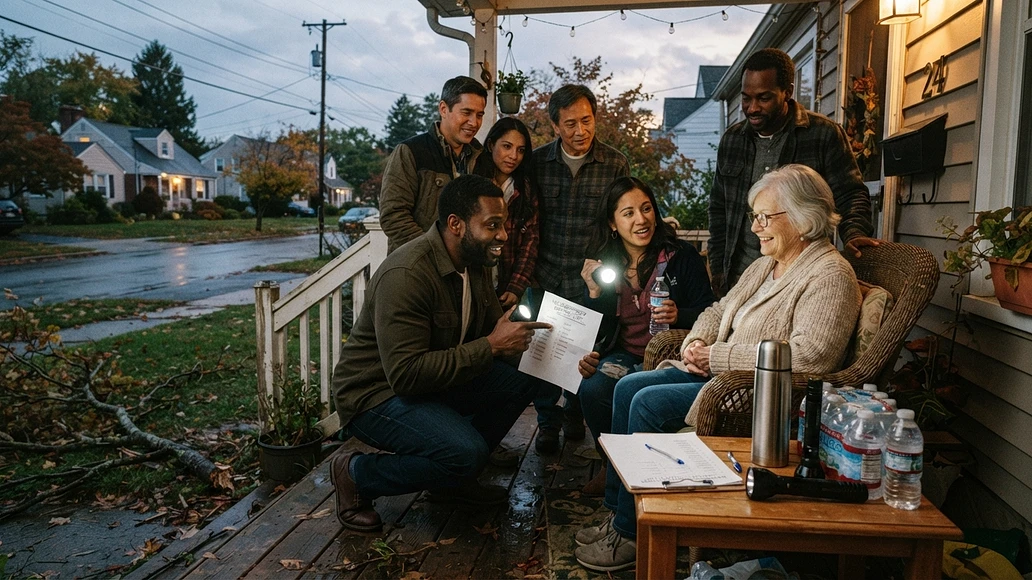
Community skill is not abstract. It means knowing who has medical training, who has a chainsaw and uses it safely, who checks on the elderly couple down the street, and which local school or church serves as a shelter or information hub. It means having enough trust that people share accurate information instead of rumors.
This also improves safety for people who live alone, caregivers, and households with mobility or health challenges. In many emergencies, the first real help is not a distant expert. It is the person nearby who already knows your name.
Water and power skills save lives because they prevent secondary disasters
Many households think of water and power as supply problems. They are also skill problems. Knowing how to store water safely, disinfect it correctly when appropriate, and avoid contamination matters. So does knowing how to use generators, grills, camp stoves, and heaters without causing carbon monoxide poisoning or fires.
Recent years have made this especially relevant. More families are dealing with extended outages, wildfire smoke, extreme heat, winter storms, and grid strain. In those situations, the underappreciated skill is not just owning backup equipment. It is using it safely and knowing when conditions are becoming dangerous.
Never run a generator in a home, garage, basement, crawl space, or near windows, doors, or vents. Do not use outdoor cooking devices indoors. If anyone develops headache, dizziness, nausea, confusion, or unusual sleepiness during an outage, think about carbon monoxide and get to fresh air while calling for help.
Navigation and local knowledge still matter in a phone-first world
GPS is excellent until it is not. Batteries die. Networks fail. Roads close. Evacuation routes change. An underappreciated skill is knowing your area well enough to move safely without depending entirely on a screen.
That means keeping a paper map, understanding a few alternate routes, and knowing where flood-prone roads, bridges, hospitals, shelters, and fuel options are. In rural areas, it may also mean understanding dead zones, seasonal road conditions, and how long help actually takes to arrive. In urban areas, it may mean knowing pedestrian routes, transit backups, and where crowds can become chokepoints.
You do not need to become a wilderness navigator to benefit. Basic local geography is enough to reduce delay and confusion.
Repair and improvisation keep small failures from becoming emergencies
Preparedness is often won in the maintenance phase. A loose handrail, a leaking pipe, a dead smoke alarm battery, or a jammed window can become a serious problem at the wrong time. Basic repair skill is underappreciated because it looks ordinary, but ordinary failures are exactly what many households face during storms and outages.
Useful skills include shutting off water, resetting breakers safely, replacing detector batteries, securing furniture, stopping minor leaks, weather-sealing doors, and using tools correctly. Improvisation matters too, but within reason. The goal is temporary stabilization, not dangerous DIY electrical or structural work beyond your competence.
If a repair involves gas, major electrical hazards, structural instability, or anything that could injure you badly if done wrong, stop and call a qualified professional.
Special considerations for children, older adults, disability, and chronic illness
The best preparedness skill for one household may be different for another. A family with toddlers may prioritize child evacuation drills, poison prevention, and car seat readiness. A household with an older adult may focus on fall prevention, medication organization, backup lighting, and safe transfer techniques. A person with hearing, vision, or mobility limitations may need communication tools, route modifications, and equipment-specific planning.
Chronic illness changes the picture further. Diabetes, heart disease, asthma, psychiatric conditions, seizure disorders, and oxygen dependence all require personalized plans. Those plans should be coordinated with the person’s clinician, especially for medication backup, refrigeration needs, power continuity, and what symptoms require urgent care.
Preparedness is not one-size-fits-all. The most life-saving skill may be the ability to adapt a general plan to the real people in your home.
When to call 911, and when DIY becomes unsafe
A good preparedness article should say this clearly. Some situations are beyond home management from the start. Others begin small and become dangerous quickly. Skills help you bridge the gap, but they do not replace emergency services or medical evaluation.
| Symptom or situation | What you can safely do | When to stop and call professionals |
|---|---|---|
| Severe bleeding | Apply direct pressure, use a tourniquet if trained, keep person still, call 911 | Immediately, this is an emergency from the start |
| Unresponsive person or abnormal breathing | Call 911, start CPR if indicated, use AED if available | Immediately |
| Chest pain, stroke signs, severe trouble breathing | Call 911, follow dispatcher guidance, keep person at rest | Immediately |
| Possible spinal injury or major trauma | Keep person still if possible, control obvious bleeding, monitor breathing | Immediately, avoid unnecessary movement unless there is immediate danger |
| Burns | Cool with running water when appropriate, protect area, remove from source | Call urgently for large burns, facial burns, electrical burns, inhalation injury, or worsening symptoms |
| Heat illness | Move to a cooler place, hydrate if appropriate, begin cooling | Call urgently for confusion, fainting, vomiting, or suspected heat stroke |
| Signs of infection after a wound | Clean and cover minor wounds, monitor closely | Seek medical care for fever, spreading redness, worsening pain, swelling, or drainage |
| Carbon monoxide symptoms during outage | Get everyone to fresh air, call 911, do not re-enter until cleared | Immediately |
How to build these skills without turning preparedness into a second job
You do not need to master everything at once. A realistic path works better. Start with the highest-value skills that apply to the most common emergencies in your life.
- Take a CPR and first aid class from a recognized provider.
- Add bleeding control training if available in your area.
- Create a one-page family emergency and communication plan.
- Run one home drill each month.
- Learn your local hazards, alerts, and evacuation routes.
- Practice safe water, outage, and carbon monoxide habits.
- Build neighborhood connections before you need them.
Good places to learn include the American Red Cross, American Heart Association training partners, Stop the Bleed programs, local hospitals, fire departments, public health departments, and CERT programs through local emergency management. Many communities offer low-cost or free classes.
Common myths that distract from real readiness
One myth is that a secret skill will solve everything. It will not. Preparedness is layered. Another myth is that watching enough videos equals competence. It does not, especially for medical or safety skills. A third myth is that gear can compensate for lack of practice. Sometimes it can help, but often it cannot.
There is also a legal and ethical boundary that matters. Skills that drift toward vigilantism, illegal entry, unsanctioned medical practice, or dangerous improvisation are poor priorities for a mainstream household. The best underappreciated skills are the ones that are useful, lawful, teachable, and safe for ordinary people to practice.
The bottom line
If you want the most overlooked preparedness skill that could truly save a life, start with basic emergency response, especially bleeding control, CPR, and calm decision-making. Then widen your view. Situational awareness, family planning, community ties, safe water and power habits, and simple repair skills are what make a household resilient in the real world.
Preparedness is not about collecting dramatic tricks. It is about becoming the kind of person who can notice trouble early, respond within your training, and help your household and neighbors get through the first hard hour safely.
References
- American Red Cross, First Aid, CPR, AED, and disaster preparedness resources
- American Heart Association, CPR and first aid education
- Ready.gov, household emergency planning and preparedness guidance
- Centers for Disease Control and Prevention, emergency preparedness and response
- MedlinePlus, medically reviewed first aid and emergency health topics
- U.S. Consumer Product Safety Commission, generator and carbon monoxide safety