The Purple Oxidizer in Your Kit, Smart Uses, Serious Risks, and Better Backup Options
Potassium permanganate has a reputation as a do-everything prepper chemical, but it is also a strong oxidizer that can burn skin, damage eyes, and create dangerous mistakes if handled casually. This guide explains where it can help in emergencies, where it should be avoided, and how to store and use it with strict safety limits.

Potassium permanganate, often sold as dark purple crystals, has long been treated like a miracle item in survival circles. The appeal is easy to understand. A tiny amount can color water, oxidize organic material, help start a fire under controlled conditions, and serve as a very dilute external skin soak in some medical settings. But the same chemistry that makes it useful also makes it hazardous. It is a strong oxidizer, it can injure eyes and skin, and swallowing even a small amount can be a medical emergency.
This article is for general preparedness education only, not medical advice. If you choose to keep potassium permanganate in a home supply or field kit, think of it as a niche tool for trained adults, not a casual all-purpose chemical. Used carefully, it may have a place. Used carelessly, it can create a second emergency.
What potassium permanganate is, and why people keep talking about it
Potassium permanganate, abbreviated KMnO₄, is a powerful oxidizer. In plain language, that means it reacts aggressively with many organic materials and reducing agents. That is why it has been used in water treatment, laboratory work, dermatology soaks, and some controlled industrial processes. It is also why it can stain skin and fabric brown or purple, damage tissue at higher concentrations, and ignite certain materials when mixed improperly.
One reason it became popular with preparedness-minded readers is that a small bottle of crystals can serve several different roles. Another reason is shelf stability. Kept dry and uncontaminated, it stores well. Still, the word indispensable is too strong for most households. Modern filters, bleach, iodine products, wound-care supplies, and dedicated fire tools are usually easier and safer for routine preparedness.
Is it really a must-have survival chemical?
For most people, no. For a careful, well-trained adult who understands dilution, labeling, oxidizer storage, and emergency response, it can be a useful specialty item. For beginners, families with children, or anyone who wants low-complexity gear, it is often more trouble than it is worth.
| Factor | Why people value it | Why caution matters |
|---|---|---|
| Multi-use potential | Can support emergency water treatment, external soaks, and fire starting | Each use has different safety rules, and mistakes can cause burns or poisoning |
| Compact storage | A small container holds many doses for limited tasks | Small crystals are easy to spill, mismeasure, or confuse with something else |
| Shelf life | Stores well if kept dry and sealed | Contamination with fuels or other chemicals can create serious hazards |
| Preparedness value | Useful as a backup item when standard supplies fail | Usually not the safest first-choice tool for everyday households |
Evidence strength for common preparedness uses
Not every claim about potassium permanganate deserves equal confidence. Some uses are grounded in clinical or chemical practice. Others are mostly traditional, improvised, or overstated online.
| Use or claim | Evidence strength | What that means in practice | Key caution |
|---|---|---|---|
| Very dilute external soaks for certain skin conditions | Well supported | Used in dermatology as an external antiseptic and drying agent | External use only, and only in very dilute pale-pink solutions |
| General skin cleansing in limited situations | Well supported | Recognized in clinical settings when properly diluted | Too-strong solutions can burn or irritate skin |
| Emergency water disinfection | General guidance only | May reduce microbial risk in emergencies | Not equal to regulated water treatment, and does not remove chemicals |
| Fire starting with glycerin or similar fuel | Well supported chemistry | Can ignite through a strong oxidation reaction | High burn and accidental fire risk |
| Foot soaks for fungal problems | General guidance to well supported | Can help dry and reduce surface microbial load | Not a cure-all, and concentration must stay low |
| Seed treatment | General guidance only | Used in some agriculture contexts to reduce fungal contamination | Accurate dosing matters to avoid damaging seeds or creating exposure risk |
| Odor control | Mixed | Oxidation can reduce some odors | Safer products are usually better for home use |
| Internal use for poison treatment | Highly specialized and inappropriate for lay use | Historical medical use does not make it safe at home | Do not ingest or self-treat poisonings with it |
Emergency water treatment, what it can do and what it cannot
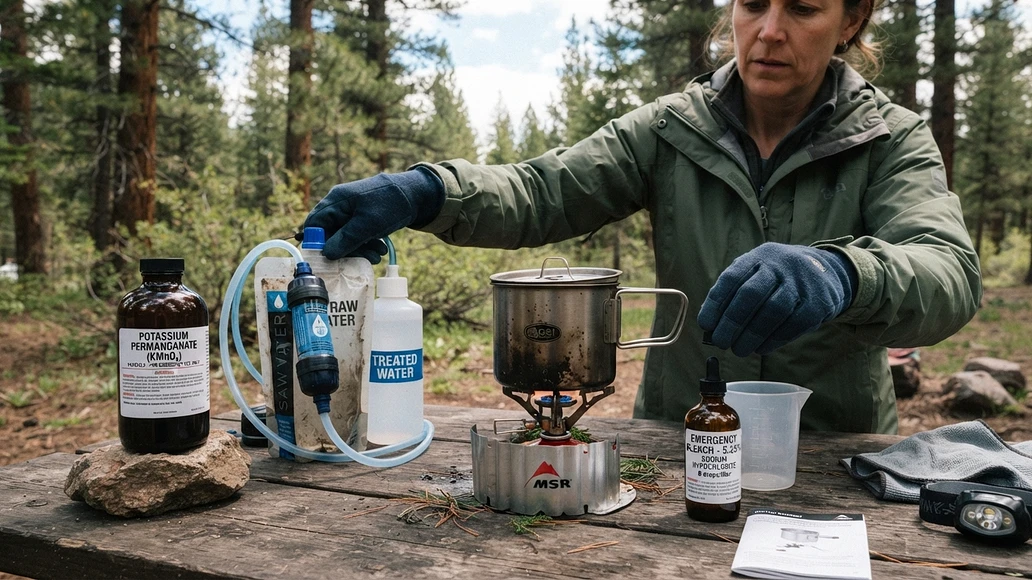
Potassium permanganate is sometimes described as a field water purifier. That oversells it. In an emergency, a very small amount may help reduce microbial contamination in water, especially when no better option exists. But it is not a complete home water-treatment system, and it does not remove pesticides, heavy metals, fuel contamination, or many other chemical hazards.
If you are forced to consider it for emergency water treatment, use it as a last-ditch option, not your primary plan. Pre-filter cloudy water through clean cloth first. Add only enough potassium permanganate to produce a faint, light pink color. Not magenta, not purple, not dark pink. Then allow contact time, commonly 30 to 60 minutes. If the water remains strongly colored, that suggests overconcentration, and it should not be consumed.
The problem is obvious. Color-based dosing is imprecise. Water chemistry varies. Lighting varies. Human judgment varies. That is why modern preparedness plans should prioritize tested filters, boiling, or properly labeled disinfectants intended for drinking water.
| Method | Best use case | Main strengths | Main limits |
|---|---|---|---|
| Potassium permanganate | Last-resort emergency use | Compact, long-storing, may reduce microbial load | Imprecise dosing, does not remove chemical contamination, hazardous if overused |
| Boiling | Biological contamination when fuel is available | Simple and reliable for pathogens | Needs heat and time, does not remove chemicals |
| Household bleach, unscented | Emergency disinfection with known instructions | Widely recognized emergency method | Shelf life declines, requires exact product type and dose |
| Water filter | Routine preparedness and field use | Easy to use, effective for many biological threats | Performance depends on filter type, may not remove viruses or chemicals |
| Iodine products | Portable backup disinfection | Compact and familiar | Taste, health limitations, less suitable for long-term routine use |
When to skip it for water
Do not rely on potassium permanganate when you already have a working filter, fuel for boiling, or a properly labeled water disinfectant. Do not use it when the water may contain industrial runoff, fuel, agricultural chemicals, or unknown toxins. Do not use it if you cannot confidently produce only a faint pink solution.
External skin use, where it has real support and where people go wrong
This is one of the few areas where potassium permanganate has stronger mainstream support. In dermatology, very dilute solutions are sometimes used as external soaks or compresses for weeping eczema, certain superficial infections, and some irritated skin conditions. The key phrase is very dilute. Medical guidance commonly describes the correct result as pale pink. If the solution looks dark pink, purple, or richly colored, it is too strong for skin contact.
It should never be used internally. It should not be poured into deep wounds, punctures, or body cavities. It is not a substitute for proper wound cleaning, sterile dressings, or medical evaluation when infection is significant.
| Use | Typical visual target | How long it may be used | Who should avoid home improvisation |
|---|---|---|---|
| External soak for irritated, weeping skin | Very pale pink | Short, limited soaks only | Children, pregnant people without medical guidance, people with severe skin disease, diabetes, or poor circulation |
| Foot soak for mild fungal or damp skin problems | Very pale pink | Short soak, then dry thoroughly | Anyone with cracked skin, ulcers, neuropathy, or uncertain concentration |
| Compress for minor superficial skin issues | Very pale pink | Brief contact only | Anyone with sensitive skin or a history of chemical irritation |
| Deep wound or serious infection | Not recommended for home use | Not applicable | Everyone, seek proper medical care |
If you use it externally at all, mix carefully, label the container, and stop immediately if the skin becomes painful, blistered, or intensely stained. Brown staining can happen even with proper use, but pain and worsening irritation are warning signs.
Fire starting with potassium permanganate, chemistry first, bravado last
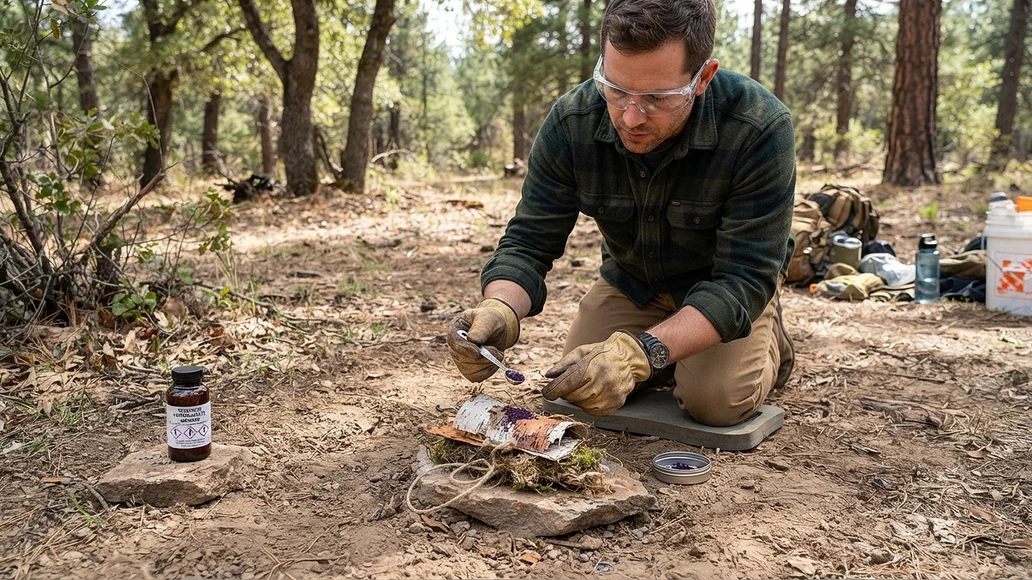
Potassium permanganate can be used to start a fire because it is a strong oxidizer. When combined with certain fuels or reducing agents, such as glycerin, it can produce enough heat to ignite tinder. This reaction is real, but internet demonstrations often hide how easy it is to get hurt or start an unintended fire.
If you are learning fire craft, a ferro rod, stormproof matches, and dry tinder are better first-line tools. Potassium permanganate fire starting belongs in the advanced backup category, not the beginner category.
Basic safety rules matter more than the trick itself. Work on bare mineral soil or another nonflammable surface. Wear eye protection. Keep only a tiny amount of material out at one time. Keep the main container sealed and far from the reaction area. Never experiment indoors, near spilled fuel, or around children.
Why accidental mixing is a serious concern
The same reaction that can help create flame can also create an accident if crystals contact the wrong substance in storage. Keep potassium permanganate away from glycerin, sugars, fuels, oils, solvents, and other household chemicals. A prep kit that tosses everything into one pouch is the wrong place for a loose oxidizer.
Other uses people mention, and how much confidence they deserve
Preparedness discussions often expand potassium permanganate into a long list of extra uses, from deodorizing to seed treatment. Some of these have a basis in chemistry or agriculture. Others are more folklore than dependable field practice.
| Claimed use | Practical value | Confidence level | Bottom line |
|---|---|---|---|
| Foot care | Can help dry damp, irritated skin and reduce surface microbial load | Moderate | Reasonable only in very dilute external soaks |
| Seed treatment | Can reduce some fungal contamination before planting | Moderate | Useful only for people who can measure carefully and handle chemicals safely |
| Odor reduction | Oxidation may reduce some smells | Low to mixed | Usually not worth the hazard for home use |
| Fruit handling claims | Often repeated online | Mixed | Not a mainstream preparedness use |
| Routine household disinfecting | Possible in theory | Low for home practicality | Safer, simpler products are better choices |
How dangerous is it, really?
Dangerous enough that it should never be treated casually. Potassium permanganate can cause serious eye irritation and possible eye damage. Strong solutions can burn skin. Dust can irritate the respiratory tract. Swallowing crystals or concentrated solution can burn the mouth, throat, esophagus, and stomach, and may lead to vomiting, shock, breathing problems, and other severe complications.
Toxicology data also matter. Published safety data place oral LD50 values in animals around 1090 mg/kg, and human fatal dose estimates around 10 grams have been reported. Those numbers are not instructions or thresholds for safe use. They simply underline the point that a small amount can be dangerous, especially for children.
Long-term exposure to manganese-containing dusts has also been associated with chronic respiratory and neurologic harm in occupational settings. That does not mean a sealed emergency bottle creates the same risk, but it does mean you should avoid creating dust, avoid repeated unnecessary handling, and avoid storing damaged containers.
If exposure happens
| Exposure type | Immediate action | What not to do | Next step |
|---|---|---|---|
| Swallowed | Rinse mouth, give a small amount of water or milk if the person is conscious and able to swallow | Do not induce vomiting, do not try home antidotes | Call Poison Control immediately and seek emergency care |
| Eye splash | Flush with clean water for at least 15 minutes | Do not delay irrigation to search online for fixes | Get urgent medical help |
| Skin burn or painful irritation | Rinse thoroughly with water and remove contaminated clothing | Do not keep applying more solution | Seek medical advice if pain, blistering, or worsening irritation occurs |
| Dust inhalation | Move to fresh air | Do not continue handling the chemical | Get medical help if breathing symptoms develop |
Storage and handling at home or in a kit
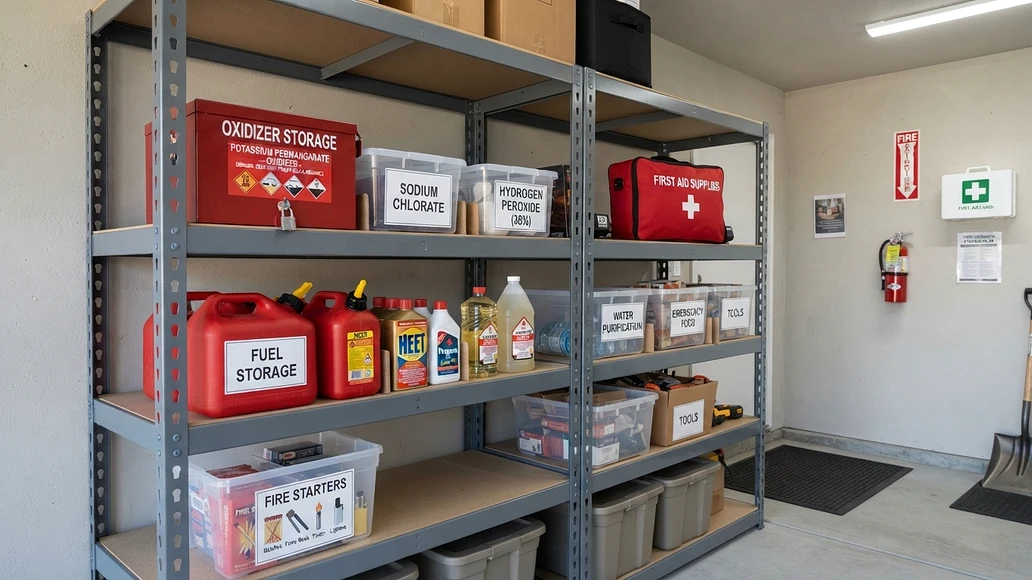
If you decide to keep potassium permanganate, storage discipline is non-negotiable. It should be dry, sealed, clearly labeled, and physically separated from anything combustible or reactive.
| Storage item | Best practice | Reason |
|---|---|---|
| Container | Keep in original labeled container or a compatible, tightly sealed chemical container | Prevents moisture entry and dangerous confusion |
| Location | Cool, dry shelf away from heat and sunlight | Protects stability and reduces accidental degradation or spills |
| Separation | Store away from fuels, oils, glycerin, sugars, solvents, and random chemicals | Reduces fire and reaction risk |
| Labeling | Mark as OXIDIZER, EXTERNAL USE ONLY, DO NOT INGEST | Prevents dangerous misuse under stress |
| Child and pet safety | Use a locked cabinet or inaccessible container | Small amounts can still cause severe injury |
| PPE | Use gloves and eye protection when handling crystals or mixing solutions | Limits skin and eye exposure |
What type should you buy for preparedness?
If you buy any at all, buy from a reputable supplier that clearly identifies the product and provides safety documentation. Avoid mystery powders, repackaged unlabeled crystals, or products sold with vague survival claims but no safety data. Different markets may sell technical, water-treatment, aquarium, or medical-related forms. For general preparedness, the most important issue is not marketing grade language. It is whether the product is correctly identified, uncontaminated, and accompanied by clear handling information.
Do not buy more than you can safely store and label. For most households, a small amount is more than enough. Large quantities increase risk without adding much practical value.
Who should avoid using it at home
Some people should skip potassium permanganate entirely. That includes households with young children, adults who are not comfortable measuring and labeling chemicals, people with chronic skin disease, people with asthma or respiratory sensitivity, and anyone likely to confuse it with another product under stress. Pregnant or breastfeeding people should not improvise home use without professional guidance. People with diabetes, poor circulation, neuropathy, or open foot wounds should not experiment with foot soaks.
How it compares with simpler preparedness tools
Preparedness works best when tools are easy to use correctly in bad conditions. That is where potassium permanganate often loses to simpler options.
| Item | Primary role | Ease of use | Risk level | Best place in a plan |
|---|---|---|---|---|
| Potassium permanganate | Niche oxidizer for backup tasks | Low to moderate, requires training | High if mishandled | Advanced backup item only |
| Unscented household bleach | Emergency water disinfection and surface sanitation | Moderate | Moderate | Home emergency supplies |
| Iodine tablets or drops | Portable water disinfection | Moderate | Moderate | Travel and backup kits |
| Water filter | Routine field water treatment | High | Low to moderate | Primary field water plan |
| Ferro rod | Fire starting | High with practice | Low | Primary backup fire tool |
| Stormproof matches | Fire starting | Very high | Low | Simple, reliable ignition |
A responsible checklist if you still want to carry it
If you choose to include potassium permanganate in a preparedness setup, keep the system simple and documented.
- Buy only from a reputable source with safety documentation.
- Keep it in a sealed, labeled container.
- Store it away from fuels, glycerin, sugars, solvents, and children.
- Pack written instructions that say external use only, unless directed by a professional.
- For any skin use, remember the visual rule, pale pink only.
- For any water emergency use, treat it as a last resort, not a preferred method.
- Carry gloves and eye protection if you plan to handle crystals.
- Write Poison Control information on the container or instruction card.
Common myths that cause trouble
One myth is that if a little works, more works better. With potassium permanganate, more often means more tissue damage and more risk. Another myth is that because it has historical medical uses, it is safe to ingest or use as a home antidote. It is not. A third myth is that if it can disinfect water in a pinch, it is equal to a proper water-treatment plan. It is not. Finally, many people underestimate storage hazards and toss it into mixed gear with fire starters, oils, and random liquids. That is exactly the wrong approach for an oxidizer.
When to skip potassium permanganate and use something else
Use something else when you need routine water treatment, when you are building a family emergency kit, when children may access the supplies, when you want a simple first-aid setup, or when you are learning basic fire craft. In those situations, dedicated water filters, bleach used according to emergency guidance, standard wound-care supplies, and ferro rods or matches are better choices.
Potassium permanganate makes the most sense as a specialized backup for experienced adults who understand both its utility and its limits. That is a much narrower role than many survival articles suggest.
FAQ
Can you drink water purified with potassium permanganate every day, or is it only for emergencies?
It should be treated as an emergency-only option, and even then only with great caution. It is not a good routine drinking-water method for home use. Safer and more standardized options include filters, boiling, or approved disinfectants used according to instructions.
How much potassium permanganate is too much in a skin soak or foot bath?
If the solution is more than pale pink, it is too much for casual home skin use. Dark pink, purple, or strongly colored solutions should not touch skin. Because exact dilution matters, anyone unsure of the concentration should not improvise.
Is potassium permanganate safe to use around children and pets?
Not casually. It should be locked away and treated as a hazardous chemical. Children and pets are at much higher risk from accidental swallowing, splashes, and stained containers that look harmless.
What should I do immediately if someone accidentally swallows potassium permanganate crystals or solution?
Rinse the mouth, give a small amount of water or milk if the person is awake and can swallow, then call Poison Control immediately and seek emergency care. Do not induce vomiting and do not try home remedies.
Can I mix potassium permanganate with other household chemicals to make stronger disinfectants?
No. Do not mix it with random household chemicals. As a strong oxidizer, it can react dangerously with many substances, including fuels, solvents, glycerin, sugars, and organic materials.